
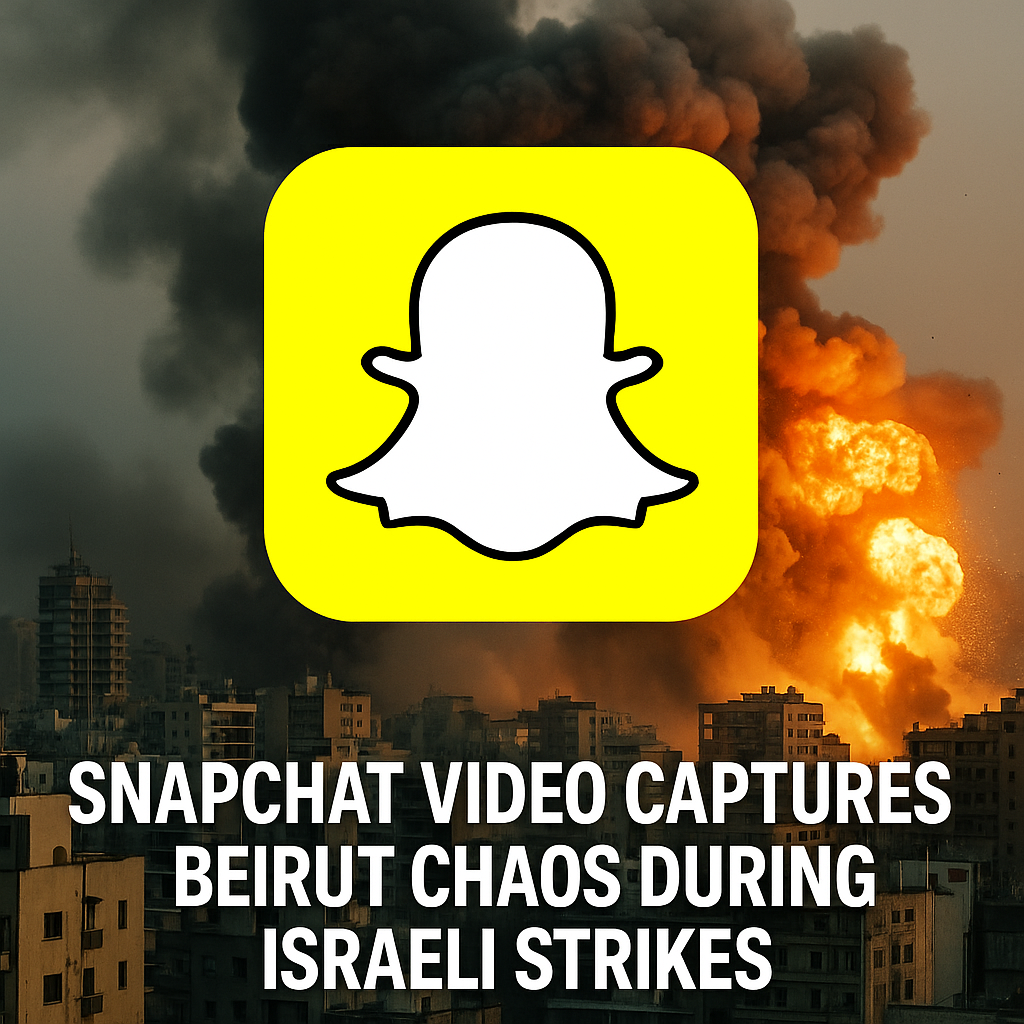
Snapchat Video Captures Beirut Chaos During Israeli Strikes

Capturing Chaos: The Impact of Israeli Strikes on Beirut Through Snapchat
In an age where social media serves as a critical lens through which we view world events, a Snapchat video recently recorded in Beirut has highlighted both the immediacy of conflict and the personal toll it takes on residents. As violence erupts in the region, the footage has sparked discussion around the broader implications of such real-time documentation.

Real-time Documentation and Personal Perspectives
The Snapchat video in question features a teenage girl recording the chaos unfolding around her as Israeli strikes hit various locations in Beirut. In her emotional account, she expressed fear and confusion, saying, “I was so scared.” This sentiment resonates deeply with many who experience the unpredictability of conflict; it encapsulates the anxiety of living in a war-torn environment where safety is a fleeting illusion.


This particular video serves not only as a personal account but also as a poignant reminder of the human stories that often get overshadowed by political narratives. It brings attention to how technology has empowered individuals to share their experiences in real-time, offering a unique, immediate insight into the complex realities of modern warfare. Such documentation can, at times, evoke empathy and spur action, but it can also be criticized for potentially desensitizing audiences to the violence and suffering being portrayed.


The Broader Context of Israeli Strikes
The ongoing tensions in the region are fraught with complex historical and geopolitical factors, which have led to an escalation of violence between Israel and various factions in Lebanon. Reports from Al Jazeera note that these strikes are part of a larger pattern of retaliation following incursions by militant groups into Israeli territory. Conversely, outlets like RT have pointed to the need for international action to address what they describe as disproportionate responses to perceived threats.
While the Snapchat footage captures a singular moment in time, it echoes louder in the context of these broader, ongoing issues. Various sources emphasize the precariousness of peace in the region, warning that civilian areas, such as Beirut, are increasingly becoming the battlegrounds for conflicts that often have little to do with the residents themselves.
The Emotional Toll on Civilians
One of the key aspects of the Snapchat video is its emotional weight. As news outlets continue to report on the casualties and damage inflicted by these strikes, stories like that of the teenage girl become emblematic of the trauma that civilians face. Many experts argue that the normalization of violence can lead to long-lasting psychological scars on those who live in conflict zones.
– Increased Anxiety: The terror and uncertainty experienced by the girl and her peers may not simply fade with the cessation of strikes.
– Desensitization: Viewers of such footage, while sympathetic, may become numb to the violence depicted as it becomes more prevalent in media coverage.
– Call for Empathy: Advocates for humanitarian intervention emphasize the importance of recognizing the human element in these conflicts, urging the international community to respond not just to geopolitical maneuvers but to the needs of the populace.
As journalists and analysts dissect the implications of these strikes, they often find themselves caught between the need to report on the political ramifications and the ethical responsibility to convey the human suffering involved. The urgency of the girl’s Snapchat narrative sparks a significant dialogue on the importance of keeping attention focused on civilians affected by such geopolitical strife.
A Call for Balanced Perspective
While the Snapchat video serves as a visceral reminder of the immediate dangers present in Beirut, it is pivotal to approach narratives of conflict with a balanced perspective. Different news outlets provide varied insights on the motivations behind military actions, the ripple effects of these strikes, and the role of international diplomacy.
– Diverse Viewpoints: Media reports should strive to encompass a range of perspectives, from local narratives to broader geopolitical analyses, providing a holistic view of the situation.
– Avoiding Polarization: It is crucial for discussions on such conflicts not to fall into binary thinking—villains versus heroes—which often oversimplifies the reality on the ground.
As we consume content shaped by real-time social media, journalists and media platforms have a responsibility to curate and present narratives that honor the complexity of human experience while fostering understanding among diverse audiences.
Ultimately, while individual accounts like the teenage girl’s Snapchat video capture the immediacy of chaos, they also remind us of the vital importance of nuanced storytelling in a constantly shifting geopolitical landscape. The chaos may seem chaotic, but it often tells a deeper story of resilience, fear, and the undying hope for a peaceful tomorrow amidst the ruins.















