
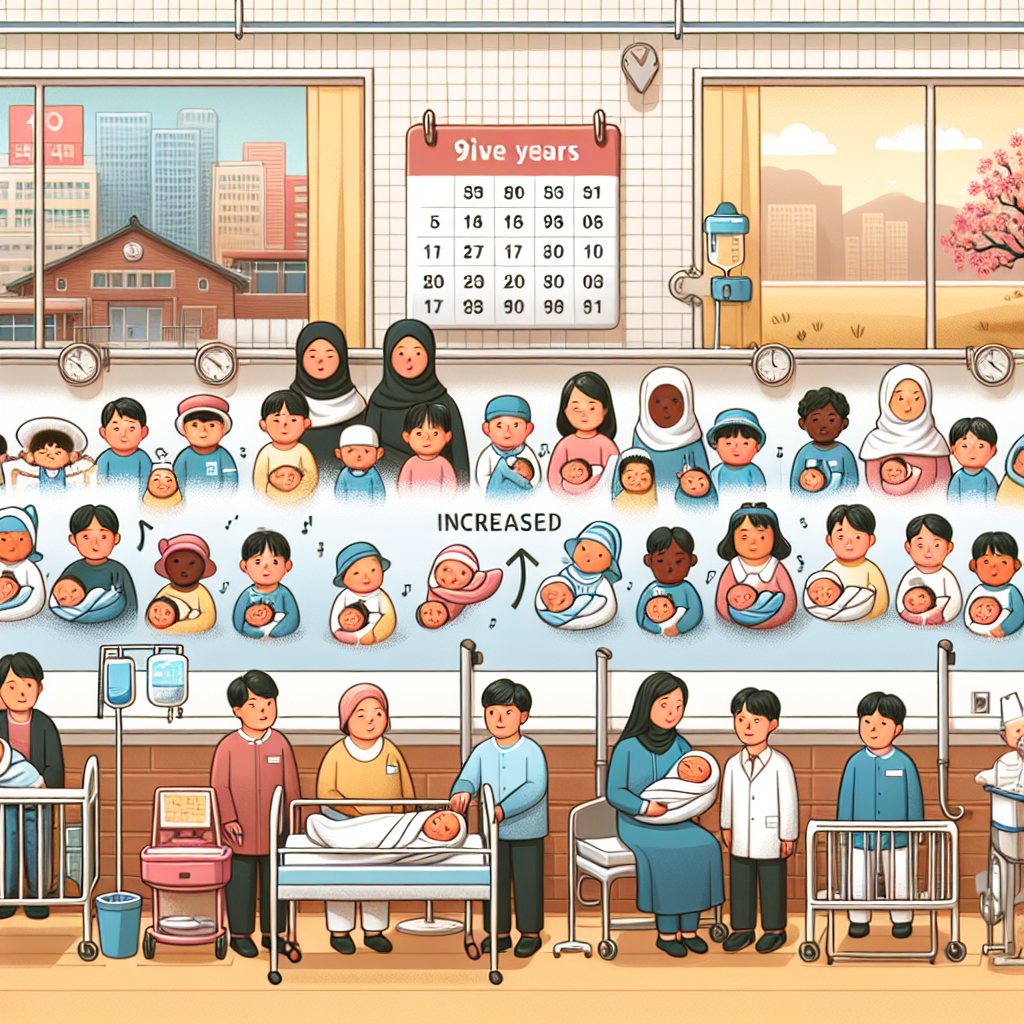
South Korea Sees First Increase in Birthrate in Nine Years

South Korea Sees First Increase in Birthrate in Nine Years
A Surprising Turn in Demographic Trends
For the first time in nearly a decade, South Korea has reported an increase in its birthrate, marking a significant shift in the country’s demographic trends. This development comes as a surprise to many, given the nation’s long-standing struggle with declining birthrates and an aging population.

Key Factors Contributing to the Increase
Several factors have been identified as contributing to this unexpected rise in birthrate:


- Government Initiatives: Enhanced family-friendly policies and financial incentives for new parents have played a crucial role.
- Societal Shifts: Changing attitudes towards family life and work-life balance have encouraged more couples to have children.
- Economic Stability: Improved economic conditions have provided a more secure environment for raising children.
Implications for the Future
The increase in birthrate has several potential implications for South Korea’s future:


- Economic Growth: A higher birthrate could lead to a larger workforce in the long term, boosting economic growth.
- Social Services: The government may need to adjust social services to accommodate the needs of a growing population.
- Policy Adjustments: Continued support and adaptation of policies will be necessary to sustain this positive trend.
Conclusion
South Korea’s first increase in birthrate in nine years is a promising sign for the nation, reflecting the effectiveness of recent policies and societal changes. While challenges remain, this development offers hope for a more balanced demographic future, with potential benefits for the economy and society as a whole.















