South Korea’s Record-Breaking Wildfires Claim 27 Lives

South Korea’s Record-Breaking Wildfires: A Tragic Toll
Overview of the Catastrophe
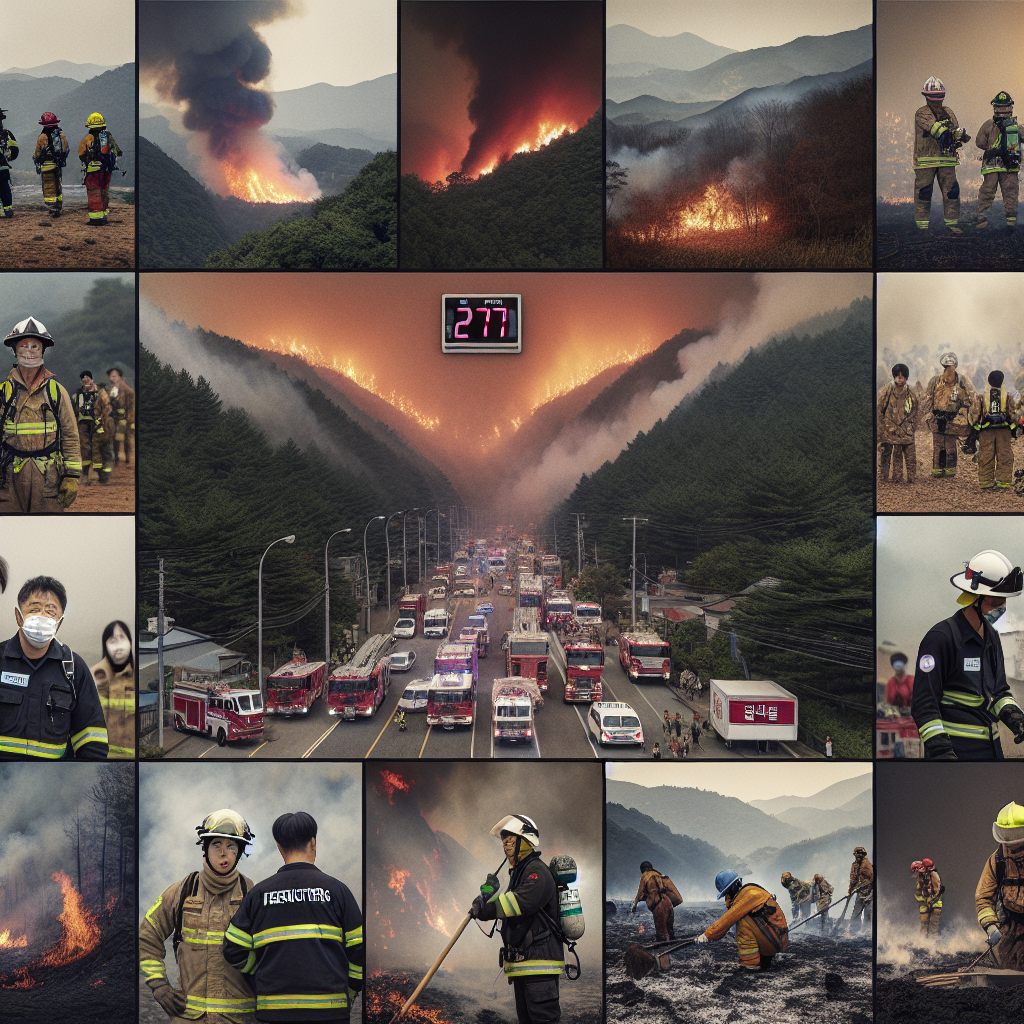
South Korea is grappling with one of its most devastating natural disasters as wildfires sweep across the nation, claiming 27 lives. The fires, unprecedented in scale and intensity, have left a trail of destruction, prompting urgent responses from authorities and communities alike.

Key Impacts of the Wildfires
- Human Casualties: The wildfires have resulted in the tragic loss of 27 lives, marking a somber record in the nation’s history.
- Environmental Damage: Vast areas of forest and wildlife habitats have been destroyed, raising concerns about long-term ecological impacts.
- Economic Consequences: The fires have disrupted local economies, with significant damage to infrastructure and agriculture.
Response and Relief Efforts
In response to the crisis, South Korean authorities have mobilized extensive resources to combat the fires and support affected communities. Efforts include:


- Firefighting Operations: Deployment of thousands of firefighters and equipment to contain the blazes.
- Evacuation and Shelter: Establishment of emergency shelters for displaced residents.
- International Assistance: Offers of aid and support from neighboring countries and global organizations.
Looking Ahead: Challenges and Recovery
As South Korea confronts the aftermath of these wildfires, the focus shifts to recovery and prevention. Key challenges include:


- Rebuilding Communities: Efforts to restore homes and infrastructure in affected areas.
- Environmental Restoration: Initiatives to rehabilitate damaged ecosystems and prevent future fires.
- Policy and Preparedness: Enhancing fire prevention strategies and emergency response capabilities.
Conclusion
The record-breaking wildfires in South Korea have underscored the urgent need for comprehensive disaster management and environmental protection strategies. As the nation mourns the loss of lives and begins the arduous journey of recovery, the lessons learned from this tragedy will be crucial in shaping a more resilient future.