
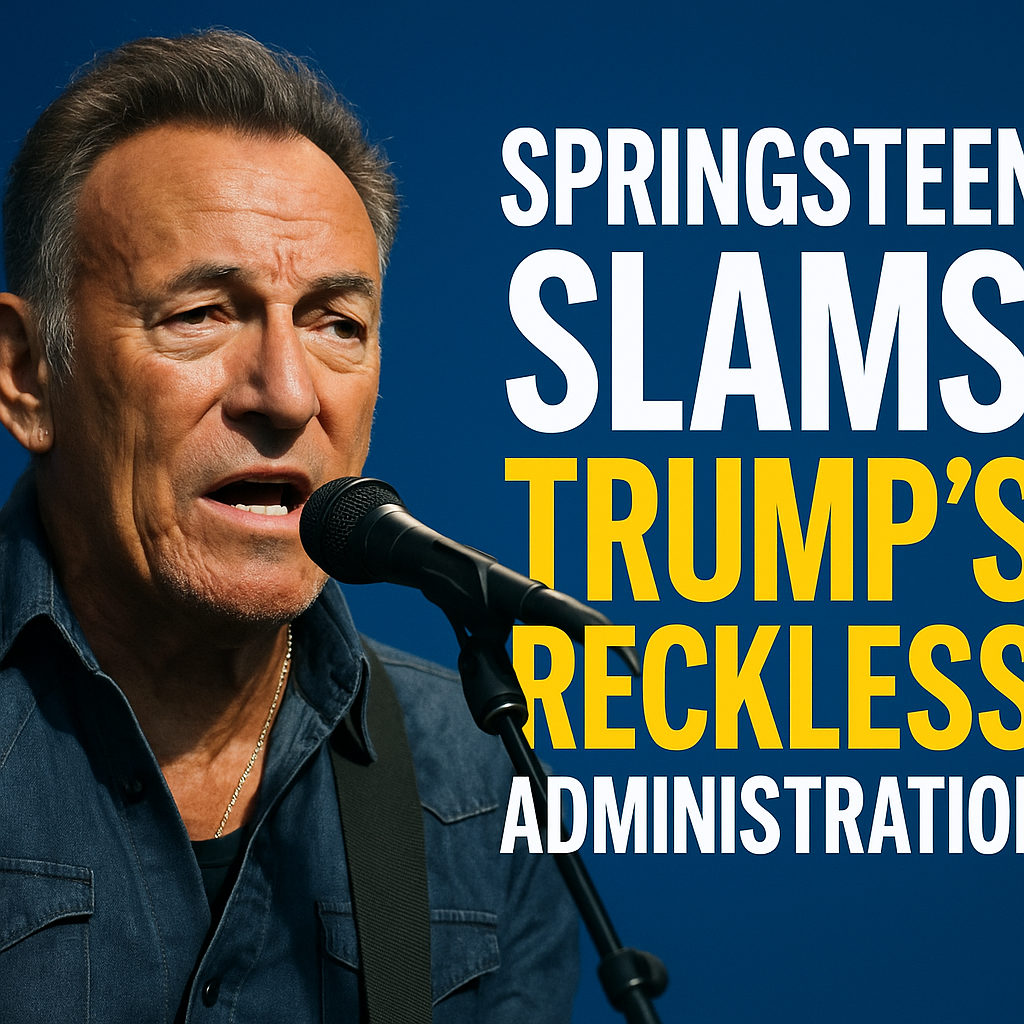
Springsteen Slams Trump’s Reckless Administration

Bruce Springsteen Critiques Trump’s Reckless Leadership
Prominent musician Bruce Springsteen has voiced a strong denunciation of former President Donald Trump’s time in office, labeling it as “reckless.” This criticism not only highlights the contentious political climate in the United States but also emphasizes the significant role that cultural figures play in shaping public discourse.

The Reckless Administration
Springsteen’s comments emerged amid a broader conversation about the impact of Trump’s administration on American values and international standing. In an interview, he stated that Trump’s governance was characterized by “a kind of disregard for the norms and values that hold a democratic society together.” This sentiment resonates with a considerable segment of the population who feel that Trump’s policies sowed division and undermined long-standing democratic principles.


Various sources have echoed similar concerns. Reports highlight the anxiety over the erosion of democratic norms during Trump’s tenure, citing actions such as the undermining of the electoral process and polarizing rhetoric that alienated millions. Critics argue that fostering dialogue across political lines became increasingly difficult under a leadership style that emphasized confrontation over collaboration.


Perspectives on Leadership
Contrastingly, some supporters of Trump defend his administration by arguing that his unorthodox approach was necessary to challenge the status quo in Washington. They maintain that he focused on pivotal issues like immigration reform and economic growth, delivering strong results in job creation before the pandemic. Proponents point to a booming economy early in his presidency as evidence of effective leadership.
However, this perspective often clashes with critiques regarding public health and social issues exacerbated by his policies. In fact, a survey conducted during his administration revealed a significant number of Americans felt that his communication style was detrimental to national unity. This division in public opinion underscores the complexities surrounding Trump’s legacy, revealing that judgments about his administration often depend on ideological alignments.
The Role of Cultural Icons
Springsteen, wielding considerable influence as a cultural figure, elevates the conversation surrounding political accountability. His remarks about the past administration highlight the responsibility of public figures in advocating for democratic principles. Many artists and entertainers have stepped into political discourse, using their platforms to mobilize supporters and challenge policies they perceive as harmful.
This trend raises the question of the responsibility of artists in the political sphere. While some argue that celebrities should remain apolitical to avoid alienating their audience, others contend that, in times of political crisis, silence equates to complicity. Springsteen’s decision to speak out aligns with a broader movement where accountability and advocacy become integral to the public’s expectation of cultural leaders.
The Future of Political Discourse
Looking ahead, the significance of Springsteen’s critique lies not only in the condemnation of Trump’s reckless administration but also in what this means for the future of political discourse in the United States. As society grapples with issues of governance, public health, and equality, voices from the arts will likely continue to play a crucial role in shaping narratives and mobilizing collective action.
Whether or not Trump’s administration will be seen as a turning point in American politics remains an open question. Responses from the public and cultural luminaries alike suggest a deeper conversation about governance, representation, and the values we uphold as a society is imperative for healing and moving forward.
In conclusion, Bruce Springsteen’s outspoken critique invites reflection and dialogue about the nature of leadership and accountability in a complex political landscape. As we process the lessons learned from recent history, continuing to elevate diverse perspectives and engaging in constructive discourse becomes essential for a healthier democratic future.















