
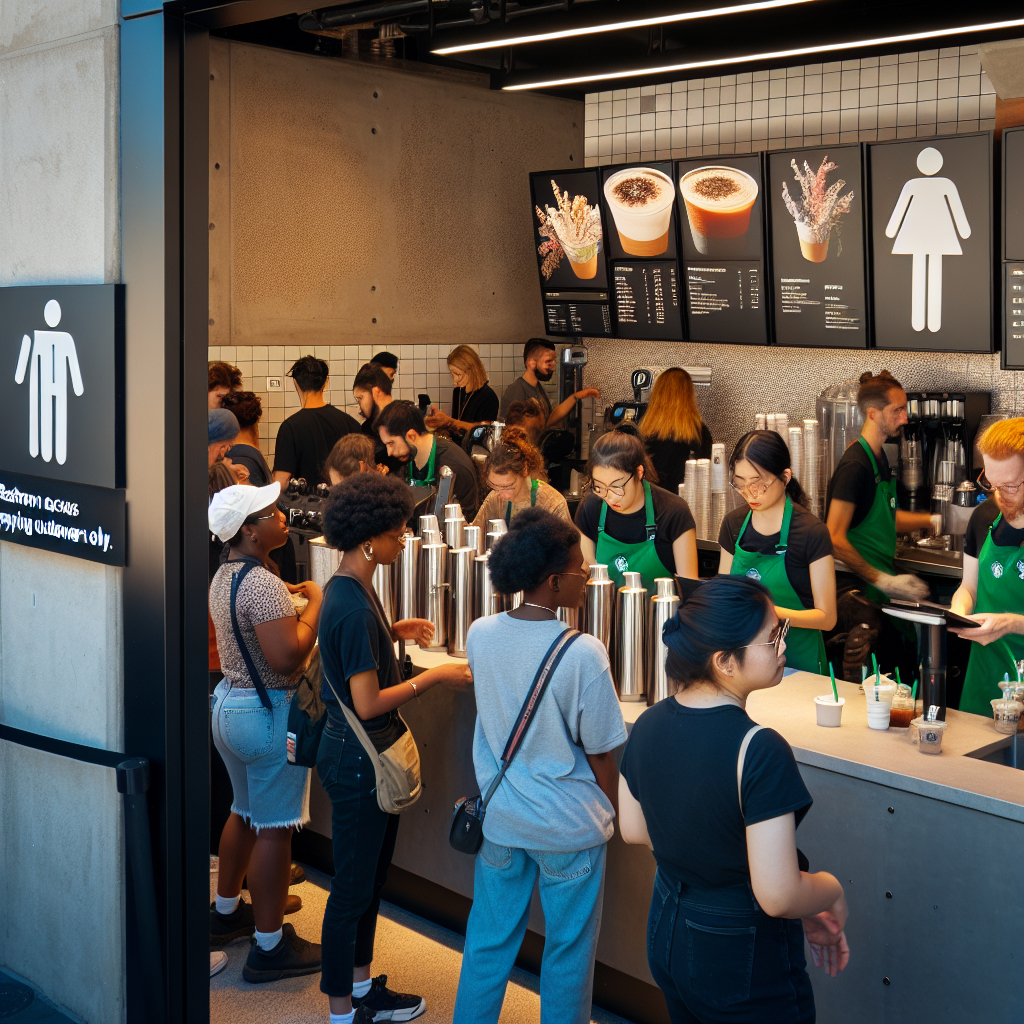
Starbucks Implements Purchase Requirement for Restroom Access

Starbucks Implements Purchase Requirement for Restroom Access
Introduction
Starbucks, the global coffeehouse chain, has introduced a new policy requiring customers to make a purchase before accessing its restrooms. This decision marks a shift from its previous open-door policy, which allowed anyone to use the facilities without buying anything.

Background
In 2018, Starbucks adopted an inclusive restroom policy following a public incident involving racial discrimination. The company aimed to create a welcoming environment for all, regardless of purchase status. However, this approach has faced challenges over time.


Reasons for the Change
- Operational Challenges: The open-door policy led to increased maintenance and operational costs due to higher restroom usage.
- Customer Experience: Some paying customers expressed dissatisfaction with the availability and cleanliness of restrooms.
- Safety Concerns: There were reports of safety issues and inappropriate behavior in restrooms, prompting a reevaluation of the policy.
Reactions and Implications
The new policy has sparked mixed reactions among customers and the public:


- Supporters: Some customers appreciate the change, believing it will improve restroom conditions and overall store experience.
- Critics: Others argue that the policy may disproportionately affect vulnerable populations who rely on public restrooms.
- Business Impact: Starbucks anticipates that the policy will streamline operations and enhance customer satisfaction, though it remains to be seen how it will affect foot traffic and sales.
Conclusion
Starbucks’ decision to require a purchase for restroom access reflects a balancing act between operational efficiency and customer service. While the policy aims to address practical challenges, it also raises questions about inclusivity and accessibility. As Starbucks navigates this transition, the company will need to monitor the impact on its brand image and customer relations.













