
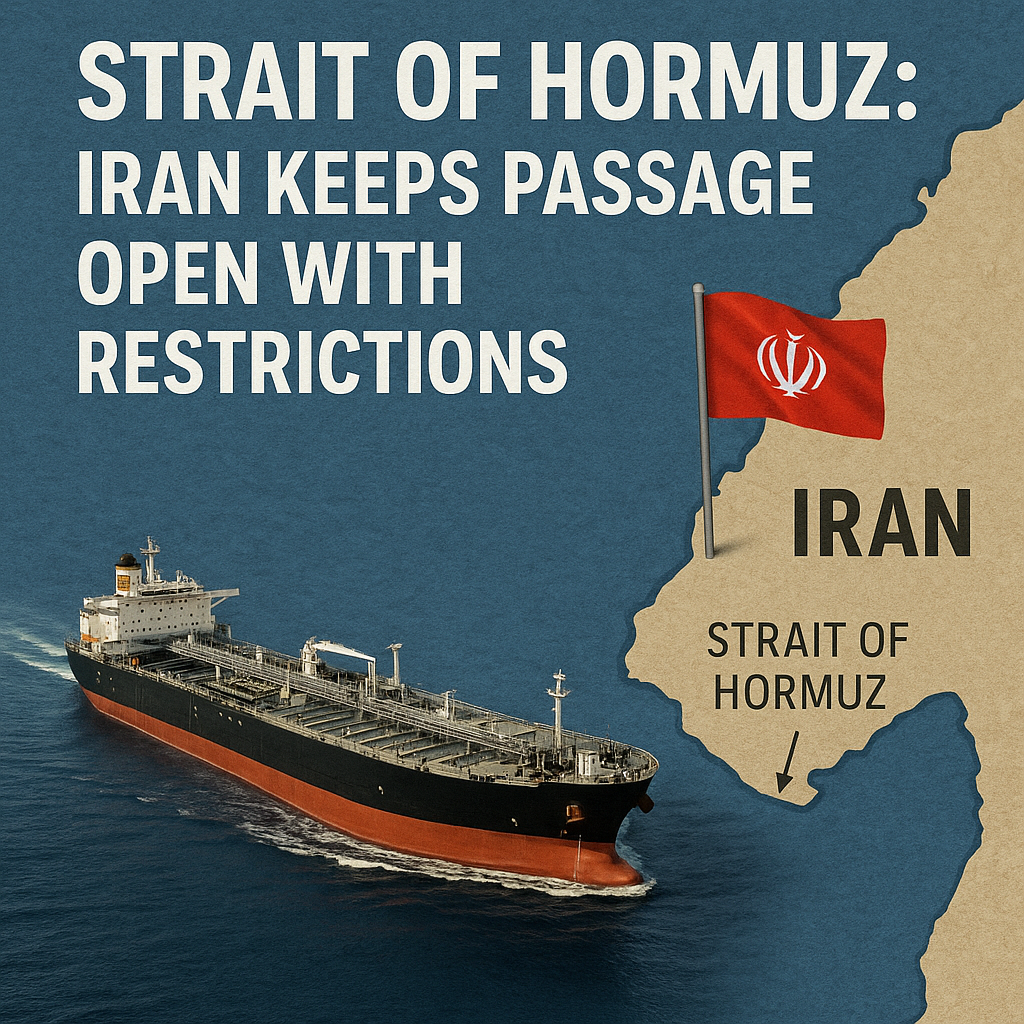
Strait of Hormuz: Iran Keeps Passage Open with Restrictions

Strait of Hormuz: Iran Keeps Passage Open with Restrictions
The Strait of Hormuz remains a vital waterway for global oil transportation, with Iran recently announcing its decision to keep the passage open under specific restrictions. The strategic significance of this narrow channel, through which approximately one-fifth of the world’s oil supply flows, has continuously placed it at the center of geopolitical tensions, as multiple stakeholders vie for influence in the region.

Iran’s Stance on Maritime Passage
In recent statements, Iranian officials emphasized their commitment to maintaining open shipping lanes while imposing certain regulations. This approach aligns with Tehran’s longstanding narrative of safeguarding national interests in an environment frequently marked by external pressures and sanctions. For instance, Iranian military spokespersons have highlighted that any maritime activity must comply with local laws, which they argue are designed to ensure the safety and security of all vessels navigating these waters.


However, the restrictions have raised eyebrows among international observers. Critics argue that Iran’s notion of compliance often translates into a mechanism for asserting control over the strategic waterway. This duality reflects Iran’s struggle to balance its sovereign rights with the international community’s demands for free navigation.


Diverse Reactions: Global Perspectives on Restrictions
Responses to Iran’s maritime policies have varied widely. On one hand, some nations are wary of Tehran’s intentions, fearing that restrictions could serve as a pretext for military maneuvering. The U.S. has consistently maintained a naval presence in the region to ensure unhindered passage. Washington’s commitment to freedom of navigation is underscored by its recent statements reiterating the importance of protecting international shipping lanes from any potential disruption by Iranian forces.
Conversely, other countries have adopted a more conciliatory approach, advocating for diplomatic channels to resolve tensions. Nations like Oman have historically played the role of mediators, promoting dialogue between Iran and Western powers. Their view is that cooperation in securing maritime routes can foster stability, benefiting regional economies and trade.
The divide illustrates a complex geopolitical landscape in which stakeholders must navigate competing interests. For instance, shipping companies and energy firms may see restrictions as a potential roadblock to business, while other nations could potentially view Iran’s stance as a necessary component of ensuring maritime security.
The Broader Implications for Global Trade
Iran’s restrictions on the Strait of Hormuz are not just a national issue; they resonate globally. The passage is critical, not only for the oil trade but also for the broader geopolitical balance. Increased tension could lead to spikes in oil prices, affecting economies far beyond the Persian Gulf. With fluctuating prices often mirroring concerns over maritime security, energy markets are keeping a close watch on developments.
Moreover, further restrictions could prompt a reevaluation of shipping routes and strategies among oil-importing nations. For instance, some analysts suggest that countries may invest in alternative routes or contingency plans, which could reshape trade dynamics in the long term. This potential shift raises questions about the sustainability of current energy dependencies and the adaptability of global markets.
Conclusion: Navigating Complexity with Caution
As the Strait of Hormuz continues commanding attention, the interplay between Iran’s restrictions and international responses exemplifies the complexities inherent in maritime geopolitics. While Iran maintains its stance of openness coupled with regulations, the reactions of world powers and regional allies will undoubtedly affect future developments.
The situation is fluid, with no clear consensus emerging about the ultimate outcome. Ongoing surveillance and dialogue seem essential if a stable maritime environment is to prevail. Stakeholders must proceed with caution, balancing their interests against the larger necessity for safe and free passage in one of the world’s most crucial transit points. Through dialogue and cooperation, it is possible to forge a path that upholds both national interests and collective security in the waters of the Strait of Hormuz.















