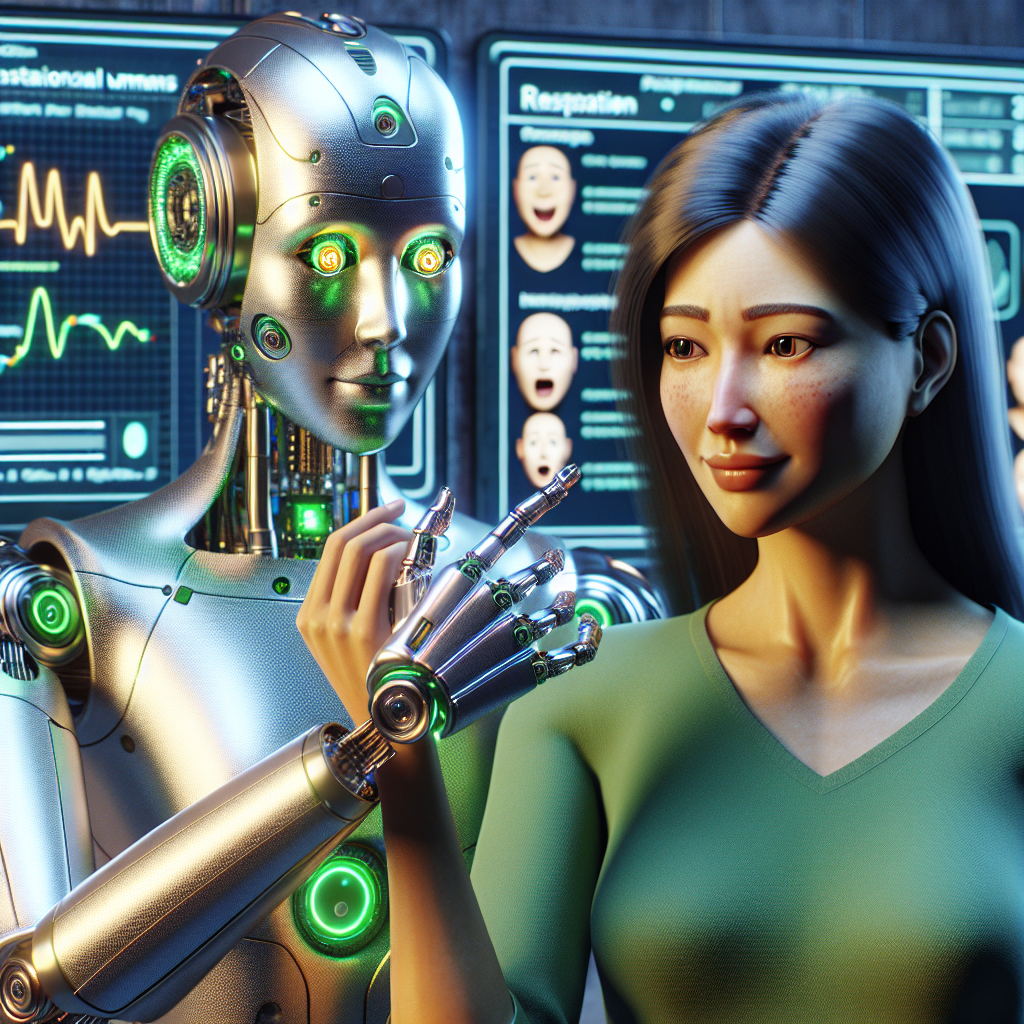
Study Suggests Robots Could Detect Human Emotions Through Skin Contact

Study Suggests Robots Could Detect Human Emotions Through Skin Contact
Introduction
Recent research has unveiled a groundbreaking development in robotics, suggesting that robots may soon be able to detect human emotions through skin contact. This advancement could revolutionize human-robot interactions, offering new possibilities in various fields such as healthcare, customer service, and personal assistance.

Key Findings
- Emotion Detection: The study indicates that robots equipped with specialized sensors can interpret emotional cues from human skin, such as temperature changes and sweat levels.
- Technological Integration: These sensors can be integrated into robotic systems, allowing them to respond to human emotions in real-time.
- Potential Applications: The technology could enhance the effectiveness of robots in therapeutic settings, providing emotional support and improving patient outcomes.
Implications for Human-Robot Interaction
The ability for robots to detect emotions through touch could lead to more empathetic and responsive machines. This development holds promise for:


- Healthcare: Robots could assist in monitoring patients’ emotional states, offering timely interventions and support.
- Customer Service: Emotionally aware robots could improve customer satisfaction by adapting their responses based on the emotional state of the user.
- Personal Assistance: Robots could become more intuitive companions, enhancing their ability to assist with daily tasks while being sensitive to the user’s emotional needs.
Challenges and Considerations
While the potential benefits are significant, there are challenges to consider:


- Privacy Concerns: The collection and interpretation of emotional data raise questions about privacy and data security.
- Ethical Implications: The deployment of emotion-detecting robots must be carefully managed to ensure ethical use and prevent misuse.
- Technical Limitations: Further research is needed to refine the technology and ensure its accuracy and reliability in diverse settings.
Conclusion
The study’s findings suggest a promising future for robots capable of detecting human emotions through skin contact. This innovation could transform various industries by creating more empathetic and responsive machines. However, it is crucial to address the associated challenges to ensure the ethical and effective integration of this technology into society.