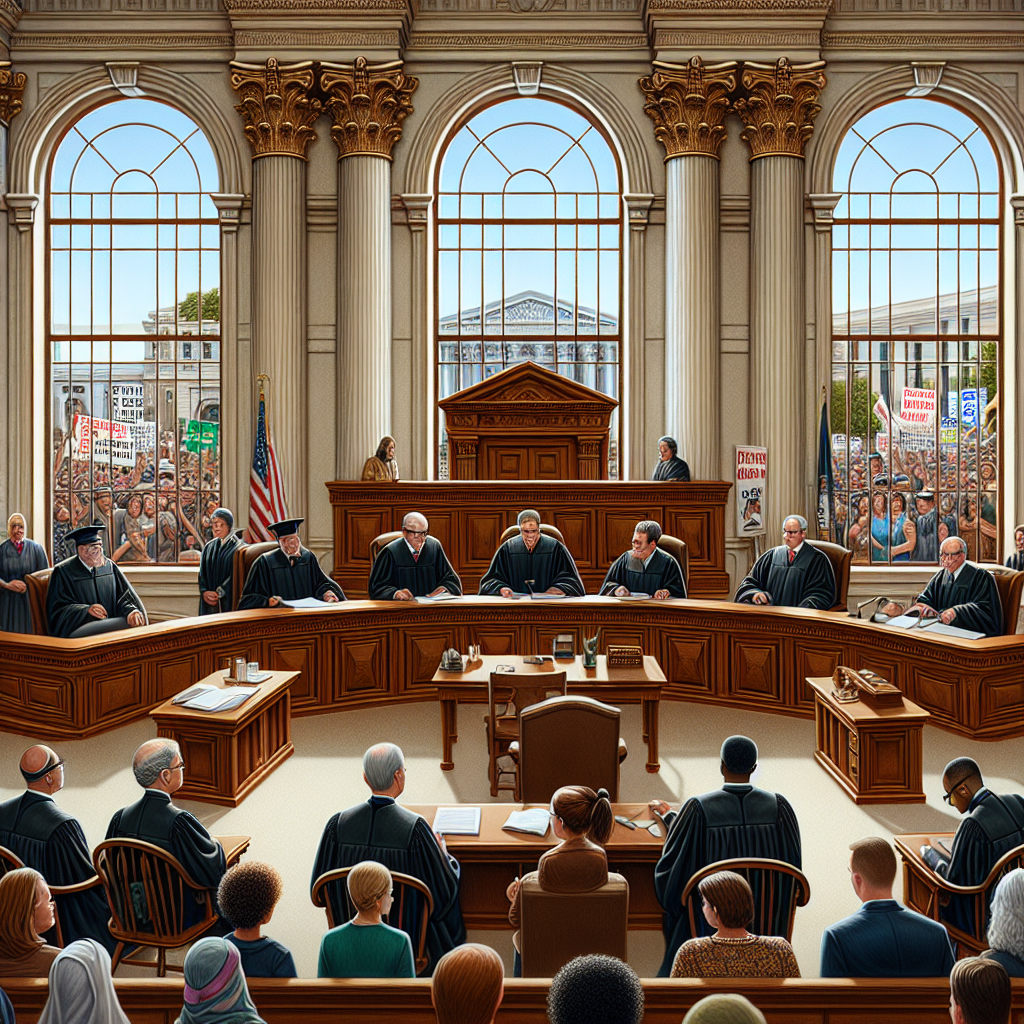
Supreme Court to weigh approval for 1st publicly funded religious charter school

Supreme Court to Weigh Approval for First Publicly Funded Religious Charter School
Introduction
The U.S. Supreme Court is set to deliberate on a landmark case concerning the approval of the nation’s first publicly funded religious charter school. This decision could have significant implications for the intersection of education, religion, and public funding.

Key Issues at Stake
- Separation of Church and State: The case raises questions about the constitutional principle of separating church and state, particularly in the context of public education funding.
- Precedent Setting: A ruling in favor of the religious charter school could set a precedent for future cases involving religious institutions seeking public funds.
- Impact on Public Education: The decision could influence the landscape of public education, potentially leading to more religious schools seeking public funding.
Arguments For and Against
Proponents argue that allowing public funding for religious charter schools promotes educational diversity and parental choice. They contend that it aligns with recent Supreme Court decisions that have favored religious freedoms.


Opponents, however, caution that such a move could blur the lines between church and state, leading to potential discrimination and the diversion of funds from traditional public schools.


Potential Outcomes
- Approval: If approved, the decision could pave the way for more religious charter schools to receive public funding.
- Rejection: A rejection could reinforce the current boundaries between public funding and religious education.
- Compromise: The court might seek a middle ground, allowing some form of funding with specific restrictions.
Conclusion
The Supreme Court’s decision on this case will be pivotal in shaping the future of public funding for religious education in the United States. It will address fundamental questions about the balance between religious freedom and the separation of church and state, with potential long-term effects on the educational landscape.