
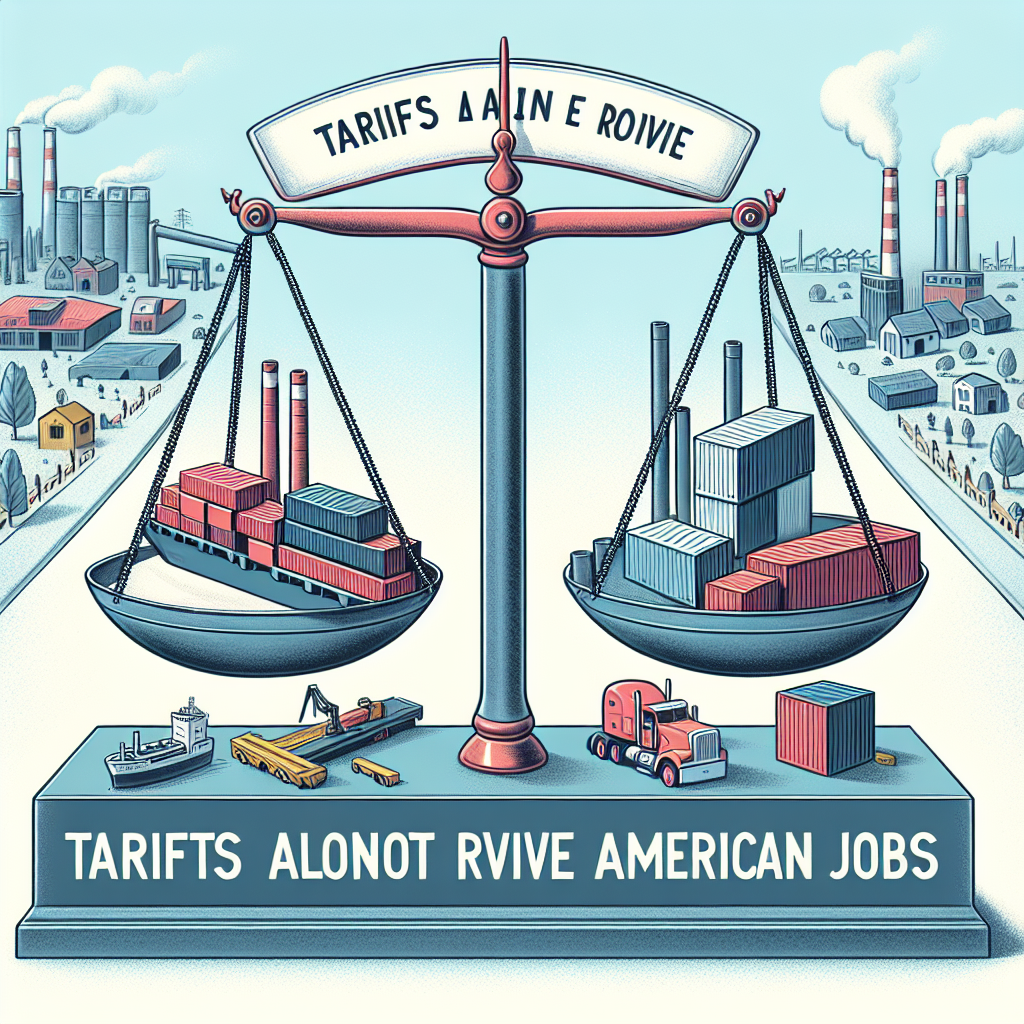
Tariffs Alone Won’t Revive American Jobs

Tariffs Alone Won’t Revive American Jobs
Introduction
The notion that imposing tariffs can single-handedly rejuvenate American manufacturing jobs is a common misconception. While tariffs are a tool in the economic policy arsenal, they are not a panacea for the complex challenges facing the U.S. job market.

The Limitations of Tariffs
Tariffs, essentially taxes on imported goods, are often seen as a way to protect domestic industries. However, their effectiveness in reviving jobs is limited due to several factors:


- Increased Costs: Tariffs can lead to higher prices for consumers and businesses, as companies pass on the increased costs of imported goods.
- Retaliation: Other countries may impose their own tariffs in response, affecting U.S. exports and potentially harming American industries.
- Supply Chain Disruptions: Many industries rely on global supply chains, and tariffs can disrupt these networks, leading to inefficiencies and job losses.
Beyond Tariffs: A Multifaceted Approach
Reviving American jobs requires a comprehensive strategy that goes beyond tariffs. Key components of this approach include:


- Investment in Education and Training: Equipping the workforce with skills relevant to modern industries is crucial for job creation.
- Innovation and Technology: Encouraging research and development can lead to new industries and job opportunities.
- Infrastructure Development: Investing in infrastructure can create jobs and improve the efficiency of the economy.
- Trade Agreements: Crafting fair trade agreements can open new markets for American products and services.
Conclusion
While tariffs can play a role in protecting certain industries, they are not a standalone solution for reviving American jobs. A holistic approach that includes education, innovation, infrastructure, and strategic trade policies is essential for sustainable job growth and economic prosperity.















