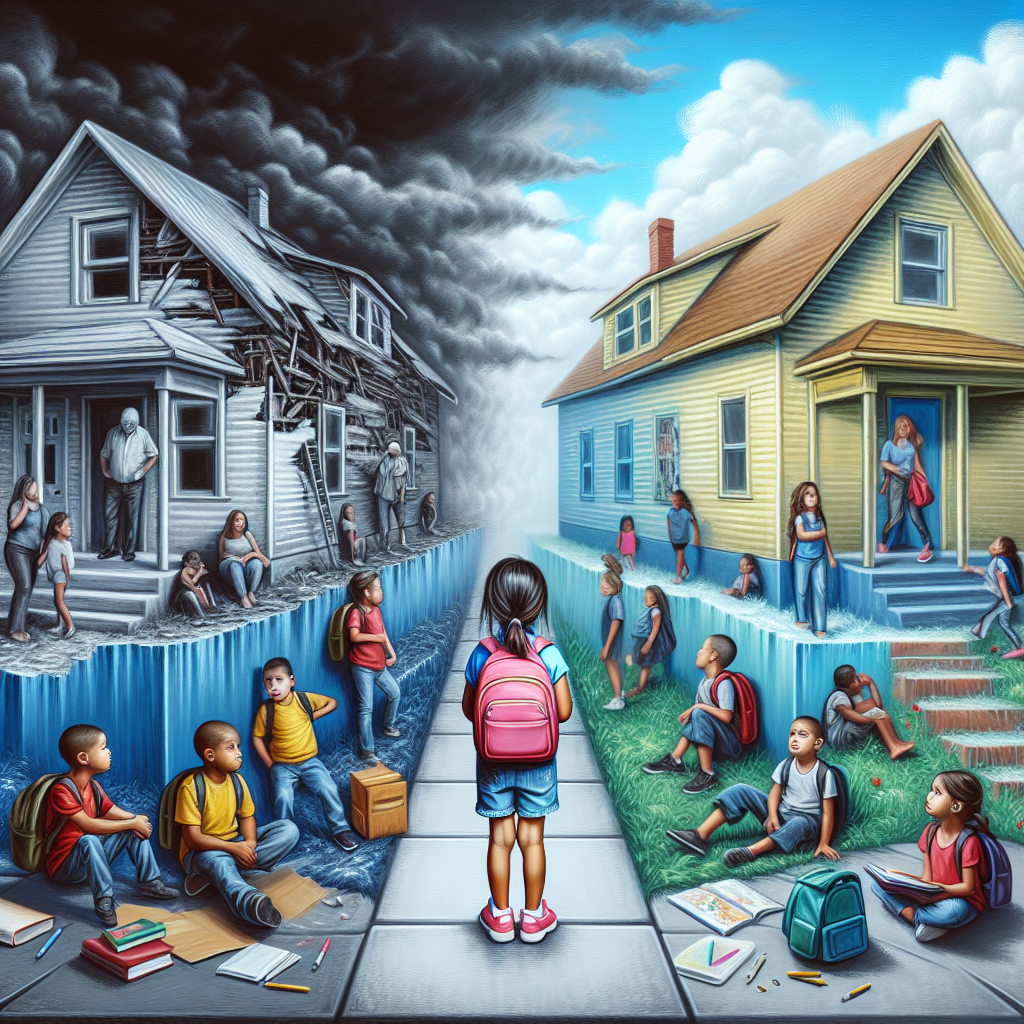
The Double Displacement: How Evictions Impact Children’s Homes and Education

The Double Displacement: How Evictions Impact Children’s Homes and Education
Introduction
Evictions are a growing concern, affecting not just the immediate housing stability of families but also the educational outcomes of children. This summary explores the dual impact of evictions on children’s home life and their schooling, highlighting the broader implications for society.

Impact on Children’s Homes
Evictions disrupt the foundational stability of a child’s home environment, leading to several adverse effects:


- Loss of Stability: Frequent moves can lead to a sense of insecurity and anxiety among children.
- Emotional Stress: The trauma of losing a home can result in emotional and psychological distress.
- Family Strain: Financial and logistical pressures can strain family relationships, affecting children’s well-being.
Educational Consequences
The instability caused by evictions extends into the educational sphere, with significant repercussions:


- Interrupted Learning: Frequent school changes disrupt learning continuity and academic progress.
- Attendance Issues: Unstable housing can lead to increased absenteeism and tardiness.
- Social Challenges: New school environments can pose social integration challenges, affecting peer relationships.
Broader Implications
The effects of evictions on children have wider societal implications:
- Long-term Academic Impact: Disrupted education can lead to lower academic achievement and future opportunities.
- Economic Consequences: Poor educational outcomes can perpetuate cycles of poverty and economic instability.
- Community Strain: High eviction rates can destabilize communities, affecting social cohesion and support networks.
Conclusion
Evictions have a profound and multifaceted impact on children, affecting both their home life and educational experiences. Addressing this issue requires a comprehensive approach that considers housing stability as integral to children’s development and future success. By understanding and mitigating these impacts, society can work towards more stable and supportive environments for all children.