
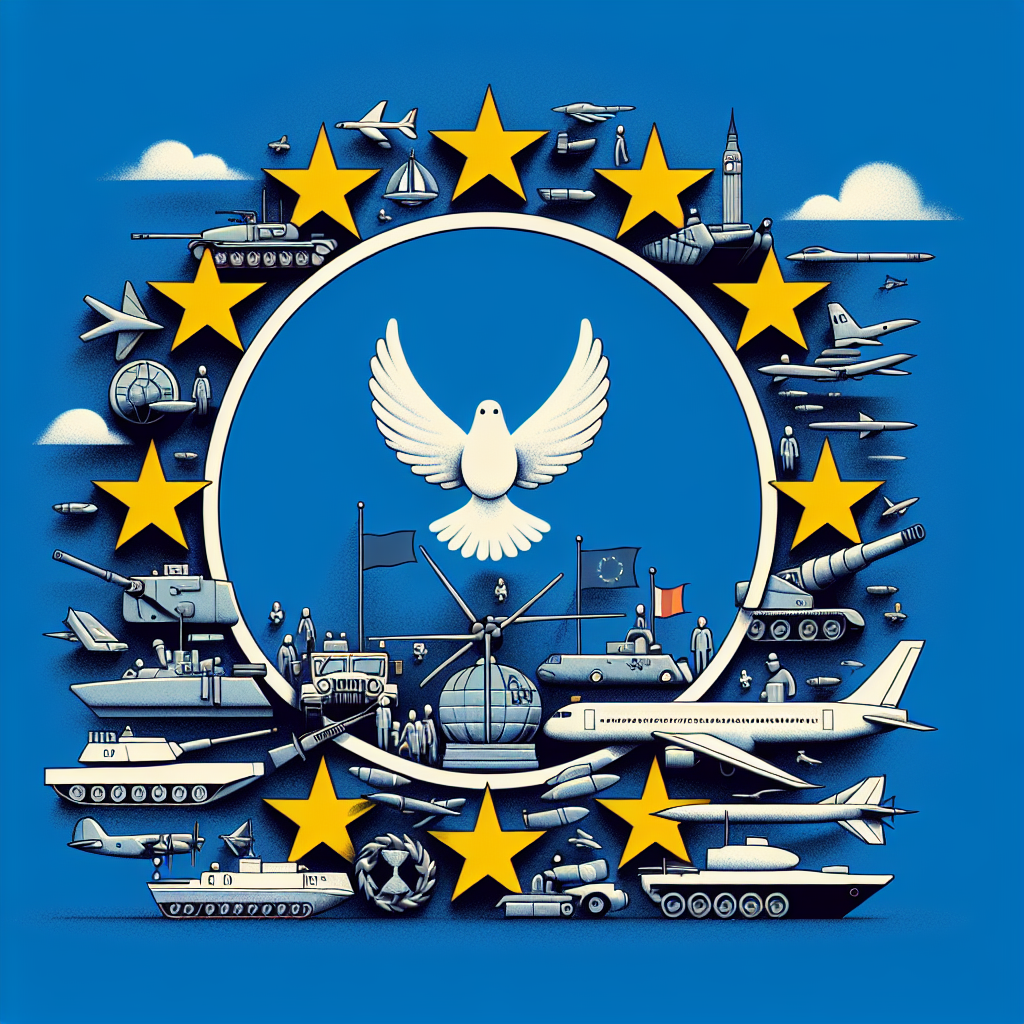
The EU’s Strategy for Peace Involves Increased Defense Spending

The EU’s Strategy for Peace Involves Increased Defense Spending
Introduction
The European Union (EU) is adopting a new strategy to ensure peace and stability within its borders and beyond. This approach involves a significant increase in defense spending, marking a shift in the EU’s traditional focus on diplomacy and economic measures.

Key Components of the Strategy
- Enhanced Military Capabilities: The EU plans to bolster its military capabilities to deter potential threats and respond more effectively to crises.
- Collaborative Defense Initiatives: Member states are encouraged to collaborate on defense projects, sharing resources and expertise to maximize efficiency.
- Investment in Technology: A focus on cutting-edge technology, including cyber defense and artificial intelligence, is central to the strategy.
- Strengthening Partnerships: The EU aims to strengthen partnerships with NATO and other international allies to ensure a coordinated approach to global security challenges.
Rationale Behind Increased Spending
The decision to increase defense spending is driven by several factors:


- Geopolitical Tensions: Rising tensions in regions such as Eastern Europe and the Middle East necessitate a more robust defense posture.
- Emerging Threats: The EU faces new threats, including cyber attacks and hybrid warfare, which require advanced defense mechanisms.
- Autonomy in Defense: By enhancing its defense capabilities, the EU seeks greater autonomy in security matters, reducing reliance on external powers.
Potential Challenges
While the strategy presents numerous benefits, it also poses challenges:


- Budgetary Constraints: Increased defense spending may strain national budgets, requiring careful financial planning and prioritization.
- Political Consensus: Achieving consensus among member states on defense priorities and spending can be complex.
- Balancing Diplomacy and Defense: The EU must balance its traditional diplomatic approach with its new defense-oriented strategy.
Conclusion
The EU’s strategy of increasing defense spending represents a significant shift in its approach to maintaining peace and security. By enhancing military capabilities, investing in technology, and strengthening partnerships, the EU aims to address emerging threats and ensure stability. However, the strategy requires careful implementation to overcome budgetary and political challenges. Ultimately, this approach seeks to provide the EU with greater autonomy and resilience in the face of global security challenges.












