
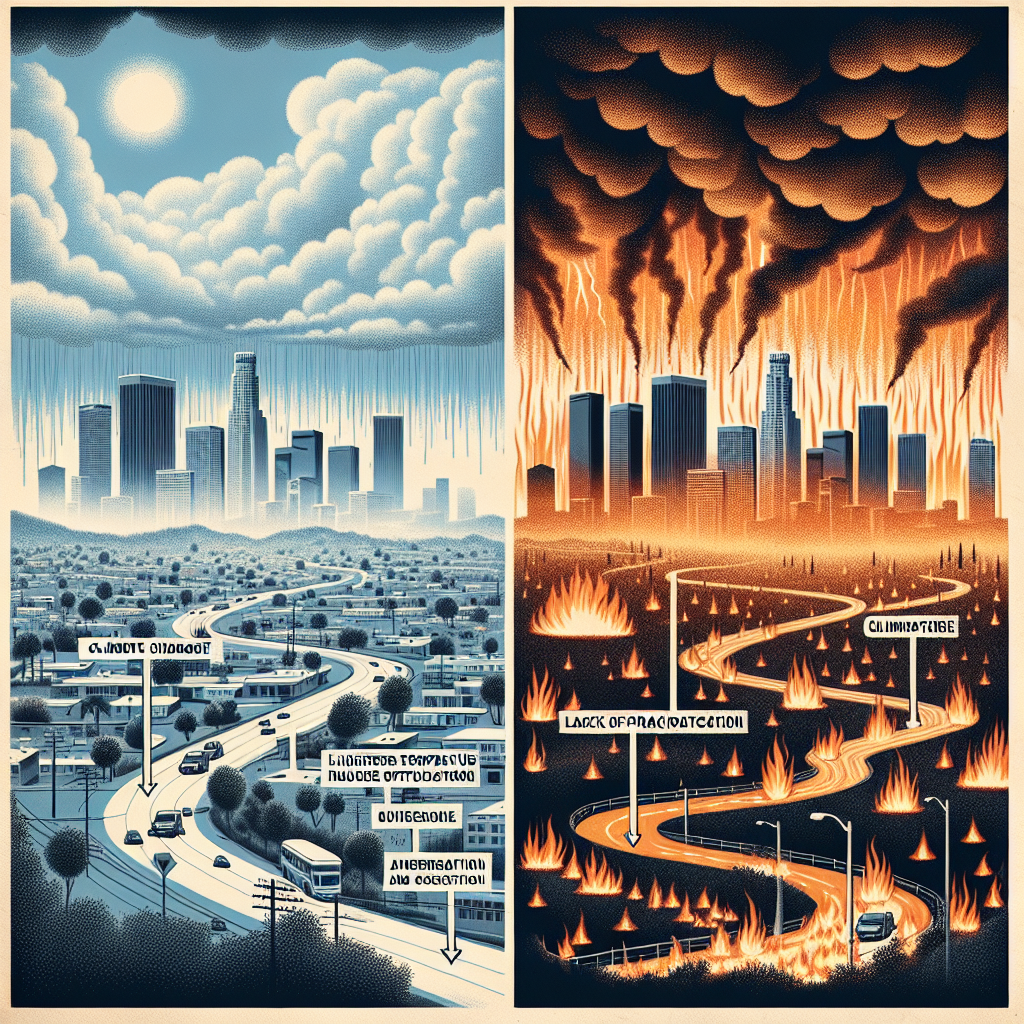
The Impact of Climate Change on LA Wildfires

The Impact of Climate Change on LA Wildfires
Introduction
Los Angeles, a city known for its sunny weather and vibrant culture, is increasingly becoming synonymous with devastating wildfires. As climate change intensifies, the frequency and severity of these wildfires are escalating, posing significant challenges to the region.

Key Drivers of Wildfire Intensity
Several factors contribute to the growing intensity of wildfires in Los Angeles, driven largely by climate change:


- Rising Temperatures: Higher temperatures lead to drier conditions, creating an ideal environment for wildfires to ignite and spread.
- Extended Droughts: Prolonged periods of drought deplete water resources, leaving vegetation dry and highly flammable.
- Increased Wind Activity: Stronger and more frequent Santa Ana winds exacerbate the spread of fires, making them harder to control.
Environmental and Economic Consequences
The impact of wildfires extends beyond immediate destruction, affecting both the environment and the economy:


- Loss of Biodiversity: Wildfires destroy habitats, threatening local wildlife and plant species.
- Air Quality Deterioration: Smoke and pollutants from fires degrade air quality, posing health risks to residents.
- Economic Strain: The cost of firefighting efforts, property damage, and recovery efforts places a significant financial burden on the region.
Mitigation and Adaptation Strategies
Efforts to combat the impact of climate change on wildfires involve both mitigation and adaptation strategies:
- Improved Fire Management: Enhanced firefighting techniques and better resource allocation are crucial in managing wildfires.
- Community Preparedness: Educating communities on fire safety and evacuation plans can reduce the risk to human life.
- Policy and Legislation: Implementing policies that address climate change and promote sustainable land management can help mitigate future risks.
Conclusion
The increasing frequency and intensity of wildfires in Los Angeles underscore the urgent need to address climate change. By understanding the key drivers and consequences, and implementing effective strategies, the region can better prepare for and mitigate the impact of these devastating events. The path forward requires a collaborative effort from policymakers, communities, and individuals to safeguard the environment and economy from the growing threat of wildfires.















