
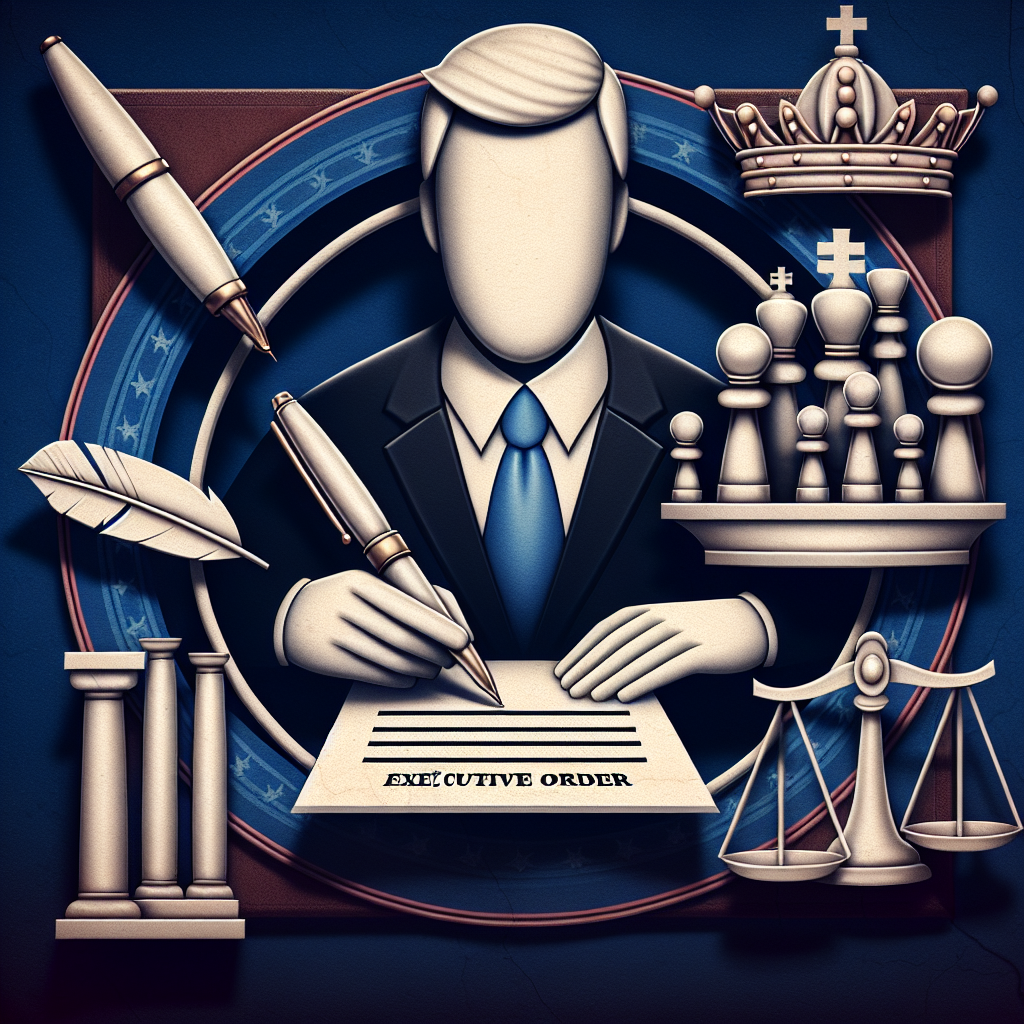
The Impact of Executive Orders on Presidential Authority

The Impact of Executive Orders on Presidential Authority
Understanding Executive Orders
Executive orders are directives issued by the President of the United States to manage operations within the federal government. They have the force of law and are used to direct government agencies and officials in their execution of congressionally established laws or policies.

Historical Context and Evolution
Throughout history, executive orders have been a tool for presidents to swiftly implement policy changes. Their use has evolved, reflecting the changing dynamics of presidential power and governance.


- First used by George Washington in 1789.
- Franklin D. Roosevelt holds the record for the most executive orders issued.
- Modern presidents use them to address urgent issues and bypass legislative gridlock.
Advantages of Executive Orders
Executive orders offer several benefits to a sitting president, allowing for quick and decisive action on pressing matters.


- Enable rapid response to national emergencies.
- Facilitate implementation of policy without waiting for congressional approval.
- Allow presidents to leave a lasting legacy through impactful policy changes.
Challenges and Controversies
Despite their advantages, executive orders are often controversial and can lead to significant challenges.
- Potential overreach of presidential power, leading to legal challenges.
- Reversibility by subsequent administrations, leading to policy instability.
- Criticism for bypassing the legislative process and undermining democratic principles.
Impact on Presidential Authority
Executive orders significantly impact presidential authority, shaping the scope and limits of executive power.
- Expand the president’s ability to influence domestic and foreign policy.
- Highlight the balance of power between the executive branch and other government branches.
- Serve as a measure of a president’s leadership style and priorities.
Conclusion
Executive orders are a powerful tool in the presidential arsenal, offering both opportunities and challenges. They enhance presidential authority by enabling swift policy implementation but also raise questions about the balance of power and democratic governance. Understanding their impact is crucial for evaluating presidential leadership and the evolving nature of executive power.















