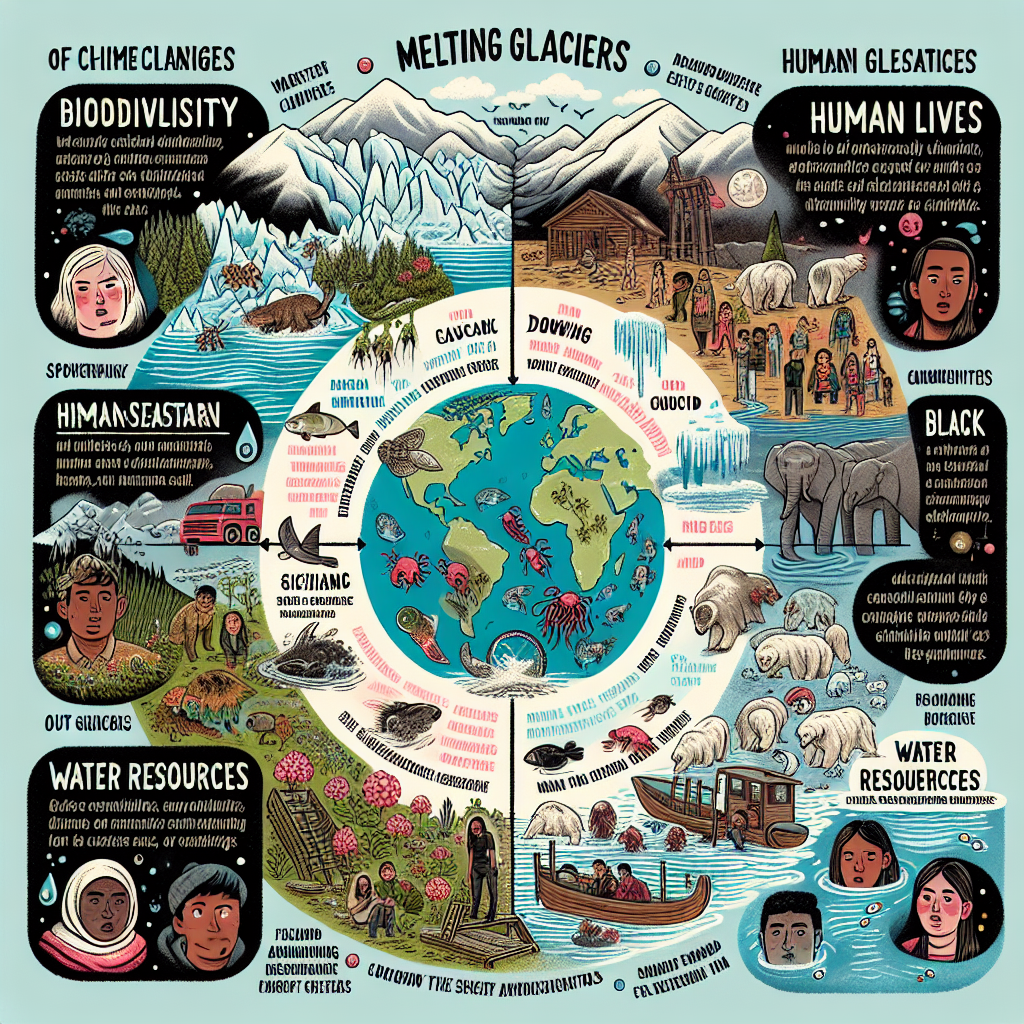
The Impact of Melting Glaciers on Biodiversity, Human Lives, and Water Resources

The Impact of Melting Glaciers on Biodiversity, Human Lives, and Water Resources
Introduction
Melting glaciers are a pressing environmental issue with far-reaching consequences. This phenomenon affects biodiversity, human communities, and water resources, posing significant challenges and requiring urgent attention.

Threats to Biodiversity
Glaciers are crucial ecosystems that support unique flora and fauna. As they melt, these ecosystems face severe disruptions.


- Loss of habitat for cold-adapted species.
- Altered food chains and ecosystem dynamics.
- Increased risk of extinction for specialized species.
Impacts on Human Lives
Human communities, particularly those in mountainous and polar regions, are directly affected by the retreat of glaciers.


- Increased risk of natural disasters such as floods and landslides.
- Displacement of communities due to changing landscapes.
- Loss of cultural heritage tied to glacial landscapes.
Challenges for Water Resources
Glaciers are vital freshwater reserves, and their melting poses significant challenges for water management.
- Reduced freshwater availability for agriculture and consumption.
- Altered river flows impacting hydroelectric power generation.
- Increased competition for dwindling water resources.
Conclusion
The melting of glaciers is a multifaceted issue with profound implications for biodiversity, human societies, and water resources. Addressing this challenge requires global cooperation and innovative solutions to mitigate impacts and adapt to changing conditions. Immediate action is essential to preserve these critical ecosystems and ensure sustainable futures for affected communities.