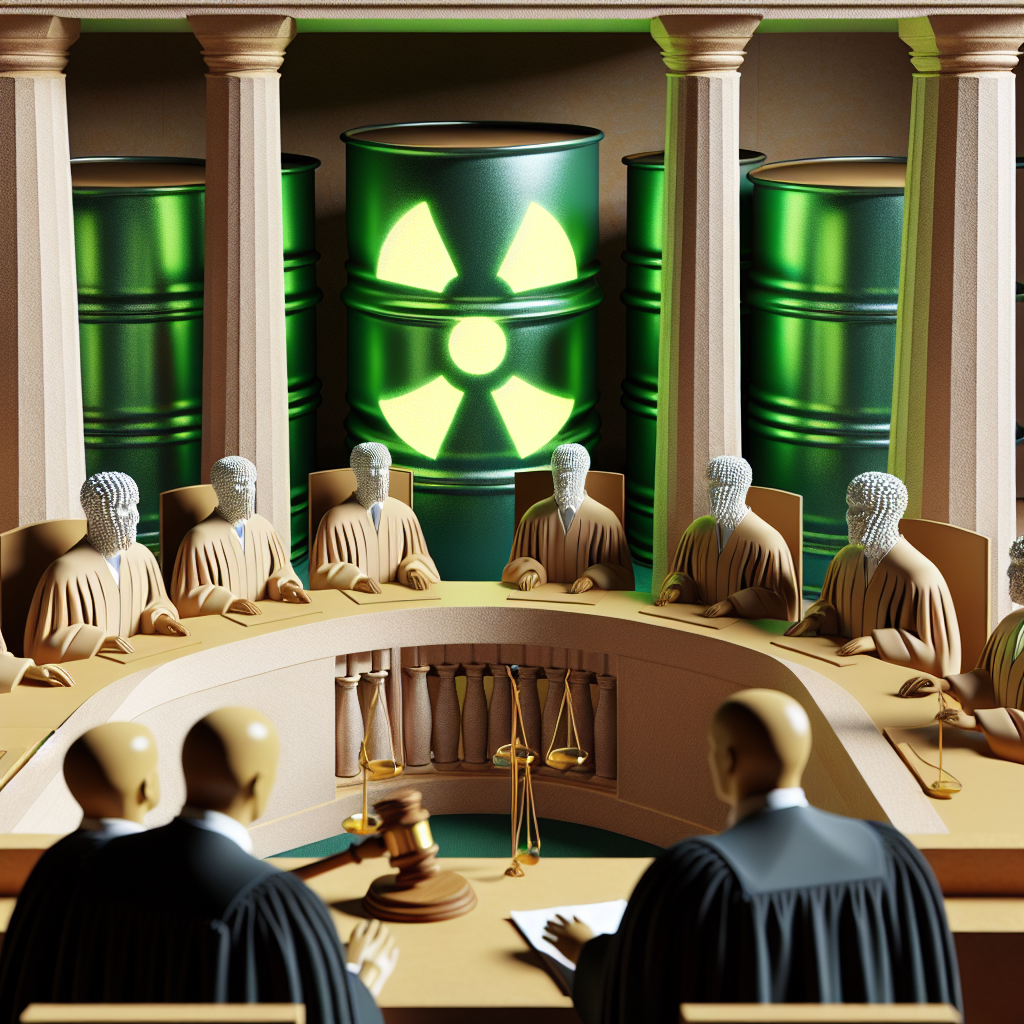
The Supreme Court Faces the Challenge of Managing Nuclear Waste Accumulation

The Supreme Court Faces the Challenge of Managing Nuclear Waste Accumulation
Introduction
The Supreme Court is currently grappling with the complex issue of nuclear waste management, a critical challenge that has significant environmental and legal implications. This issue has been a longstanding concern, with various stakeholders seeking a sustainable and legally sound solution.

Background
Nuclear waste accumulation has been a persistent problem due to the lack of permanent disposal solutions. The current temporary storage methods are not sustainable, prompting legal challenges and public concern.


Key Issues at Stake
- Environmental Impact: The accumulation of nuclear waste poses significant risks to ecosystems and public health.
- Legal Challenges: Various lawsuits have been filed, questioning the adequacy of current waste management practices.
- Policy and Regulation: The need for updated policies and regulations to address the growing waste problem is urgent.
Supreme Court’s Role
The Supreme Court’s involvement is crucial in determining the legal framework for managing nuclear waste. The court’s decisions could set precedents that influence future policies and regulations.


Potential Solutions
- Permanent Disposal Sites: Identifying and developing permanent disposal sites is a priority.
- Technological Innovations: Investing in new technologies to reduce waste and improve storage safety.
- International Collaboration: Working with other countries to develop global standards and solutions.
Conclusion
The Supreme Court’s handling of the nuclear waste accumulation issue is pivotal in shaping the future of environmental policy and public safety. As the court deliberates, the need for innovative solutions and robust legal frameworks becomes increasingly apparent. The outcome of this challenge will have lasting implications for both the environment and the legal landscape.