
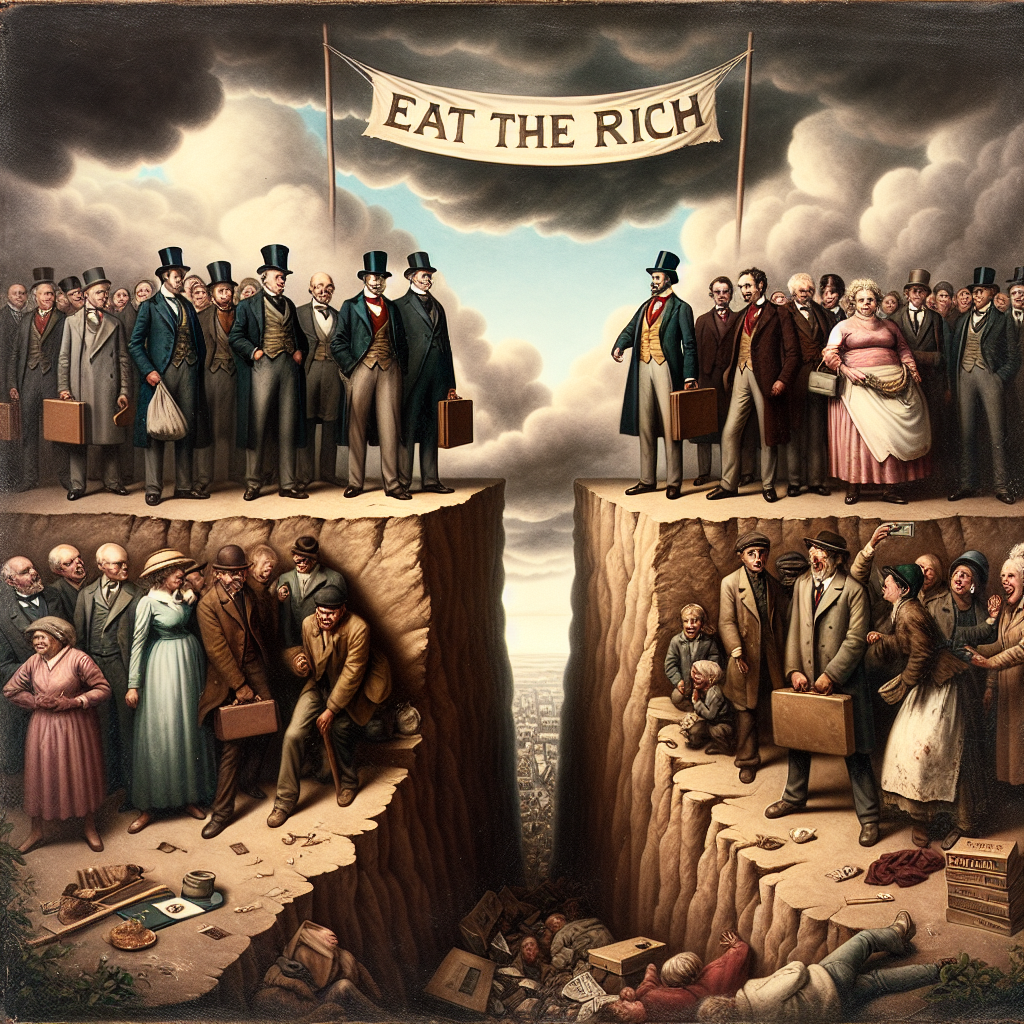
“The Widening Gap: Class Divide and the ‘Eat the Rich’ Movement”

The Widening Gap: Class Divide and the ‘Eat the Rich’ Movement
Introduction
The growing disparity between the wealthy elite and the rest of society has sparked a movement known as “Eat the Rich.” This movement highlights the increasing frustration and anger towards economic inequality and the perceived indifference of the affluent class.

Understanding the Class Divide
The class divide is characterized by a significant gap in wealth and opportunities between the rich and the poor. Key factors contributing to this divide include:


- Stagnant wages for the middle and lower classes
- Rising costs of living and education
- Tax policies favoring the wealthy
- Concentration of wealth in the hands of a few
The Rise of the ‘Eat the Rich’ Movement
The “Eat the Rich” movement is a social and political response to the class divide. It is driven by:


- Public outrage over corporate greed and tax evasion
- High-profile cases of wealth flaunting amidst widespread poverty
- Social media campaigns amplifying calls for economic justice
- Grassroots activism demanding policy changes
Impact and Implications
The movement has significant implications for society and politics, including:
- Increased pressure on governments to implement wealth taxes
- Greater scrutiny of corporate practices and executive compensation
- Potential shifts in consumer behavior towards ethical consumption
- Heightened political discourse around income redistribution
Conclusion
The “Eat the Rich” movement underscores a critical societal issue: the widening class divide. As economic inequality continues to grow, the movement serves as a catalyst for change, urging policymakers and the public to address the root causes of this disparity. The future of this movement will likely shape discussions on wealth distribution and social justice in the years to come.















