
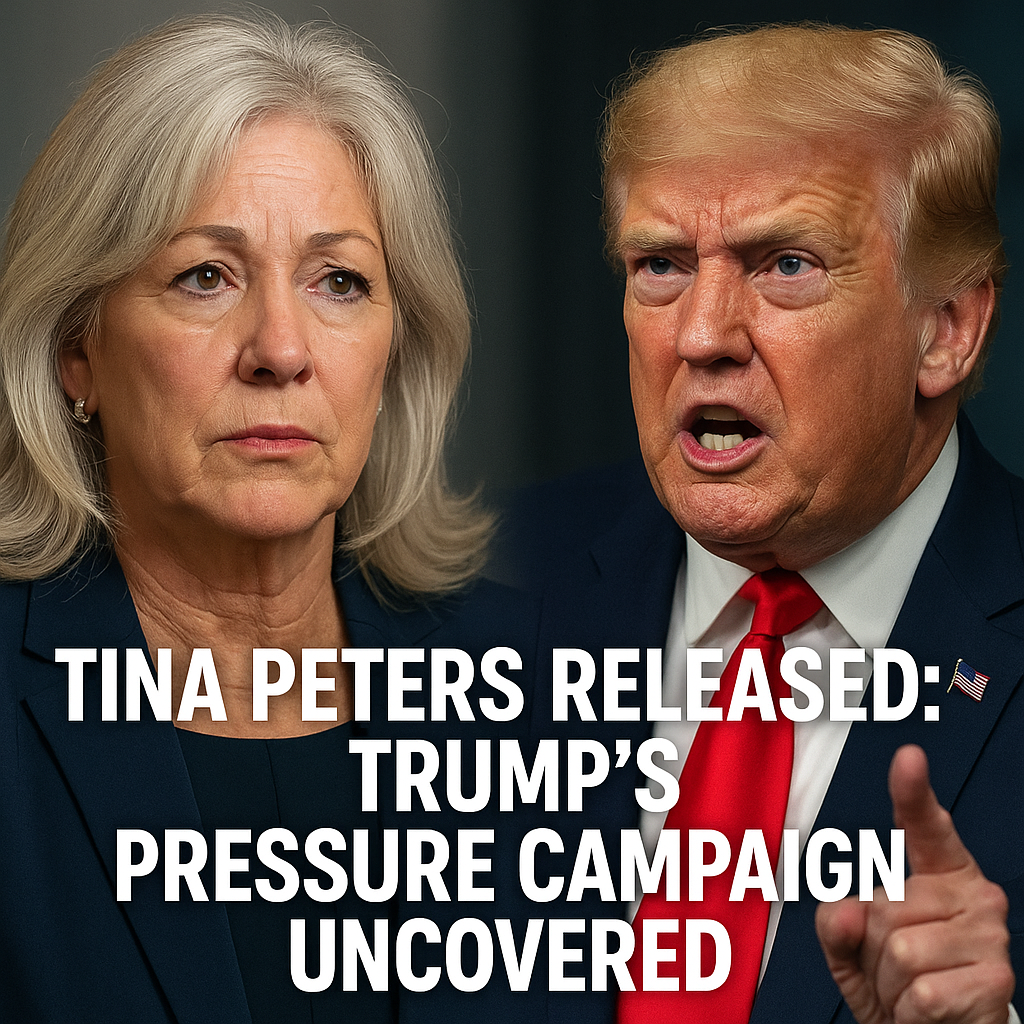
Tina Peters Released: Trump’s Pressure Campaign Uncovered

Tina Peters Released: Unpacking the Pressure Campaign
The release of Tina Peters, the former Mesa County election clerk, has drawn attention to the intricate web of pressure tactics employed during the tumultuous post-2020 election period. Her case highlights a significant moment in American politics, where the lines between election integrity and political maneuvering blur.

The Context of Peters’ Release
Shortly after her arrest in the summer of 2021, Peters became a focal point for those questioning the legitimacy of the 2020 election. Accused of facilitating a security breach in her county’s voting system, her actions were initially viewed through the lens of election fraud. However, the context has shifted, revealing a more nuanced story influenced by the expansive network of support from Trump’s associates.


Reports from various sources indicate that Peters was not merely acting on her own initiative. Al Jazeera describes how her public appearance in support of election conspiracy theories served to bolster Trump’s narrative, positioning her as a brave whistleblower fighting against perceived corruption. This portrayal has been met with criticism, as many see her actions as dangerously undermining public trust in the electoral process.


Similarly, RT noted that Peters’ release might signify a continued alignment with Trump’s efforts to contest the election outcomes. The former president, who has been vocal in his attempts to claim that widespread fraud affected his 2020 election chances, appears to have supported Peters’ claims as part of a larger strategy.
The Pressure Campaign: Strategies and Implications
The pressure exerted on Peters, as revealed by various reports, raises questions about the methods used by Trump and his allies to influence election figures. Sources indicate that Peters received direct encouragement from Trump supporters, pushing her to contest the legitimacy of the election results in her jurisdiction. This campaign can be seen as an attempt to harness local political figures to validate broader baseless conspiracy theories about election fraud.
Experts have voiced concern about the implications of such a campaign. Engaging local officials like Peters not only spreads misinformation but also jeopardizes the integrity of future elections. This orchestrated effort to sway officials highlights a systematic approach to sow doubt in the electoral process. As one election expert observed, this kind of manipulation can cascade through local systems, eroding public confidence.
Conversely, some supporters argue that Peters was merely fulfilling her duty to her constituents by questioning processes she believed to be compromised. This perspective reinforces the notion of civic engagement, albeit through a controversial lens that some deem harmful to democratic integrity.
Reflections on Accountability and Future Directions
Peters’ release and the surrounding discourse reflect the ongoing tensions in the American political landscape. While some view her as a martyr for election integrity, others see her release as a troubling endorsement of unfounded claims. The differing perspectives on her case underline the polarization prevalent in today’s political environment.
Calls for accountability become louder as the implications of such pressure campaigns unfold. Observers are urging for a clearer understanding of how local officials can be influenced and what safeguards can be put in place to prevent future manipulation. The future integrity of elections may depend on addressing these vulnerabilities to uphold a democratic process free from undue influence.
As the fallout from Peters’ situation continues to evolve, the conversation remains pertinent: How do we navigate the delicate balance between questioning electoral processes and protecting the foundational principles of democracy? The need for comprehensive dialogue around election integrity is clear, as is the necessity for robust policies to protect the electoral system from distortion.
Conclusion
The saga of Tina Peters serves as a critical case study in understanding how political pressures can shape the narrative surrounding election integrity. With the release spotlighting broader tactics employed by Trump and his allies, the implications extend far beyond an individual case. The challenge ahead lies in reconciling civic engagement with the need for factual, trustworthy election processes, ensuring that the democratic process remains resilient against manipulation. As this story unfolds, it will be crucial to observe how both local and national leaders respond to the lessons presented by Tina Peters’ release and the broader context of election integrity in America.















