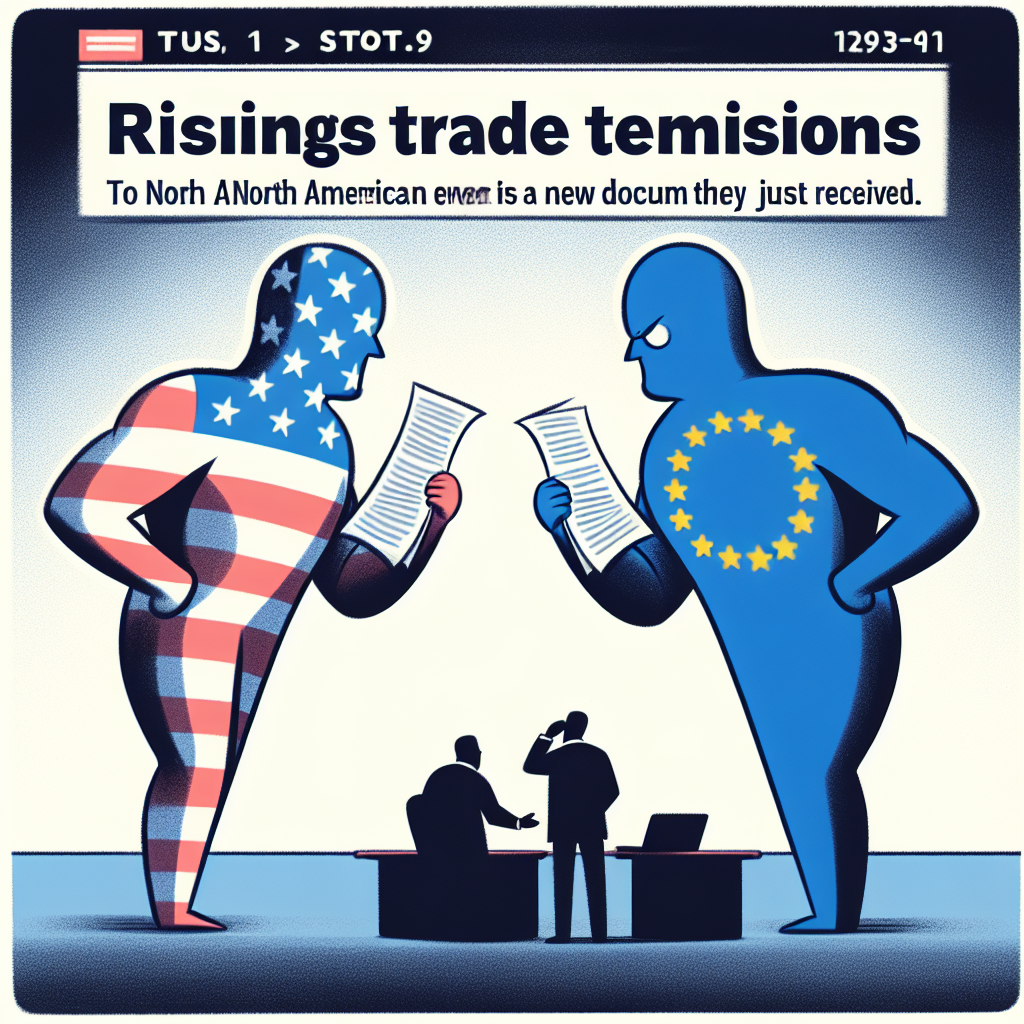
Trade Tensions Rise: Trump Justifies New Tariffs on Europe

Trade Tensions Rise: Trump Justifies New Tariffs on Europe
Introduction
In a move that has escalated global trade tensions, former U.S. President Donald Trump announced the imposition of new tariffs on European goods. This decision has sparked widespread debate and concern over its potential impact on international trade relations and economic stability.

Reasons Behind the Tariffs
Trump’s administration cited several reasons for the introduction of these tariffs, aiming to justify the decision to both domestic and international audiences.


- Trade Imbalance: The U.S. government highlighted a significant trade imbalance with Europe, arguing that the tariffs are necessary to level the playing field.
- Subsidies Dispute: The tariffs are also a response to what the U.S. perceives as unfair subsidies provided by European governments to their industries, particularly in the aerospace sector.
- National Security: The administration claimed that protecting American industries is crucial for national security, a common justification for trade barriers.
Impact on Global Trade
The introduction of these tariffs is expected to have far-reaching consequences on global trade dynamics.


- Economic Uncertainty: The tariffs have introduced a new layer of uncertainty in global markets, potentially affecting investment and economic growth.
- Retaliatory Measures: European nations are considering retaliatory tariffs, which could further strain trade relations and lead to a tit-for-tat escalation.
- Consumer Prices: The cost of European goods in the U.S. is likely to rise, impacting American consumers and businesses reliant on these imports.
Reactions from Key Stakeholders
The announcement has elicited varied reactions from different stakeholders, reflecting the complexity of the issue.
- European Union: EU officials have expressed disappointment and are exploring legal and diplomatic avenues to address the situation.
- U.S. Businesses: Many American companies have voiced concerns over the potential negative impact on their operations and profitability.
- Economists: Experts warn that prolonged trade tensions could hinder global economic recovery efforts, especially in the post-pandemic context.
Conclusion
The imposition of new tariffs on Europe by the Trump administration marks a significant development in international trade relations. While intended to address trade imbalances and protect national interests, the move risks escalating tensions and disrupting global economic stability. As stakeholders navigate this complex landscape, the long-term implications of these tariffs remain to be seen.