
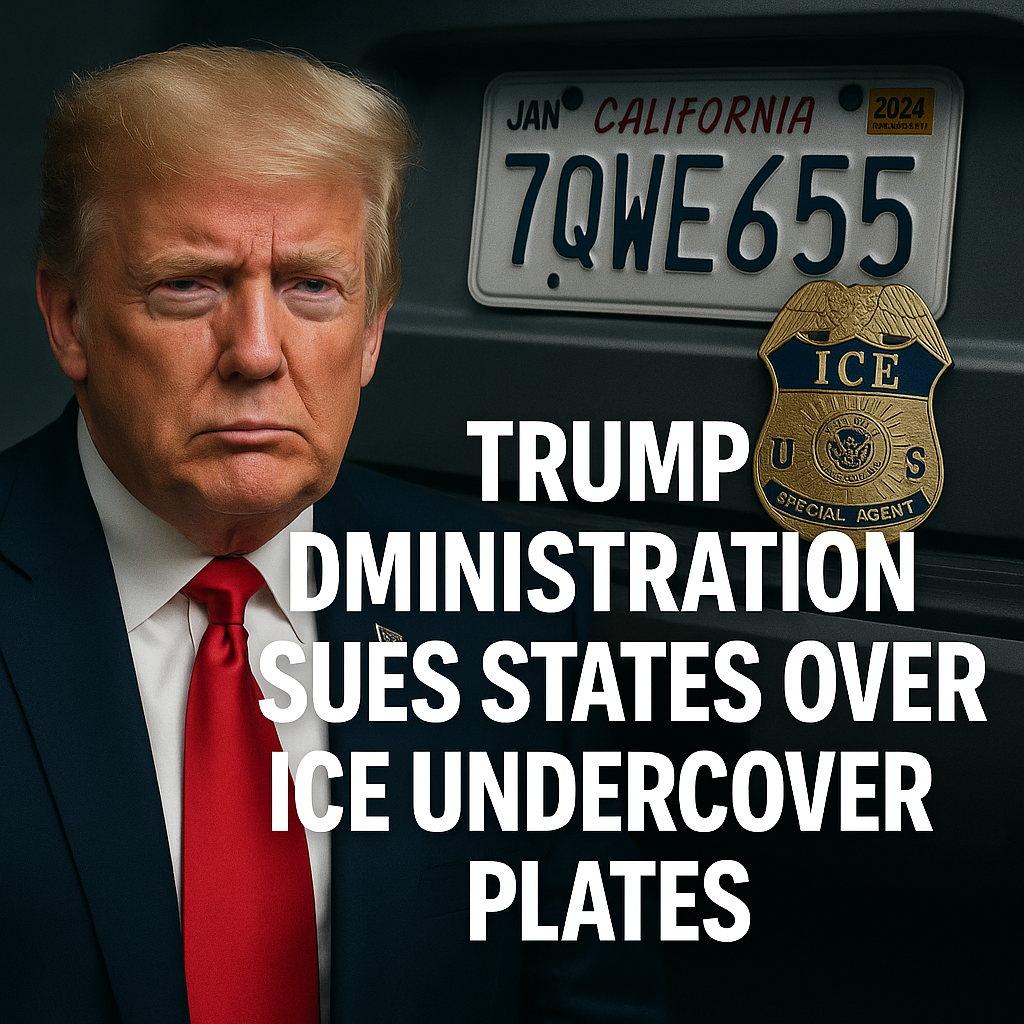
Trump Administration Sues States Over ICE Undercover Plates

The Trump administration has stepped into contentious legal territory with its recent lawsuit against states that have enacted regulations denying ICE (Immigration and Customs Enforcement) agents the ability to use undercover license plates in their operations. This move raises significant questions about the balance between state regulations and federal law enforcement practices, particularly in an era defined by heated political and social debates over immigration policies.

The Legal Landscape of Undercover Operations
Central to the lawsuit is the argument that state laws impeding ICE’s capabilities hinder federal law enforcement from effectively executing its duties. As reported by various sources, the administration claims that the ability to utilize undercover plates is crucial for the safety of ICE agents and the efficacy of their operations aimed at enforcing immigration laws.


For context, various states have passed laws restricting the use of such plates, citing ethical concerns about surveillance practices and the targeting of undocumented immigrants. These regulations have emerged from a desire to protect civil rights and ensure that local law enforcement conducts itself transparently, especially in situations involving vulnerable populations.


Critics of the lawsuit argue that the federal government is overstepping its authority by challenging state rights to impose regulations that protect their residents. A spokesperson for one of the states involved noted that such federal actions could lead to a dangerous precedent, where state laws designed to safeguard civil liberties could be brushed aside.
Diverging Perspectives on Federal Oversight
The situation reflects a broader national debate over federalism and the dynamics between state and federal governance. Supporters of the Trump administration’s stance, including some law enforcement agencies, argue that cooperative frameworks are necessary for effective crime fighting and public safety. They highlight instances where undercover operations have successfully led to arrests of individuals associated with criminal activities, arguing that undercover licenses serve as a tool to protect law enforcement personnel in potentially volatile situations.
On the other hand, opponents emphasize that the suit illustrates a troubling trend where the federal government is perceived as attempting to use legal avenues to undermine state laws that promote transparency and accountability. They worry that the continued push for expansive federal authority could erode public trust in law enforcement and hinder community relationships—a sentiment that resonates in an age marked by calls for police reform.
The Uncertain Outcome
As this legal battle unfolds, it remains uncertain how the courts will interpret the balance of power between state and federal authorities. Legal experts suggest that this case could hinge on how well each side can articulate its rationale for the rights to conduct operations without state interference versus the rights of states to impose their laws.
Moreover, the sentiments surrounding immigration and law enforcement have created a charged atmosphere. Public opinion seems divided, with some actively supporting greater limitations on federal operations, while others call for enhanced measures to enforce immigration laws. This polarization complicates the narrative, as both sides lend weight to their arguments based on differing experiences and values.
In conclusion, the Trump administration’s lawsuit against states blocking ICE’s use of undercover plates raises essential questions regarding the limits of federal and state powers. As the case progresses, it will be crucial to watch for its implications—not just for ICE agents and their operations, but for the broader discourse on civil liberties and the ever-evolving landscape of immigration policy in the United States. The nuanced intricacies of this legal battle reveal the tension inherent in governance, laying the groundwork for ongoing discussions about rights, safety, and the role of law enforcement in society.















