
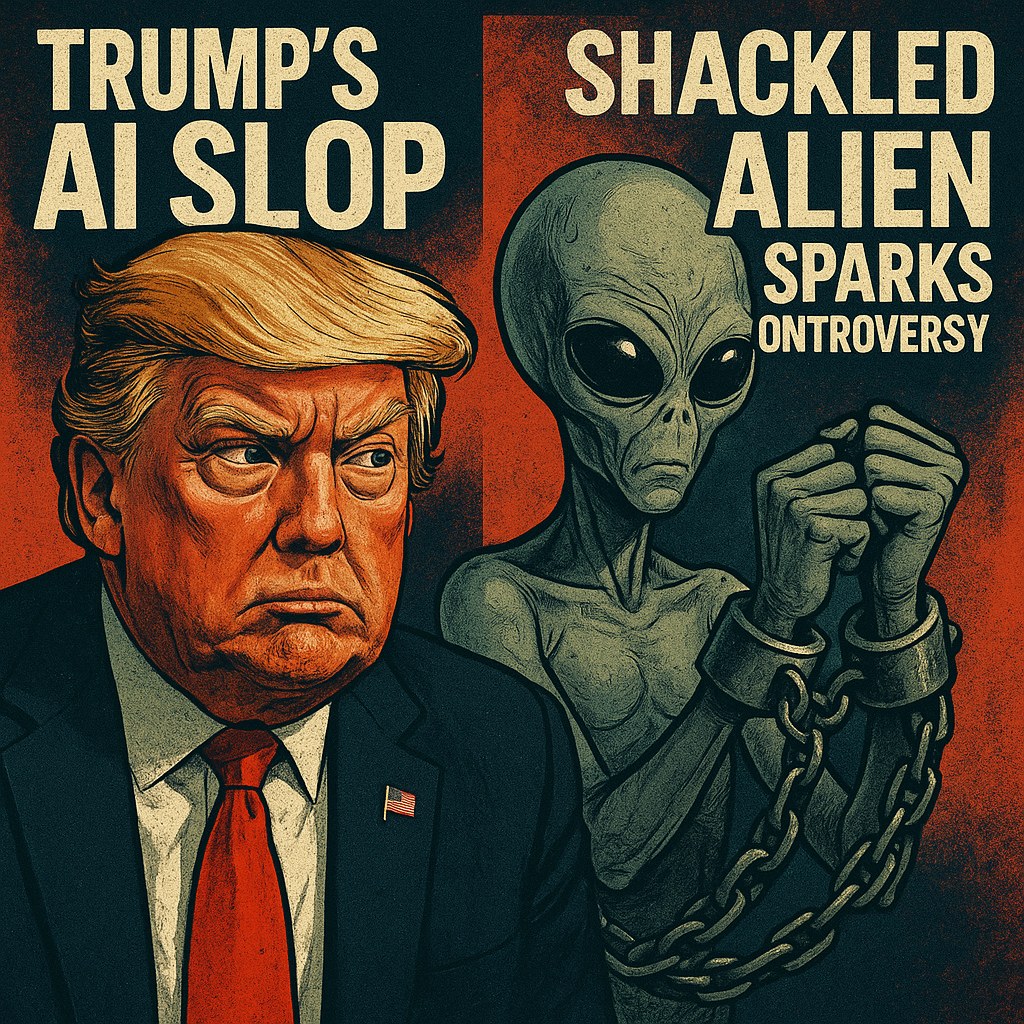
Trump’s AI Slop: Shackled Alien Sparks Controversy

Trump’s AI Slop: Shackled Alien Sparks Controversy
In an unprecedented intersection of politics and technological advancement, former President Donald Trump’s recent remarks regarding artificial intelligence (AI) have ignited significant debate over its ethical implications and social ramifications. Dubbed “AI Slop” by critics, Trump’s comments about the use of AI in various sectors, including law enforcement and healthcare, spotlight the diverse opinions on whether AI should be wielded uncontrollably or regulated with urgency.

The Dimensions of AI Controversy
The rapid integration of AI into everyday life presents both challenges and opportunities. Advocates for AI argue its capacity to streamline processes can lead to greater efficiency and innovations. For instance, in healthcare, AI algorithms significantly enhance diagnostic accuracy through data analysis. Reports note that companies utilizing AI to predict patient outcomes can ultimately save lives. Supporters emphasize the technology’s potential to improve various sectors by automating mundane tasks and offering enhanced predictive analytics.


Conversely, critics warn about AI’s ethical implications, particularly regarding transparency and accountability. A report by RT highlights concerns over reliance on AI in law enforcement, suggesting it could lead to biased outcomes if not adequately monitored. The potential for misuse, especially in criminal justice, raises high-stakes ethical questions that demand immediate attention. Critics argue this “AI Slop” risk oversimplifies complex social issues, potentially reverting to outdated stereotypes through flawed data inputs.


Political Ramifications and Public Perception
As AI becomes increasingly prominent in political discussions, public sentiment appears divided. Al Jazeera has reported on varying public perception, revealing that many people fear that unregulated AI could pose existential risks ranging from job displacement to the erosion of civil liberties. Some analysts point out that the public’s trust in technology diminishes when tied to political agendas. In Trump’s case, his usage of AI as part of campaign rhetoric raises eyebrows, suggesting it’s more about galvanizing support than genuine concern for safe implementation.
This contrasts with views from tech enthusiasts and AI developers. Many argue that while regulatory measures are essential, they should not stifle innovation. They advocate for a balanced approach where regulatory frameworks can be crafted in collaboration with tech leaders to ensure ethical standards without hampering progress. This perspective calls for a foundational shift—moving from alarmist views to a pragmatic understanding of technology’s potential and limitations.
Balancing Innovation and Ethics
The crux of the AI debate is finding an equilibrium between innovation and ethical considerations. As noted in various analyses, the conversation should not be about banning AI but rather about creating a robust set of guidelines for its use. By prioritizing transparency, accountability, and collaboration, we can foster a culture of responsible AI deployment.
Leaders from both industry and government sectors are encouraged to engage in dialogues that prioritize public interest in AI development. Comprehensive regulations that focus on preventing biases and establishing accountability can help mitigate the fears that pervade public perception. For instance, inclusive AI design processes could help ensure that data reflects diverse perspectives, reducing the risk of negative societal impacts.
Conclusion: An Uncertain Path Forward
Trump’s stance and the ensuing controversy highlight the complexities associated with AI’s integration into society. The discussion underscores a vital consensus: while the pathway to AI-enhanced processes is fraught with challenges, the urgency to establish ethical frameworks has never been more pressing. As technology continues to evolve, society must not only adapt but also strive for responsible innovation that acknowledges its potential pitfalls.
The future landscape of AI remains uncertain, but what is clear is that voices on both sides of the argument must engage constructively. By fostering collaboration between technologists, policymakers, and citizens, there exists an opportunity to shape AI’s trajectory in a way that promotes innovation while upholding essential ethical standards. Ultimately, the conversation surrounding AI underscores a broader societal question: how do we embrace technological advancement without losing the core values that define our humanity?















