
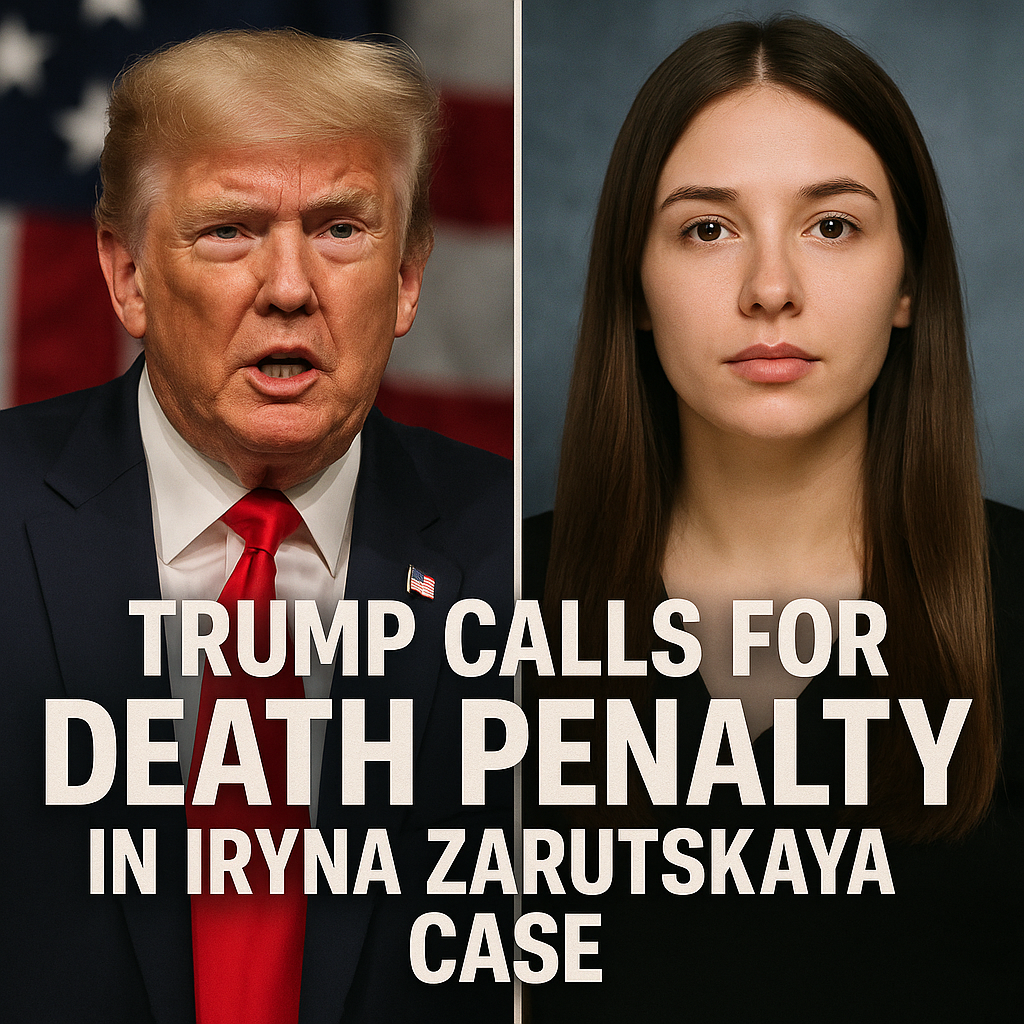
Trump Calls for Death Penalty in Iryna Zarutskaya Case

Trump Calls for Death Penalty in Iryna Zarutskaya Case: A Controversial Context
Recent calls by former President Donald Trump for the death penalty in the case of Iryna Zarutskaya have stirred a nationwide discussion about justice, morality, and the implications of capital punishment in the context of violent crime. The incident in question involves the tragic stabbing of a Ukrainian woman which has captivated public attention and reignited debates surrounding the legal penalties for extreme acts of violence.

The Case at Hand
Zarutskaya, a 31-year-old Ukrainian, was fatally attacked in a New York City incident that has raised significant concern. As reports outline, the circumstances surrounding her death included not only the brutal nature of the stabbing but also issues pertaining to the assailant’s mental health and background. In a statement, Trump emphasized the need for the harshest penalties to deter future crime, framing his argument around public safety and national concern.


While some may view Trump’s comments as a necessary call for justice, they raise complex questions regarding the death penalty. The case against the assailant, who was reportedly diagnosed with mental health issues, epitomizes the moral dilemmas surrounding capital punishment. Is it just to impose the death penalty on an individual whose actions could be influenced by psychiatric conditions? Critics argue that calls for the death penalty can sometimes oversimplify deeply intricate social and legal debates.


Perspectives on Capital Punishment
The application of the death penalty has always been a polarizing issue in the United States. Many supporters of capital punishment argue it serves as an effective deterrent against heinous crimes. Trump’s statement aligns with this viewpoint, suggesting that strong repercussions are essential for maintaining law and order. According to some sources, his stance has received support from various law enforcement representatives who advocate for strict measures in violent crime cases.
Conversely, opponents of the death penalty emphasize its moral and ethical implications. Concerns about wrongful convictions, the unequal application of justice, and the potential for bias based on socio-economic status or race dominate discussions against capital punishment. Activists argue that a life sentence without parole could serve as a more humane alternative while still ensuring public safety.
Discourse around the Zarutskaya case exemplifies these divisions. For instance, some articles from Al Jazeera stress the unpredictability of violent crimes and the need for a comprehensive evaluation of broader societal issues—like mental health support and socioeconomic disparities. This perspective challenges the idea that a single punitive measure like the death penalty can effectively address the multifaceted causes of violent crime.
Public Sentiment and Campaigning
Trump’s comments have also become a focal point in ongoing political campaigning, reflecting the trends of law-and-order rhetoric familiar in American politics. His supporters may view his stance as appropriate for such a violent crime, arguing that accountability must be a pillar of any effective justice system. However, polling data and sentiments shared in various news articles indicate a notable division among voters on the death penalty, affecting how politicians approach the subject.
Moreover, as the current political landscape evolves, some leading Democrats have pushed for abolition or significant reform of the death penalty, citing moral and ethical concerns. This shift in perspective suggests that the conversation about the death penalty isn’t just about Zarutskaya’s case but represents a broader look at the legal framework surrounding justice in America.
A Balanced Perspective
As we engage with the details of Iryna Zarutskaya’s tragic case, it is essential to navigate the complexities with a balanced perspective. The nuances of justice, the efficacy of the death penalty, and the societal factors leading to violent crime cannot be simplified into a singular response.
Examining different viewpoints helps illuminate the broader implications of such cases. While Trump’s push for capital punishment resonates with specific segments of the population demanding tougher justice, it simultaneously raises crucial questions about morality, mental health, and the flaws within the judicial system.
In conclusion, the debate surrounding the death penalty in the context of the Zarutskaya case reflects larger societal concerns that require thoughtful discourse. As conversations evolve, it is essential to consider varying perspectives while also engaging in constructive dialogue about ensuring justice without sacrificing humanity. The future of capital punishment in the U.S. may well hinge on how society chooses to approach not only violent crime but the underlying issues that contribute to it.















