Trump Cites 18th Century Law for Faster Deportations, Judge Quickly Blocks It

Trump Cites 18th Century Law for Faster Deportations, Judge Quickly Blocks It
Overview
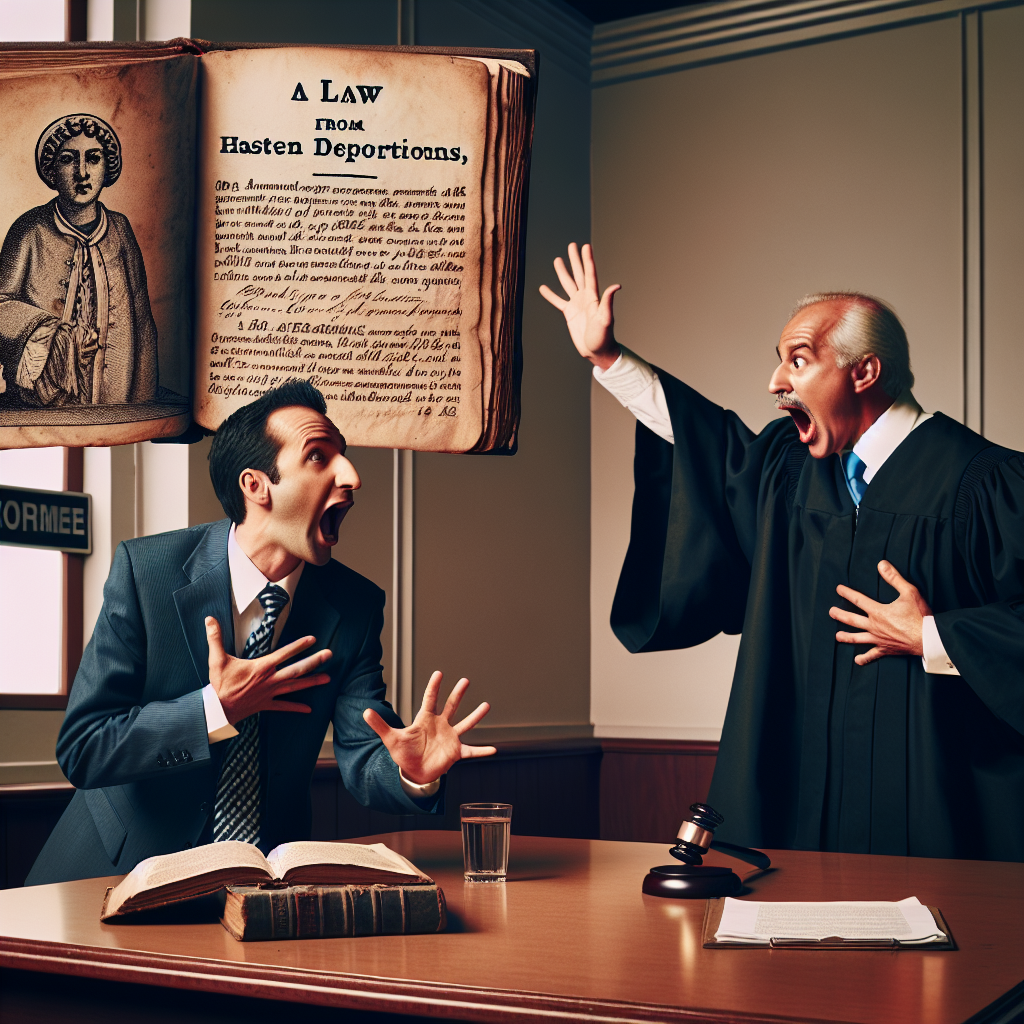
In a controversial move, former President Donald Trump attempted to expedite deportations by invoking an obscure 18th-century law. This legal maneuver was swiftly challenged in court, resulting in a judge blocking its implementation. The situation highlights ongoing tensions in U.S. immigration policy and the legal complexities surrounding it.

The 18th Century Law
Trump’s legal team referenced a law from the 1790s, aiming to streamline the deportation process. This law, largely forgotten in modern times, was intended to address issues of national security and public safety during its inception.


- Originally enacted in the late 1700s.
- Designed to protect national security.
- Rarely used in contemporary legal contexts.
Judicial Response
The attempt to use this antiquated law was met with immediate legal challenges. A federal judge quickly intervened, issuing a block on the law’s application in the context of modern deportations.


- Federal judge issued a temporary block.
- Concerns over the law’s relevance and applicability today.
- Highlighted potential conflicts with current immigration laws.
Implications for Immigration Policy
This legal battle underscores the complexities and contentious nature of U.S. immigration policy. It raises questions about the use of historical laws in contemporary governance and the balance between national security and individual rights.
- Reflects ongoing debates over immigration reform.
- Challenges the use of historical precedents in modern law.
- Emphasizes the role of the judiciary in checking executive actions.
Conclusion
The attempt to use an 18th-century law for modern deportations, and the subsequent judicial block, highlights the intricate dance between historical legal frameworks and contemporary policy needs. This incident serves as a reminder of the complexities involved in navigating immigration laws and the critical role of the judiciary in maintaining legal balance.