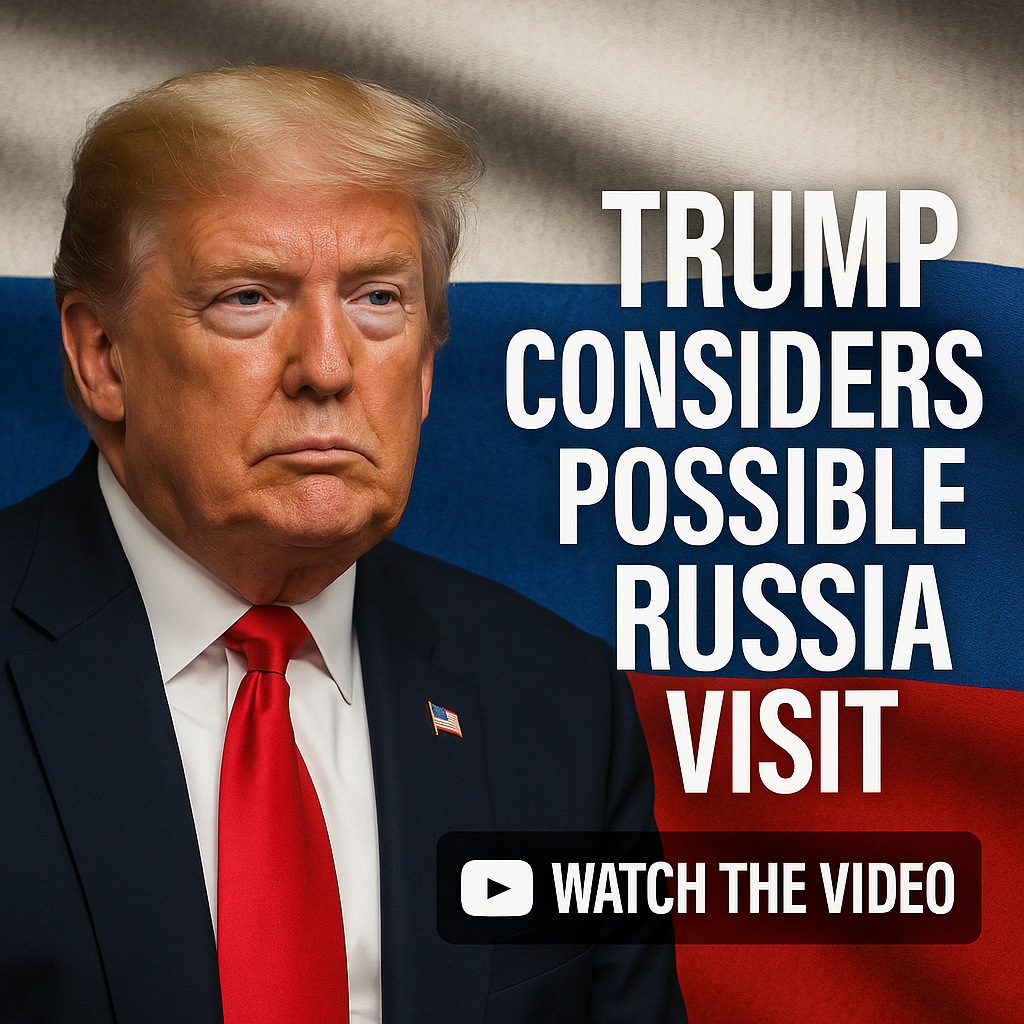
Trump Considers Possible Russia Visit: Watch the Video

As the political landscape continues to shift, former President Donald Trump has expressed interest in a potential visit to Russia. This consideration has stirred debate, drawing contrasting perspectives from various political analysts and commentators.

The Context of Trump’s Potential Visit
Trump’s consideration to visit Russia emerges amid a complex backdrop of geopolitical tensions. While public sentiment appears largely skeptical, the former president’s remarks suggest he regards such a visit as a platform for discussing important diplomatic matters. Recently, Trump mentioned, “If I become president, I will find a way to solve the issues with Russia.” This assertion resonates within a faction of his supporters who believe that goodwill gestures could pave the way for diplomatic breakthroughs.


However, the implications of such a visit are multifaceted. Critics argue that Trump’s move could undermine established U.S. foreign policy, particularly regarding sanctions against Russia and its role in international conflicts such as the ongoing war in Ukraine. The timing is particularly sensitive given the current geopolitical climate, where the U.S. and its allies are reinforcing their stance against Russian aggression.


Diverging Perspectives on the Visit
To grasp the full scope of reactions to Trump’s potential Russia visit, it is essential to synthesize opinions from various sides of the political spectrum.
Supporters’ Viewpoint
Proponents of Trump, including several conservative commentators, argue that engaging directly with leaders such as Vladimir Putin could lead to constructive dialogues. They cite historical precedents where personal diplomacy has helped de-escalate tensions. A supporter might contend that the absence of direct communication contributes to misunderstandings and unnecessary conflicts.
Moreover, as highlighted in reporting from RT, some view this as an opportunity for Trump to reestablish his position as a statesman advocating for peace rather than conflict, setting the stage for a new chapter if he were to reclaim the presidency.
Critics’ Concerns
On the flip side, critics from both sides of the aisle strongly oppose the idea. Many Democratic analysts and some moderate Republicans express concerns that such a visit could legitimize Putin’s regime. They argue that it could signal that the U.S. is willing to overlook Russia’s aggressive actions—an interpretation of events that might embolden further military incursions in Europe and beyond.
Recent articles from Al Jazeera point out that adaptation of diplomacy should not come at the expense of accountability. The consensus among critics is that Trump’s prior relationship with Russia raises valid questions about his approach and intentions: Whether personal motives might overshadow national interests is a central concern.
Public Sentiment and Political Implications
In light of these differing viewpoints, public opinion appears divided. A survey conducted by a notable polling organization indicates that while some Americans are open to diplomatic overtures with Russia, a significant majority remains wary of Trump’s intentions. This ambivalence reflects a broader uncertainty prevalent in contemporary American politics. Engaging with adversarial nations remains a contentious topic, and Trump’s historical behavior complicates these conversations.
While many supporters are enthused by the prospect of direct engagement, critics assert that any potential visit ought to be contingent upon Russia’s compliance with international norms regarding human rights and territorial integrity. The juxtaposition of these positions highlights the complexity of international relations, particularly when individual leaders have such a profound influence on policy direction.
Conclusion: Navigating Uncertainties Ahead
As Trump contemplates a visit to Russia, the discourse surrounding it underscores the intricacies of post-Cold War diplomacy. What should be evident is the need for an approach that balances strategic interests with ethical considerations in international relations. Whether Trump’s aspirations will manifest into a concrete plan remains to be seen. Stakeholders in global diplomacy, however, should prepare for ripples of impact that might arise from this anticipated interaction—be it healing ties with adversaries or exacerbating tensions.
In this evolving narrative, it is clear that any significant diplomatic action requires a careful assessment of potential repercussions, making this an essential moment in American political dialogue. The coming months will undoubtedly reveal more about the implications of these conversations and their significance for the future of U.S. foreign policy.