
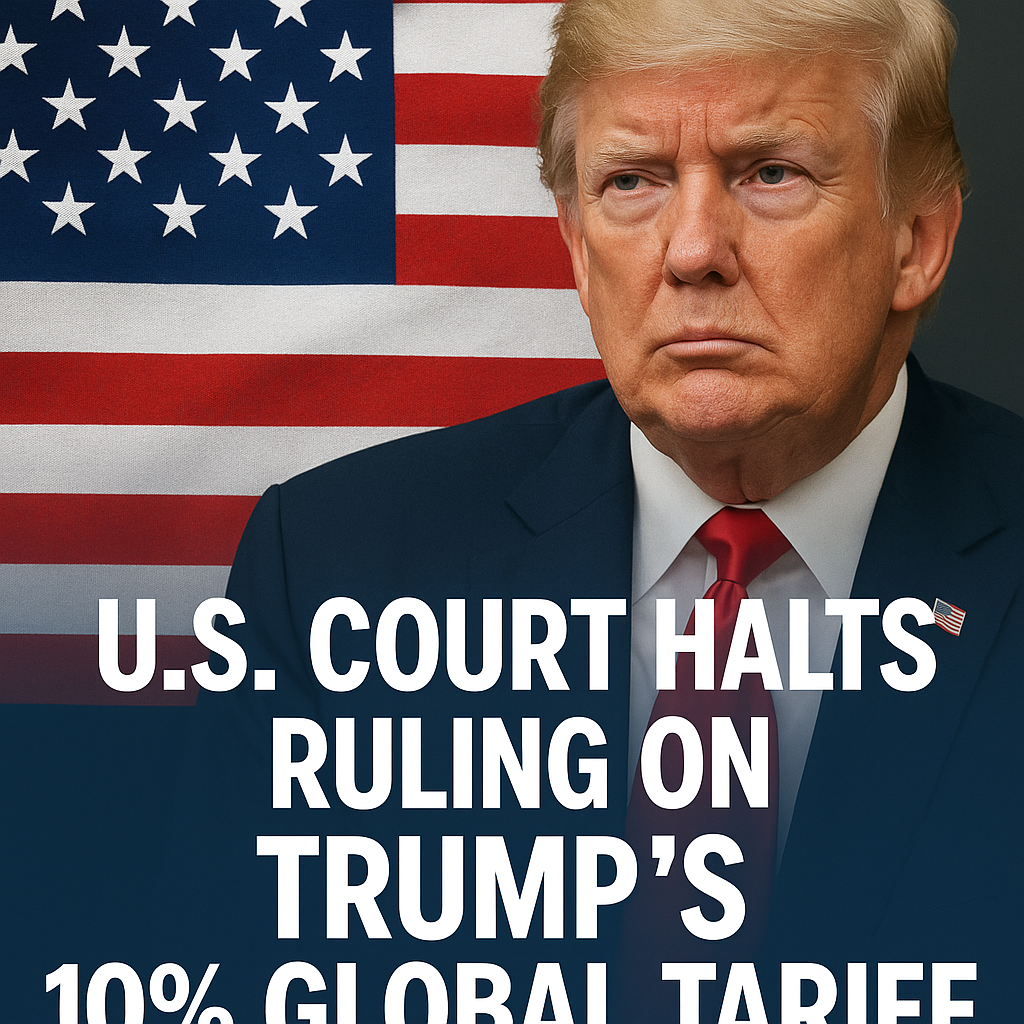
US Court Halts Ruling on Trump’s 10% Global Tariff

US Court Halts Ruling on Trump’s 10% Global Tariff
In a significant legal development, a U.S. court has temporarily paused a ruling that aimed to block former President Donald Trump’s proposed 10% global tariff on foreign goods. This decision reflects the complexities of trade policy in an era where international relations and economic strategies are continually evolving.

The Context Behind the Tariff
The proposed tariff, initially introduced during Trump’s presidency, has been a contentious issue since its inception. The intention behind this tariff was to protect American industries by making imported goods more expensive, thereby encouraging consumers to buy domestically produced products. Proponents argue that such protectionist measures can help reduce trade deficits and boost local economies.


However, critics have voiced significant concerns over potential repercussions. According to various analyses, imposing such tariffs could lead to increased prices for consumers on a wide range of products—everything from electronics to everyday household goods. This raises the question of whether the short-term benefits of protecting local industries outweigh the long-term costs to consumers and international relations.


As the court deliberates, this pause allows for continued dialogue among stakeholders, including businesses, policymakers, and consumers, about the implications of the tariff.
Diverging Opinions on the Tariff’s Impact
While some industries have rallied in support of the tariff, particularly those heavily reliant on domestic manufacturing, others—especially in sectors such as retail and technology—fear the adverse effects on their operations. A report from Al Jazeera indicates that businesses dependent on imported materials may face increased operational costs, leading to a ripple effect that could strain supply chains and drive prices up.
On the flip side, supporters of the tariff argue that these measures are essential for maintaining a competitive edge against countries that they believe engage in unfair trade practices. According to a spokesperson for a prominent manufacturing trade group, “This tariff is a vital mechanism for leveling the playing field against competitors that manipulate their currencies and engage in other unfair practices.”
Conversely, economic analysts at RT News have highlighted the potential for retaliation from trade partners, citing historical precedents where foreign governments responded to tariffs with their own trade barriers. Such actions could intensify trade wars and further complicate already fraught international relationships.
The Road Ahead
As the legal battle continues, the temporary pause on the ruling invites reflection on the broader implications of trade policy in a globalized economy. In an interdependent world, the repercussions of unilateral tariffs are multifaceted. The complexities of international trade negotiations require careful consideration, balancing national interests with global partnerships.
Moreover, this situation emphasizes the importance of public discourse surrounding trade policy. Engaging various stakeholders—from business owners to everyday consumers—can provide valuable perspectives that contribute to more informed policymaking. As the U.S. economy progresses through various phases of recovery, understanding the nuanced implications of tariffs will be crucial in shaping a sustainable economic future.
In conclusion, the court’s decision to halt the ruling on Trump’s global tariff underscores the intricate balance between protecting domestic interests and fostering international cooperation. As we await further developments, it is vital to remain engaged in the conversation regarding the potential outcomes, reflecting on both the intended and unintended consequences of such economic policies.















