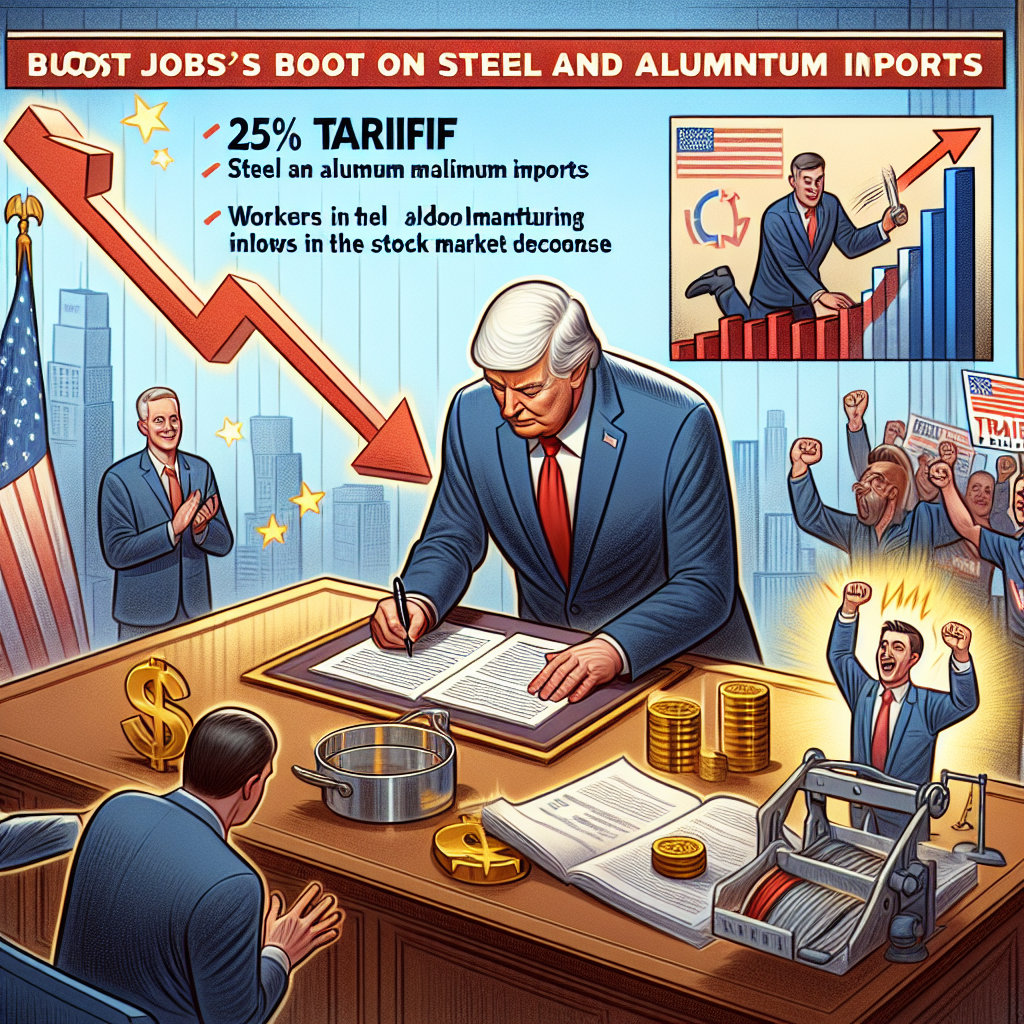
Trump Enacts 25% Tariffs on Steel and Aluminum Imports, Aiming to Boost Jobs Amid Market Decline

Trump Enacts 25% Tariffs on Steel and Aluminum Imports
A Strategic Move to Revitalize Domestic Industry
In a bold economic maneuver, President Donald Trump has announced the imposition of a 25% tariff on steel and aluminum imports. This decision is aimed at revitalizing the domestic manufacturing sector and safeguarding American jobs amid a period of market decline.

Key Objectives of the Tariffs
- Boost Domestic Production: Encourage the growth of U.S. steel and aluminum industries by making imported goods more expensive.
- Protect American Jobs: Shield domestic workers from foreign competition and potential job losses.
- National Security: Ensure a reliable supply of essential materials for defense and infrastructure.
Potential Economic Impacts
While the tariffs are designed to bolster domestic industries, they may also lead to increased costs for manufacturers relying on imported materials. This could result in higher prices for consumers and potential trade tensions with international partners.


Reactions from Industry and Global Partners
- Domestic Manufacturers: Mixed reactions, with some praising the move for protecting jobs, while others express concern over rising material costs.
- International Response: Potential for retaliatory measures from trade partners, which could escalate into broader trade disputes.
Conclusion
The imposition of 25% tariffs on steel and aluminum imports by President Trump is a strategic effort to bolster the U.S. economy by protecting domestic industries and jobs. While it aims to strengthen national security and economic stability, the move carries risks of increased consumer prices and international trade tensions. The long-term effects of this policy will depend on the response from both domestic industries and global trade partners.