
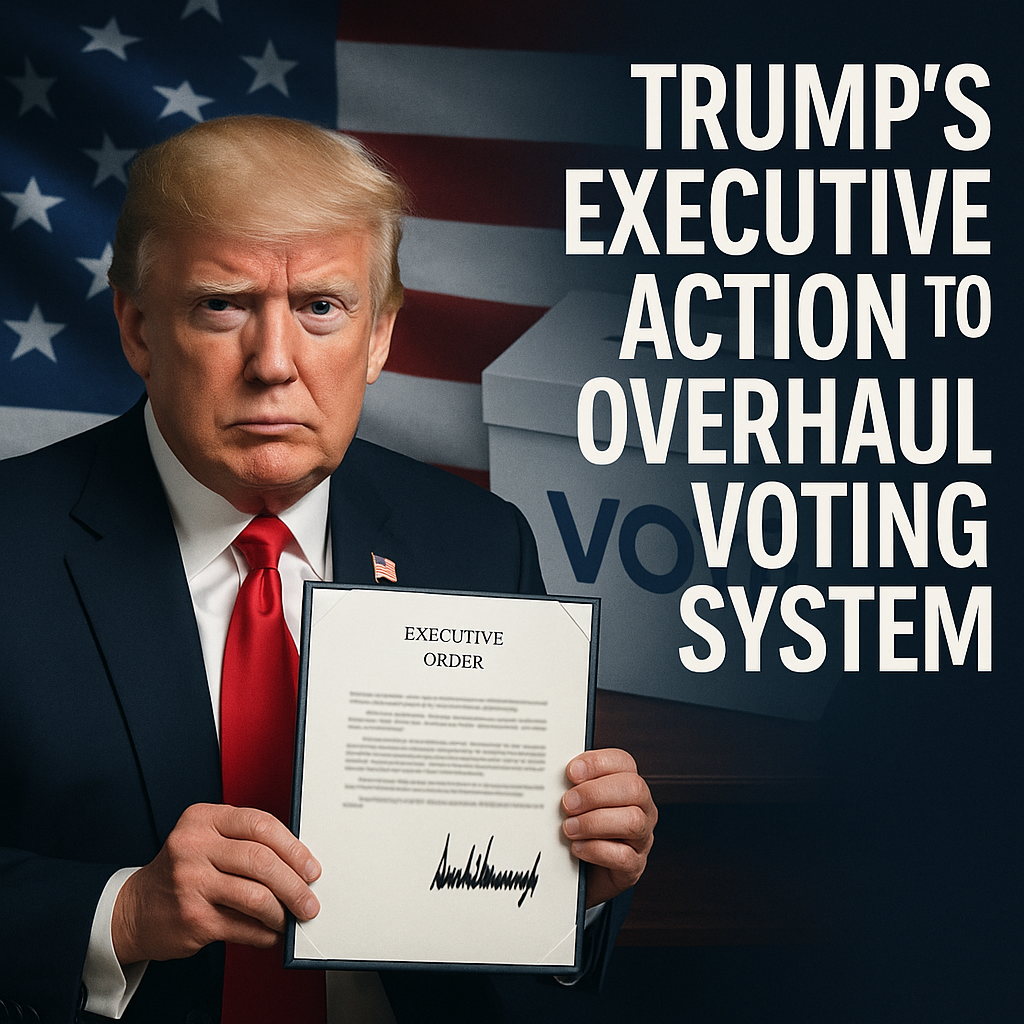
Trump’s Executive Action to Overhaul Voting System

Trump’s Executive Action to Overhaul Voting System
In a significant move, former President Donald Trump has announced his intentions to implement an executive action aimed at overhauling the voting system in the United States. This announcement has sparked a wide array of responses, illuminating the complexities surrounding electoral reforms in a nation deeply divided on voting rights and election integrity.

The Rationale Behind the Overhaul
Trump’s proposed overhaul ostensibly stems from claims of widespread voter fraud during the 2020 election. In his view, the integrity of the electoral system is of paramount importance, and the proposed changes are essential to restore public confidence. Trump has indicated that his executive action will aim to enhance security measures, tighten voter registration processes, and implement stricter verification requirements.


Supporters of this initiative argue that the proposed changes are necessary to fend off electoral malpractice. According to Trump, the measures will address loopholes that purportedly facilitate fraudulent activities, thereby ensuring a fairer electoral process moving forward.


However, it is important to note that various studies and investigations have consistently found little evidence to support claims of widespread voter fraud. For instance, a comprehensive review by the Brennan Center for Justice found that fraud rates in American elections are exceptionally low, often cited at around 0.0003% to 0.0025%.
The Reactions: Divided Opinions
The announcement has elicited a wide range of reactions from political leaders, advocacy groups, and the public.
Support from Conservative Circles
Conservative supporters view Trump’s executive action as a crucial step toward safeguarding democracy. They assert that voter ID laws and accurate voter rolls can prevent unauthorized individuals from participating in elections. Groups such as the Heritage Foundation applaud Trump’s initiative, considering it a necessary evolution in maintaining electoral integrity.
– Advocates argue that:
– Stricter voter ID laws could mitigate potential fraud.
– Enhanced security measures can increase public trust in elections.
Opposition from Progressives and Election Experts
Conversely, many progressives and election experts vehemently oppose Trump’s initiative. They argue that the actions threaten to disenfranchise voters, especially marginalized groups who may struggle to meet new identification requirements. The National Association for the Advancement of Colored People (NAACP) has raised concerns that such measures disproportionately affect minority groups and undermine the foundational principle of universal suffrage.
– Concerns include:
– Potential disenfranchisement of vulnerable populations.
– Perpetuation of unsubstantiated fraud claims that damage public trust.
Media Analysis and Public Sentiment
Media analyses reflect a broad spectrum of public sentiment on this issue, with some outlets emphasizing the threat to democratic norms while others focus on the importance of accountability in elections. A survey reported by Al Jazeera found that while a portion of the electorate supports tightened voting regulations, a nearly equal percentage fears such measures could be detrimental to democratic participation.
The diverse viewpoints highlight an essential uncertainty around how these reforms may impact future elections and whether they will foster a climate of trust or suspicion among voters.
Looking Ahead: The Path Forward
As Trump moves forward with his executive action, it’s evident that the topic of electoral reform will remain contentious. Political leaders must navigate a complex landscape where public trust, voter rights, and democratic integrity intersect. Moreover, legal challenges are likely, as various states may react differently to Trump’s proposed changes.
Furthermore, the ongoing debates around this issue underscore a national need for dialogue and collaboration among differing political factions. An inclusive approach that incorporates voices across the political spectrum could lead to reforms that enhance both security and accessibility.
In conclusion, the conversation surrounding Trump’s executive action to overhaul the voting system is emblematic of broader national tensions regarding electoral integrity and democratic values. Balancing the need for secure elections while also promoting widespread participation remains a critical challenge for the future of American democracy. Moving forward, it is essential to engage in constructive conversations that prioritize fairness, equity, and the trust of the electorate.















