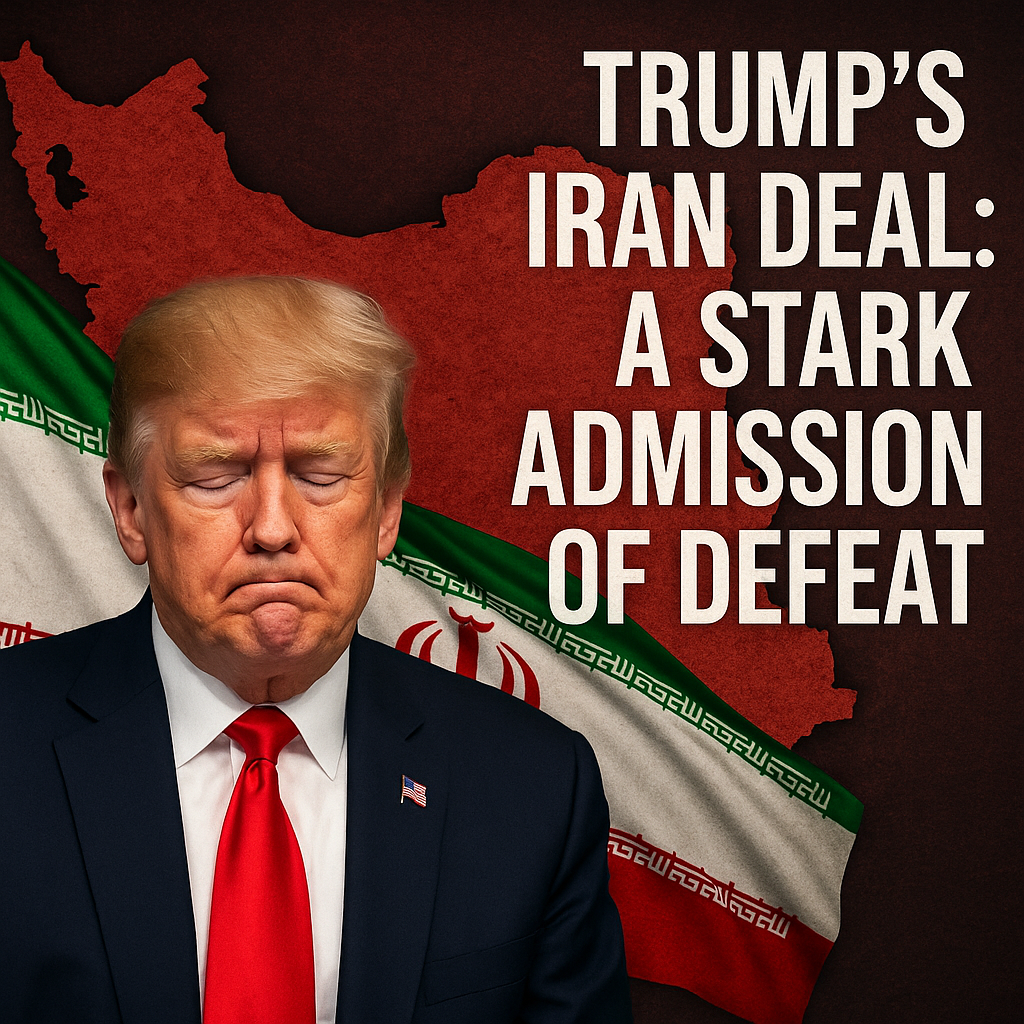
Trump’s Iran Deal: A Stark Admission of Defeat

Analyzing Trump’s Iran Deal: A Stark Admission of Defeat
The complexities surrounding Trump’s Iran deal highlight a significant shift in U.S. foreign policy that has invoked intense debate and contrasting opinions across the political spectrum. As we unpack the opposing views on this decision, it becomes evident that the implications of the deal extend far beyond diplomatic negotiations, hinting at deeper strategic failures.

The Strategic Landscape Post-Deal
Trump’s unilateral withdrawal from the Joint Comprehensive Plan of Action (JCPOA) in 2018 marked one of the most contentious moves in recent American foreign policy. The deal aimed to limit Iran’s nuclear capabilities in exchange for lifted sanctions, a framework that many critics now argue was one of the last chances to ensure regional stability.


One viewpoint posits that abandoning the JCPOA was a calamity, sparking tensions not only between the U.S. and Iran but also among key allies in Europe who were invested in the original agreement. According to reports, this decision has often been labeled “one of the greatest strategic blunders in U.S. history.” Analysts have argued that Trump’s approach weakened the United States’ standing in international relations, empowering adversaries and creating a vacuum that Iran has exploited to expand its influence across the Middle East.


Furthermore, the economic impact on Iran has been dire, leading to widespread dissatisfaction among its citizens. The resulting economic desperation has only amplified domestic unrest and stymied prospects for diplomatic resolutions.
Contrasting Perspectives: National Security vs. Diplomatic Engagement
On the other hand, proponents of Trump’s approach argue that the deal was fundamentally flawed, asserting that it allowed Iran to continue its destabilizing activities in the region under the guise of compliance. They contend that by withdrawing, the Trump administration aimed to pivot U.S. policy toward a more aggressive strategy that showcased America’s willingness to confront perceived threats head-on.
This perspective suggests that stronger sanctions could potentially compel Iran to re-evaluate its behavior, thereby resulting in a more coherent negotiating stance, though concrete evidence supporting this assertion remains elusive. Critics of the sanctions policy point out that while they may have harmed Iran economically, they did not yield the intended diplomatic results. Instead, Iran has continued to advance its nuclear capabilities, albeit in a more clandestine manner, raising alarms globally about its potential to develop nuclear weapons.
The Global Ramifications
The aftermath of the U.S. withdrawal has shown that international relations are not merely transactional; they are deeply intertwined with historical contexts, trust, and mutual interests. European nations’ attempts to salvage the JCPOA have been met with frustration, revealing significant cracks in the traditional alliance structures that have underpinned U.S. foreign policy for decades. Tensions among NATO allies have surged as varying interests complicate collaborative efforts in the region.
The geopolitical vacuum resulting from this tumultuous shift may have inadvertently strengthened Iran’s ties to Russia and China, nations that are keen to fill the void left by American disengagement. This alignment poses new challenges for the U.S. and its allies, as the dynamics of power in the region evolve, suggesting that the Iran deal was more than just a bilateral agreement; it was a microcosm of broader shifts in global alliances.
Conclusion: A Complex Legacy
In examining Trump’s Iran deal through these diverse lenses, it becomes clear that the discussion transcends a simple narrative of victory or defeat. Instead, it evolves into a complex interplay of national security, diplomatic aspirations, and the unpredictable landscape of global politics. The stark admission of defeat suggests not only a failure in achieving immediate goals but also raises critical questions about future strategies in American foreign policy.
As the geopolitical environment continues to shift, the lessons derived from this episode may inform how future administrations approach similar negotiations, ensuring that past mistakes do not beget new ones. The road ahead requires a balanced approach, one that weighs the merits of engagement against the imperatives of security, navigating a middle path through an otherwise tumultuous landscape.