
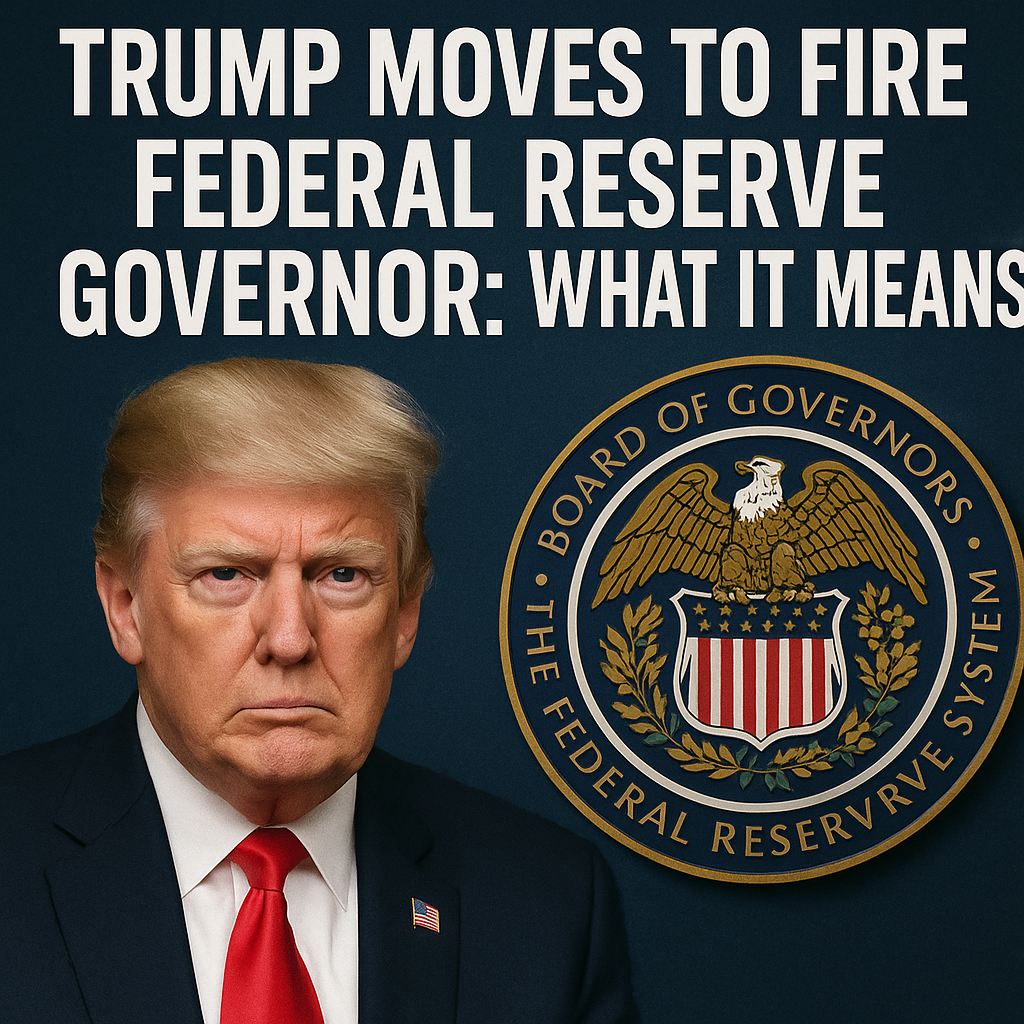
Trump Moves to Fire Federal Reserve Governor: What It Means

Trump Moves to Fire Federal Reserve Governor: What It Means
The recent move by former President Donald Trump to fire a Federal Reserve governor has stirred up significant debate about monetary policy and the independence of the central bank. This bold action raises essential questions about the future of economic management in the United States, especially amidst a backdrop of rising inflation and changing political landscapes.

Understanding the Governor’s Role
The Federal Reserve, often simply referred to as the Fed, plays a crucial role in shaping the U.S. economy through its monetary policy. The governors on the Fed’s board are appointed to ensure that a balance of perspectives is represented, aiding in decisions regarding interest rates, inflation control, and banking regulations. Trump’s decision to effectively remove a governor from this board introduces a multitude of potential impacts, both immediate and long-term.


Perspective on Independence


One of the primary controversies surrounding Trump’s action is its implications for the Federal Reserve’s independence. Critics, including many economists and political analysts, argue that this move undermines the apolitical nature that the Fed has historically maintained. According to experts, the central bank’s independence is crucial for maintaining public trust in its policies, especially during turbulent economic times.
A report from Al Jazeera highlighted that firing a governor may rattle the foundational principle that the Fed should operate free from political influence. Such actions could lead to perceptions that monetary policy is being manipulated for partisan interests rather than being guided by empirical economic indicators and professional analysis. Some argue that this may also undermine the Fed’s credibility both domestically and internationally.
On the contrary, Trump’s supporters assert that his decision reflects a necessary accountability measure. They claim that governors should be held responsible for their policy choices, especially if those choices are seen as detrimental to economic growth. From this viewpoint, Trump’s actions might be viewed as an attempt to realign the Fed’s focus with the economic agenda of supporting growth and reducing unemployment, especially following challenges posed by the COVID-19 pandemic and current inflationary pressures.
Economic Implications and Future Considerations
The specifics of the economic implications stemming from this decision are complex. On the one hand, if the Fed’s board becomes more aligned with Trump’s views on interest rates and fiscal policy, we might see a shift that favors lower rates and more aggressive economic stimulus. This, proponents argue, could spur growth and help revive sectors struggling after the pandemic.
Conversely, if the central bank becomes too politically influenced, it risks making decisions that could lead to greater economic instability. Inflation, for example, could spiral if the Fed opts for overly expansionary policies without the necessary checks and balances that come from a diverse board with varying opinions.
A piece in Sky News emphasized the delicate balance that the Fed must maintain between fostering economic growth and controlling inflation. The current inflation rates are a significant concern, as rising prices impact everyday Americans and could lead the Fed to raise interest rates in the future. The type of leadership emanating from the Fed can have far-reaching consequences including job growth, investments, and overall economic confidence.
Diverging Opinions on Future Governance
This scenario has elicited varied reactions, underscoring the divergences in how different political factions view the Fed’s role in economic policy. Some express concern that a partisan Fed could lead to a lack of confidence in monetary policy, discouraging investment and achieving sustainable economic growth. In contrast, others see an opportunity for a more proactive and responsive Fed that addresses immediate economic needs, even if it means navigating uncharted waters.
The division is evident across news sources, with RT framing the firing as part of a broader narrative of Trump challenging institutional norms, while Al Jazeera presents a more cautionary outlook, warning against the potential perils of diminishing institutional independence. These dual narratives reflect the broader tension between economic pragmatism and political maneuvering.
Conclusion
As Donald Trump moves to fire a Federal Reserve governor, the implications are manifold and complex. Balancing the need for independent, apolitical monetary policy against calls for accountability will be a delicate undertaking. The economic landscape remains uncertain, and how this decision plays out could set crucial precedents for the governance of America’s financial future.
In a changing political environment, it remains to be seen how this move will affect the Fed’s operations and the overall U.S. economy. The interplay between political influence and economic governance will undoubtedly continue to be a heated topic, inspiring further discussion and analysis in the months ahead.















