
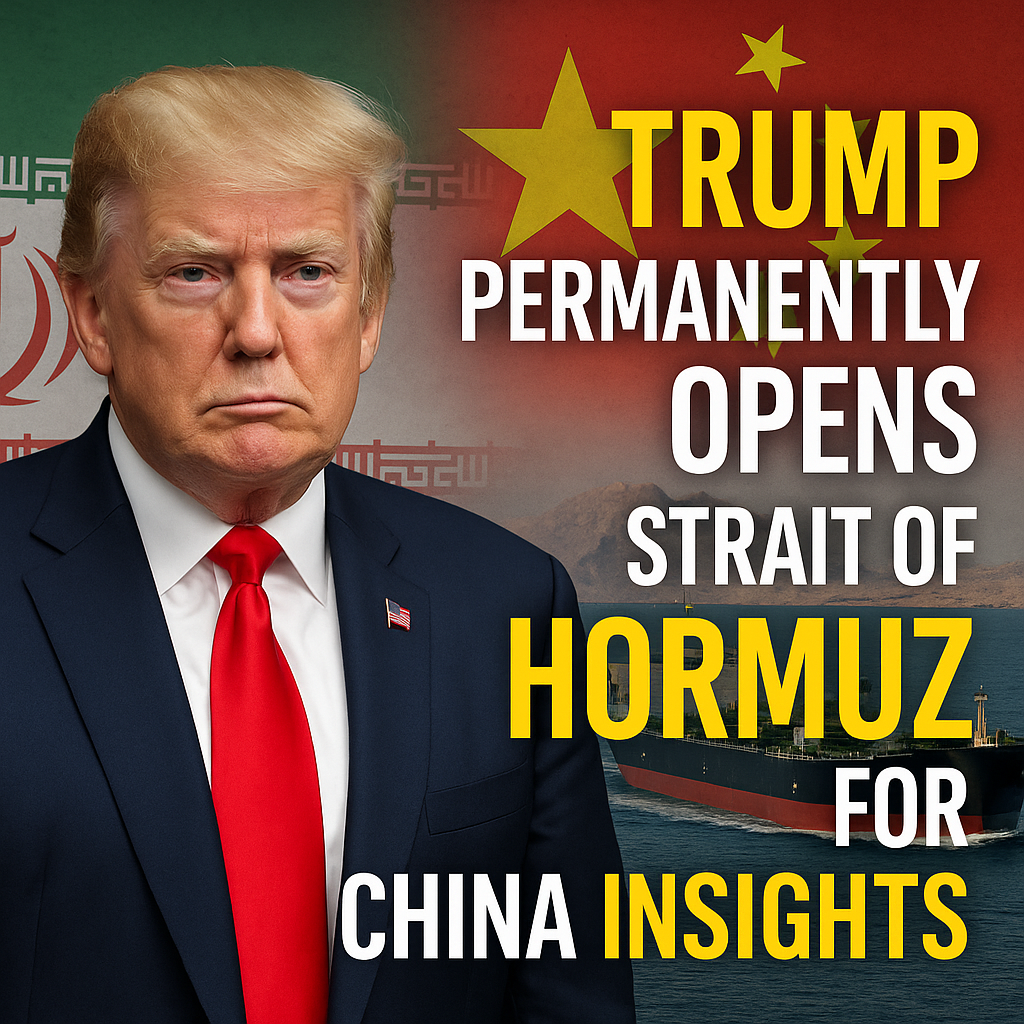
Trump Permanently Opens Strait of Hormuz for China Insights

Understanding the Implications of Trump’s Move to Open the Strait of Hormuz for China
The recent decision by former President Donald Trump to permanently open the Strait of Hormuz for China raises various questions regarding its geopolitical implications. This strategic waterway, which is vital for global oil transport, remains a focal point in international politics. With contrasting opinions from diverse sources, a more nuanced understanding of this development is necessary.

The Strait of Hormuz: A Vital Nexus
The Strait of Hormuz connects the Persian Gulf to the Gulf of Oman and is one of the world’s most crucial maritime passages. Approximately 20% of the world’s oil passes through this narrow waterway, making its security paramount for many countries. The move to open this strait for China brings both opportunities and challenges to the table, with different stakeholders weighing in on what this means for global trade and regional stability.


Perspectives on Trump’s Decision
While some view Trump’s decision as a strategic shift that caters to China’s growing influence in global oil markets, others caution against the potential ramifications this may have on U.S. relations in the Middle East and with other global players.


Supportive Views: Economic Opportunities
Supporters argue that opening the Strait of Hormuz for China could foster stronger economic ties between the U.S. and China. Proponents believe that this decision could result in increased trade revenues and investments, potentially beneficial for both nations. For China, securing a reliable oil supply is critical for its continued economic growth, and the U.S. may stand to gain from this partnership as global oil prices fluctuate.
Cautious Opinions: Regional Instability
On the flip side, critics highlight the risks associated with this move. The Strait of Hormuz has historically been a flashpoint for military tensions, particularly between Iran and the U.S. A sudden influx of Chinese vessels could escalate these tensions, with some analysts suggesting that this may provoke Iran, who considers this region as a sphere of influence. Al Jazeera indicated that, while the U.S. may benefit economically, it is vital to consider the socio-political ramifications. They stress that U.S. support for China in this regard could lead to a deteriorating relationship with Gulf states that rely on the American military for protection.
An Array of Responses and Implications
Political analysts offer a range of insights, noting the complex interplay of international alliances and rivalries. Whether this move fortifies or undermines U.S. standing in the region is still an open debate.
Balancing Act
Experts from both RT and Sky News agree that while enhanced economic cooperation can be beneficial, there exists a delicate balance in maintaining diplomatic ties with nations like Saudi Arabia and the UAE, who might view the strengthening of Chinese influence with skepticism. Critics also point out that this decision could be interpreted as a shift away from U.S. commitment to Islamic nations, further complicating the already fraught dynamics in the Middle East.
The Road Ahead: Predicting Outcomes
With the complexities surrounding the Strait’s future, it is crucial to remain grounded in the possibilities and challenges that lay ahead. The consensus among some sources is that while the economic benefits are palpable, the geopolitical consequences warrant careful examination.
Uncertainty Abounds
Despite varied opinions, one common thread is the uncertainty that pervades this decision. The potential for diplomatic fallout may inadvertently lead to conflict rather than collaboration. As both the U.S. and China continue to vie for dominance in global oil markets, the impact on regional actors remains to be seen.
Conclusion
In summary, Trump’s decision to permanently open the Strait of Hormuz for China is multifaceted, reflecting a mixture of economic enthusiasm and geopolitical caution. Engaging with this topic requires an understanding of the historical context and the present-day dynamics that affect U.S.-China relations. The route forward is riddled with complexities, and ongoing analysis will be crucial in deciphering the implications for both nations and the global community. As international players navigate this intricate landscape, the importance of dialogue and diplomacy cannot be overstated, especially when dealing with regions as volatile as the Middle East.















