
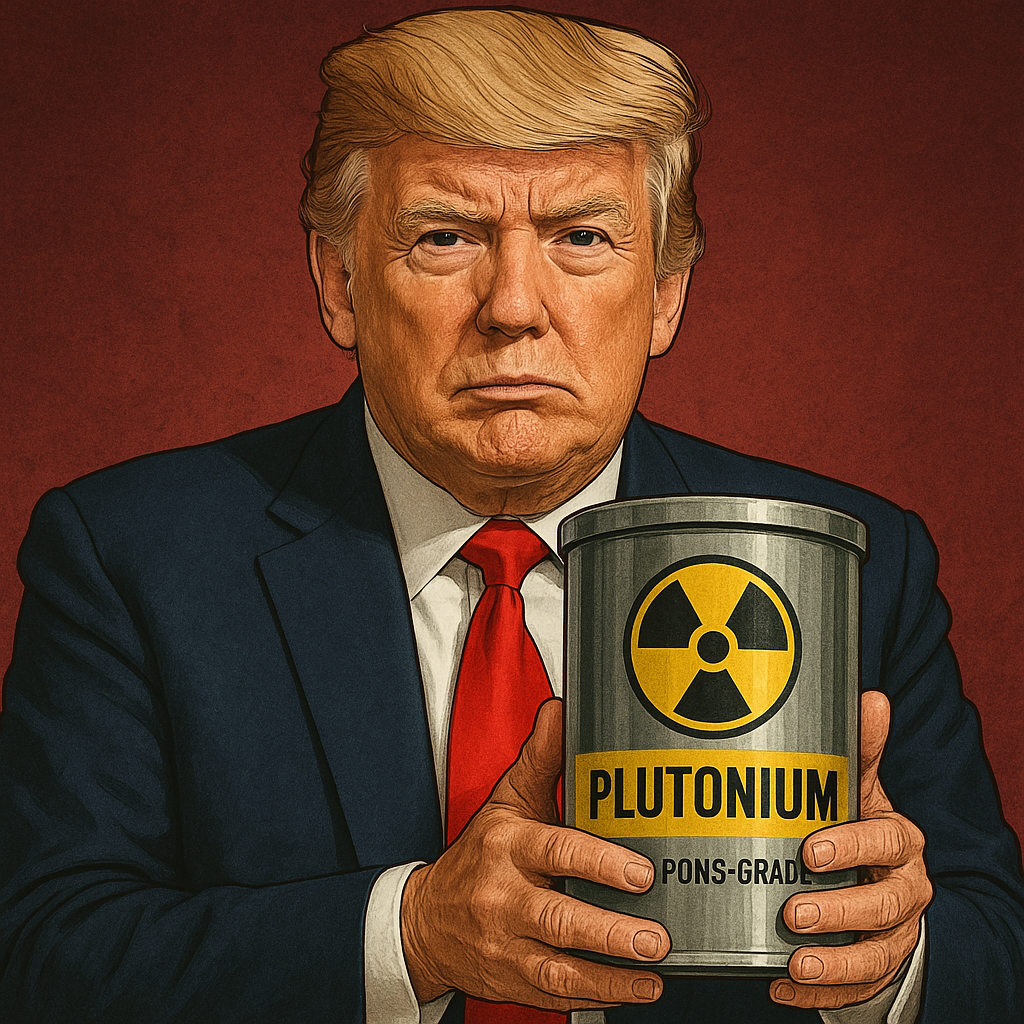
Trump’s Plan: Weapons-Grade Plutonium in Private Hands

Trump’s Plan: Weapons-Grade Plutonium in Private Hands
In recent discussions, former President Donald Trump has put forth a controversial proposal regarding the handling of weapons-grade plutonium, suggesting that private entities should manage this powerful material. The idea has drawn scrutiny from various corners, raising questions about national security, regulatory challenges, and ethical considerations.

The Proposal Explained
Trump’s plan centers on the belief that privatizing plutonium management could usher in efficiencies and innovations that government oversight has not achieved. He argues that involving private companies could lead to better technological advancements in the handling and disposal of plutonium, potentially reducing both storage costs and environmental impacts.


However, the proposal has met with a mixed response. Critics have pointed to the hazards associated with letting private firms handle such dangerous materials. Concerns primarily focus on the potential for accidents, mismanagement, and the inherent challenges in regulating private companies that may operate with profit motives.


A report from an outlet noted that the transition to a privatized structure could create loopholes in safety protocols. “The implications of privatizing weapons-grade materials could be catastrophic if proper regulations and oversight are not strictly enforced,” a security analyst warned, emphasizing that the risks could outweigh the benefits.
National Security Implications
The national security aspect of Trump’s proposal cannot be understated. Weapons-grade plutonium is a critical component in the manufacturing of nuclear weapons, and the question of who controls this resource is paramount. While proponents argue that a private sector-driven approach could lead to safer and more efficient practices, skeptics fear that the profit-driven nature of private enterprise might compromise safety standards and regulatory compliance.
According to a source from Al Jazeera, few industries have as much at stake as those dealing with nuclear materials. The fine line between encouraging innovation through privatization and ensuring national security is perilously thin. After all, the ramifications of a breach in protocol could have global repercussions.
Diverse Perspectives on the Issue
Opinions from experts in nuclear policy and environmental science offer contrasting views on the feasibility and effectiveness of Trump’s plan. Some advocates suggest that private companies could invest in new technologies that significantly enhance safety protocols. They argue that innovation often flourishes in competitive markets where financial incentives align with technological advancement. For instance, the private sector has a track record of developing new energy solutions, which could extend to handling plutonium safely.
On the other hand, voices from the scientific community maintain that the inherent risks associated with nuclear materials are too great to leave to private interests. A nuclear safety advocate highlighted, “The delicate balance of managing these resources requires experience, regulation, and utmost transparency, which the private sector isn’t always known for.” This sentiment echoes a broader concern about accountability: Can private firms be held to the same level of scrutiny as government entities when it comes to something as sensitive as nuclear weapons?
Regulatory Framework and Ethical Considerations
If the proposal were to move forward, establishing a robust regulatory framework would be indispensable. Any such system would need to address several crucial components, including:
– Transparency: Ensuring that private entities disclose operations and safety measurements.
– Accountability: Establishing clear lines of responsibility in the event of incidents.
– Technological Innovation: Encouraging cutting-edge solutions while maintaining stringent safety standards.
Moreover, ethical considerations come to the forefront. The prospect of privatizing weapons-grade materials conjures images of profit-driven motives overriding public safety. Opponents stress that the handling of nuclear materials is not merely a business venture; it is a societal obligation that requires commitment to both local and global safety.
The Road Ahead: Uncertainty and Debate
As the debate surrounding Trump’s plan unfolds, uncertainties persist on how this policy could be effectively implemented. Supporters claim that innovative approaches from the private sector could pave the way for safer management of plutonium, while critics remain skeptical, arguing that the associated risks might eclipse any potential benefits.
In summary, Trump’s proposal to allow private companies to manage weapons-grade plutonium encapsulates a complex interaction of national security, innovation, and ethics. As discussions continue, it will be vital to weigh the diverse viewpoints and apprehensions surrounding such a pivotal issue. Ultimately, it remains an open question whether this approach is indeed feasible, or if it merely represents another chapter in the ongoing discourse about privatization and public safety in the realm of nuclear materials.















