
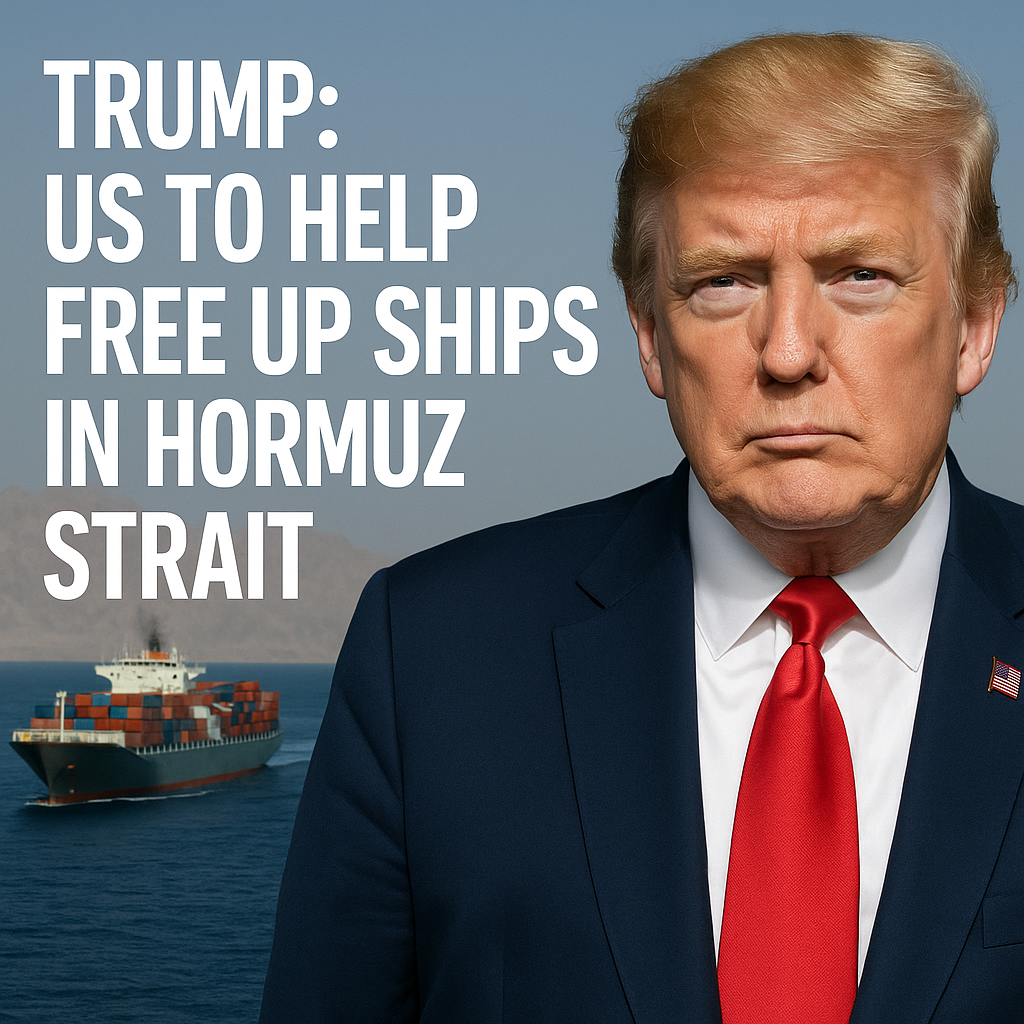
Trump: US to Help Free Up Ships in Hormuz Strait

Navigating the Hormuz Strait: U.S. Involvement in Maritime Security
The Hormuz Strait has become a focal point of concern in global maritime security, a critical passageway through which approximately 20% of the world’s petroleum passes. In light of ongoing tensions in the region, former President Donald Trump recently stated that the United States would take measures to facilitate the movement of ships navigating this crucial waterway.

The Importance of the Hormuz Strait
The strategic significance of the Hormuz Strait cannot be understated. Stretching approximately 21 miles between Iran and Oman, it serves as the gateway for oil exports from the Gulf region. Given that many nations, including major economies, rely heavily on oil transported through this passage, any disruptions can have far-reaching economic implications. According to Al Jazeera, Trump’s comments come amidst increasing friction with Iran, where maritime navigation has been threatened by various incidents, including disruptive actions by Iranian forces.


Factors Influencing U.S. Involvement
Multiple factors are driving the U.S. decision to enhance its role in protecting maritime navigation in the Gulf:


1. Economic Stability: Disruptions in the Strait can lead to dramatic increases in oil prices, affecting economies worldwide. By ensuring safe passage, the U.S. aims to stabilize global oil markets.
2. Regional Security: Iran has threatened to block the Strait during tensions, particularly regarding its nuclear ambitions and broader regional conflicts. The U.S. intends to prevent such actions through a show of force and cooperative measures with allies.
3. Strategic Partnerships: The U.S. has historically engaged in collaborative maritime operations with allied nations in the region. By working together, these countries can create a more secure atmosphere, as reported by RT News.
Diverse Perspectives on Maritime Security
While many support the U.S.’s promise to secure maritime passage in the Strait, opinions are divided on how effective this strategy will be. Some proponents argue that U.S. involvement is essential for maintaining order and peace in the region. According to Sky News, engaging with allied navies to patrol the Strait could establish a deterrent against disruptive activities from adversarial nations, particularly Iran.
Conversely, critics argue that U.S. military presence can escalate tensions rather than alleviate them. As highlighted in certain articles from Al Jazeera and RT, there are concerns that a heightened U.S. military presence could provoke further hostility from Iran, potentially leading to conflict rather than resolution. Historically, U.S. actions in the region have sometimes led to unintended escalation, and critics advise a more nuanced diplomatic approach if long-term stability is the goal.
Balancing Maritime Security and Diplomacy
Trump’s commitment to acts of maritime security raises the question of how to balance military preparedness with diplomatic efforts. Some analysts suggest that while securing trade routes is critical, fostering dialogue with nations such as Iran is equally important. The alternating approach of deterrence and diplomacy could provide a pathway to sustained peace.
In recent months, various diplomatic initiatives have emerged aimed at easing tensions in the region. Yet, these initiatives often fall short of significant breakthroughs, partly due to distrust among the key players. For instance, while Iran asserts its rights to operate within the Strait, the U.S. and its allies view actions that threaten shipping as provocations that must be met with resolve.
The Road Ahead: Navigating Challenges
As the U.S. implements strategies to ensure safe passage through the Hormuz Strait, several challenges remain:
– Regional Alliances: Effectively engaging with regional allies will be pivotal. The strength of coalitions can influence how well maritime security operations succeed.
– Iran’s Response: Observing how Iran reacts to U.S. involvement will be essential. Their historical assertion of control in the waters around the Strait poses a constant challenge.
– International Collaboration: Wider international support, involving non-U.S. allies, could provide a comprehensive approach to ensuring safety in maritime channels without stoking tensions further.
In conclusion, the U.S. position to help free up ships in the Hormuz Strait represents an important development in addressing a potentially volatile situation. The interplay of economic stability, regional security, and the dynamics of international relations will shape how successfully this endeavor unfolds. Whether through military presence or diplomatic negotiation, the world will be watching closely to see how the U.S. navigates this complex geopolitical waterway.















