
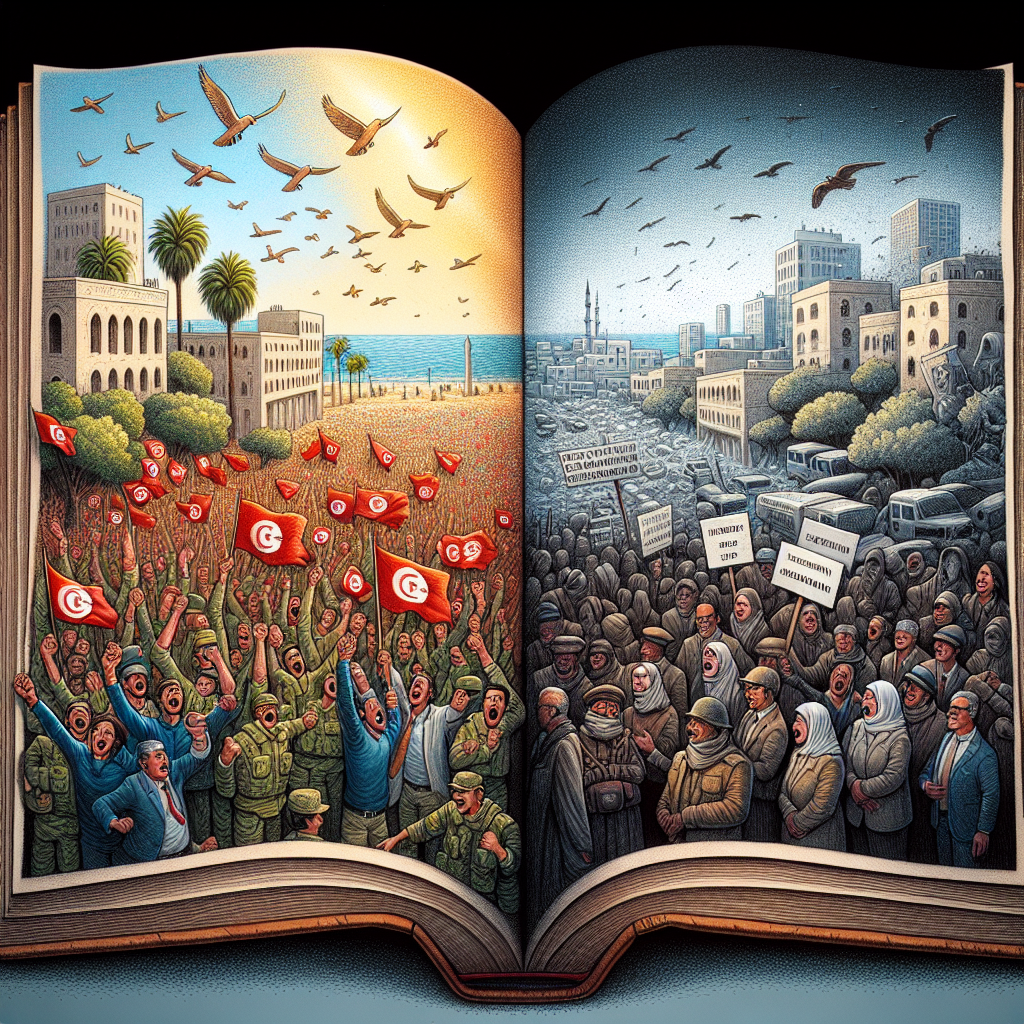
Tunisia’s Revolution 14 Years Later: Unveiling the Illusions

Tunisia’s Revolution 14 Years Later: Unveiling the Illusions
Introduction
Fourteen years after the Tunisian Revolution, the nation stands at a crossroads, grappling with the promises and pitfalls of its democratic transition. This analysis delves into the current state of Tunisia, examining the socio-political and economic landscape that has emerged since the revolution.

The Revolution’s Legacy
The revolution, which sparked the Arab Spring, was initially hailed as a beacon of hope for democratic reform. However, the journey has been fraught with challenges.


- Political Instability: Frequent changes in government and leadership have hindered consistent policy implementation.
- Economic Struggles: High unemployment rates and inflation continue to plague the economy.
- Social Discontent: Many citizens feel disillusioned with the slow pace of change and lack of tangible improvements in their daily lives.
Current Challenges
Despite initial optimism, Tunisia faces several ongoing challenges that threaten its democratic progress.


- Corruption: Endemic corruption remains a significant barrier to effective governance and economic development.
- Security Concerns: The threat of terrorism and regional instability poses risks to national security.
- Political Fragmentation: A divided political landscape complicates efforts to build consensus and implement reforms.
Opportunities for Renewal
Amidst these challenges, there are opportunities for Tunisia to revitalize its democratic journey.
- Civic Engagement: Increased participation from civil society can drive accountability and reform.
- International Support: Strategic partnerships and aid can bolster economic recovery and stability.
- Youth Empowerment: Harnessing the potential of the younger generation can lead to innovative solutions and renewed hope.
Conclusion
Fourteen years after the revolution, Tunisia’s path to democracy remains complex and multifaceted. While significant challenges persist, there are also opportunities for renewal and progress. The nation’s future hinges on its ability to address these issues and harness the potential of its people to build a more stable and prosperous society.















