
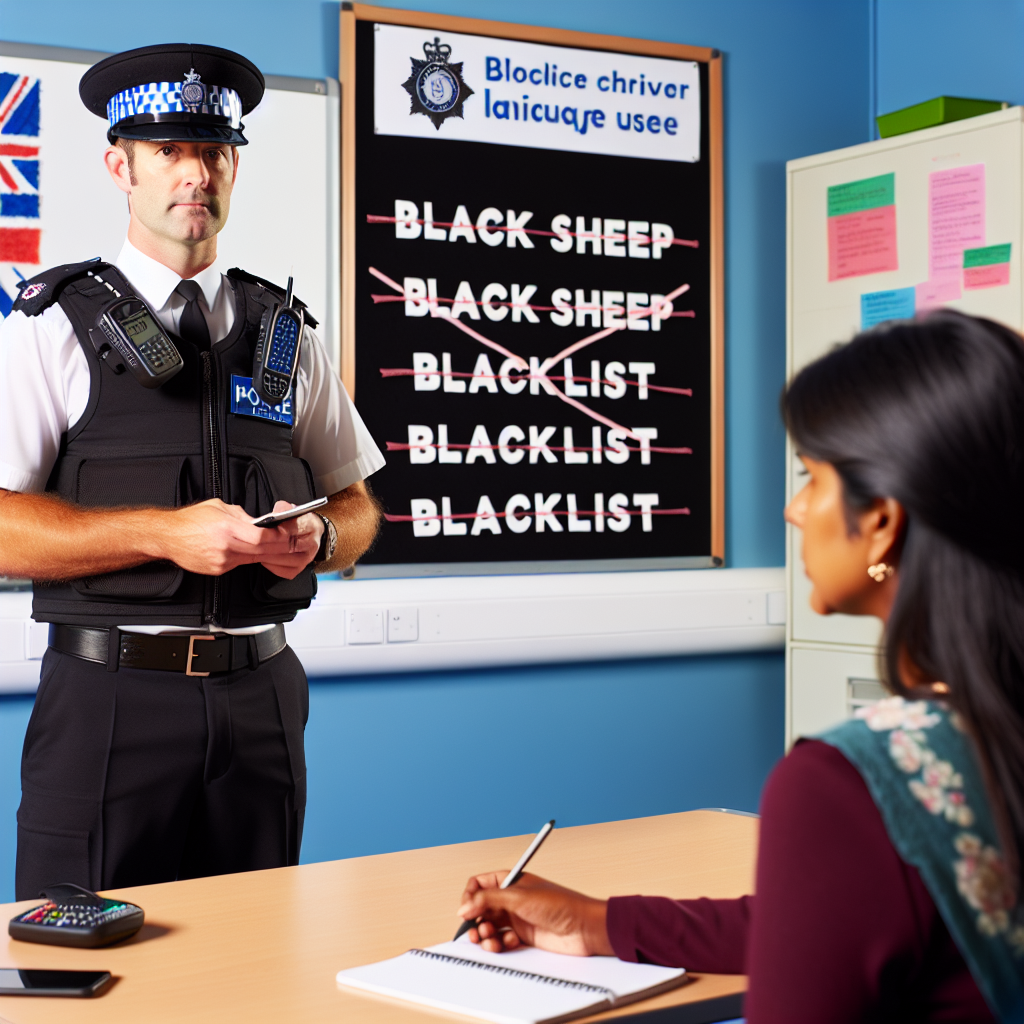
UK Police Advised Against Using Terms Like ‘Black Sheep’ and ‘Blacklist’

UK Police Advised Against Using Terms Like ‘Black Sheep’ and ‘Blacklist’
Introduction
In a move towards more inclusive language, UK police forces have been advised to avoid using certain terms that may carry racial connotations. This guidance is part of a broader effort to promote diversity and sensitivity within law enforcement communication.

Key Recommendations
- Language Sensitivity: Officers are encouraged to be mindful of the language they use, particularly terms that could be perceived as racially insensitive.
- Specific Terms: Phrases like “black sheep” and “blacklist” are highlighted as examples of language to avoid.
- Alternative Phrasing: Suggestions for alternative terms are provided to ensure clarity and inclusivity.
Rationale Behind the Guidance
The guidance aims to foster a more inclusive environment within the police force and the communities they serve. By addressing language that may unintentionally perpetuate racial stereotypes, the initiative seeks to build trust and improve community relations.


Implementation and Impact
- Training Programs: Police forces are expected to incorporate these recommendations into their training programs.
- Community Engagement: The initiative is part of a larger strategy to engage with diverse communities and address concerns about racial bias.
- Feedback Mechanism: Ongoing feedback from officers and the public will be crucial in assessing the effectiveness of these changes.
Conclusion
The advisory for UK police to avoid terms like “black sheep” and “blacklist” underscores a commitment to fostering an inclusive and respectful environment. By adopting more sensitive language, the police aim to enhance community trust and demonstrate their dedication to diversity and equality.














