
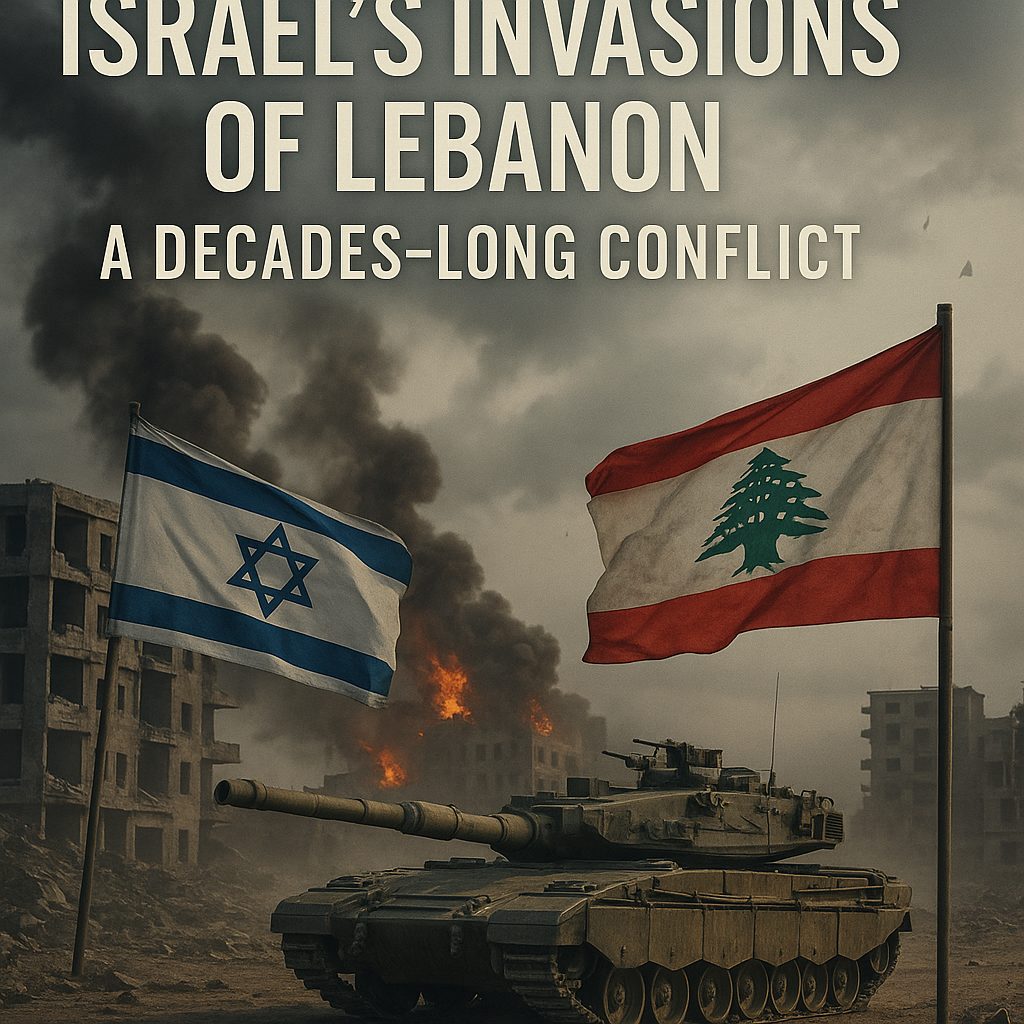
Israel’s Invasions of Lebanon: A Decades-Long Conflict

Israel’s Invasions of Lebanon: A Decades-Long Conflict
Israel’s invasions of Lebanon have unfolded as complex acts of military engagement characterized by historical grievances and shifting political dynamics. Over several decades, these incursions have shaped not only the landscape of Lebanon but also the very fabric of Israeli-Lebanese relations.

Historical Context of the Conflict
The roots of Israel’s military actions in Lebanon extend back to the mid-20th century, with pivotal moments that echoed the broader Arab-Israeli conflict. The most significant of these invasions were during the 1982 Lebanon War and the more recent escalations in 2006. Each event was driven by a mix of strategic, political, and existential concerns.


The 1982 invasion, initiated under Prime Minister Menachem Begin and Defense Minister Ariel Sharon, aimed to root out the Palestine Liberation Organization (PLO), which had established a stronghold in southern Lebanon. The operation resulted in a prolonged occupation that lasted until 2000, leading to significant casualties on both sides, including the massacre at Sabra and Shatila, which drew international condemnation. According to various reports, thousands of Lebanese civilians were caught in the crossfire, leading to long-lasting bitterness and resentment toward Israeli forces.


In contrast, the 2006 conflict emerged as a response to Hezbollah’s cross-border raids and rocket attacks into northern Israel. The Israeli military aimed to dismantle Hezbollah’s infrastructure while reclaiming security along its northern border. The war lasted for 34 days, resulting in substantial destruction in Lebanon and significant Israeli casualties. According to statistics, over 1,200 Lebanese were reported killed, alongside 160 Israelis, dramatically highlighting the human costs of these military endeavors.
Diverging Perspectives on Military Actions
Opinions on these invasions differ widely. Proponents of Israel’s strategy argue that such actions were vital for national defense against hostile entities like Hezbollah, which has been deemed a terrorist organization by Israel and several Western nations. These advocates maintain that the military incursions are preemptive measures aimed at safeguarding Israeli citizens from cross-border attacks and existential threats.
Conversely, critics argue that these invasions are punitive and exacerbate regional instability. Detractors highlight the humanitarian toll on Lebanese civilians, the destruction of infrastructure, and the long-term implications of fostering a cycle of violence. They argue that the invasions have not only failed to achieve their strategic objectives but have also led to greater animosity and empowered groups like Hezbollah by framing them as defenders of Lebanese sovereignty against foreign aggression.
Reports from various sources reveal a consensus that, while Israel’s tactical goals may have been addressed temporarily, the strategic outcomes have often been counterproductive. Opinions vary widely, with some praising Israel’s military capacity and others condemning its tactics as excessively forceful. For example, in the wake of the 2006 war, analysts noted that rather than dismantling Hezbollah, the invasion had allowed it to strengthen its position within Lebanon and bolster its reputation among its supporters.
The Role of International Actors
The international community’s response to these invasions further complicates the narrative. The United Nations has repeatedly called for ceasefires and peacekeeping efforts following major conflicts, yet the resolutions often lack robust enforcement mechanisms. Nations such as the United States have historically supported Israel, both politically and militarily, citing shared democratic values and security concerns. However, this support has been viewed with skepticism in Lebanon and throughout the Arab world, often fuelling perceptions of bias.
On the humanitarian front, NGOs and various human rights organizations have documented the aftermath of these invasions, calling attention to civilian suffering and destruction. Reports indicate that despite Israel’s assertions of targeting militants, civilian zones have often been bombarded, leading to international outcry and demands for accountability.
Conclusion: Lasting Implications and Future Outlook
The ramifications of Israel’s invasions extend far beyond military objectives; they embody a landscape shaped by complex historical grievances, shifting power dynamics, and entrenched narratives of victimhood and resilience. Moving forward, the necessity for dialogue and diplomatic engagement has never been so apparent. As regional tensions continue to flare, both nations must tread carefully, considering the lessons of the past while forging a path toward a more peaceful coexistence.
The delicate balance of military strategy and humanitarian considerations remains a pressing challenge. While Israel’s military operations may serve immediate defense needs, the long-term effects on stability and relations in the region require a reevaluation of strategies and a commitment to dialogue. Only through understanding and addressing the deep-rooted complexities of this conflict can a sustainable resolution be sought.















