
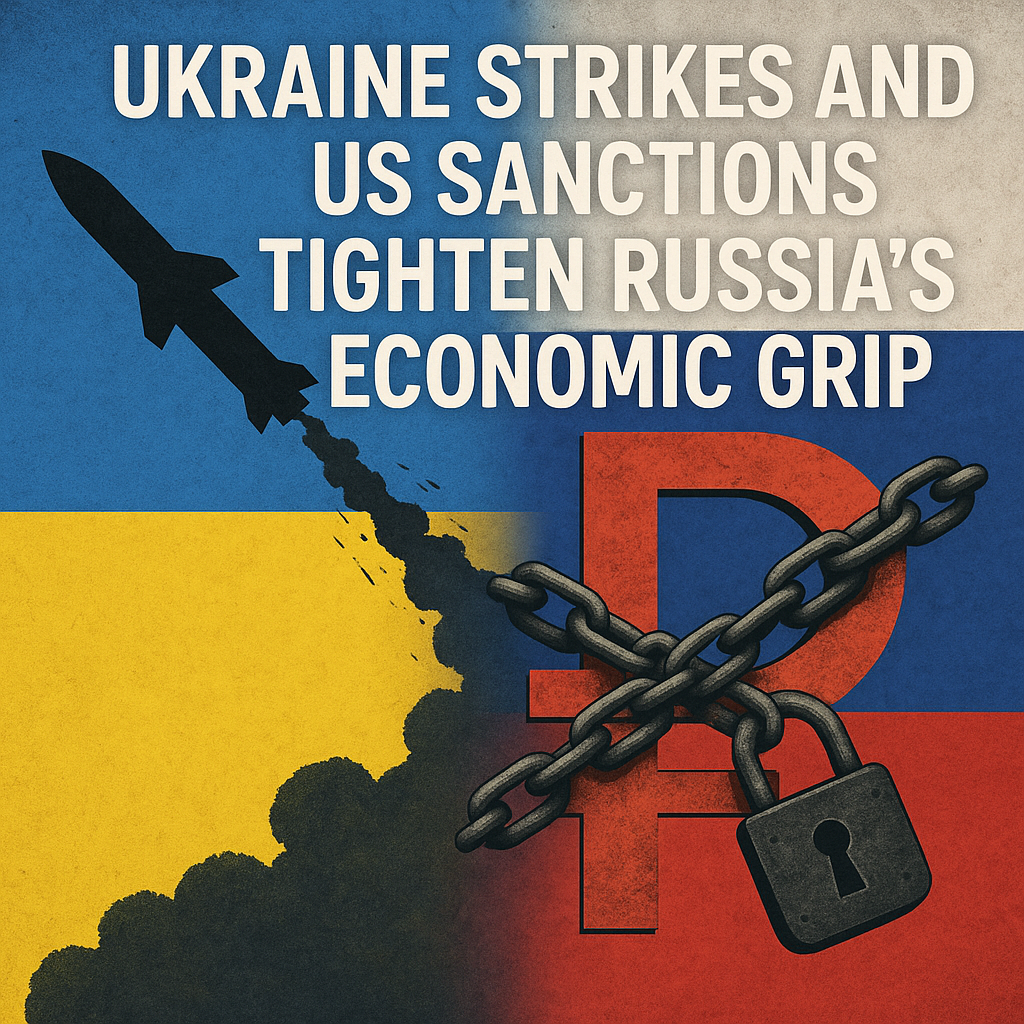
Ukraine Strikes and US Sanctions Tighten Russia’s Economic Grip

Ukraine Strikes and US Sanctions Tighten Russia’s Economic Grip
The ongoing conflict in Ukraine has led to a significant escalation of both military action and economic measures against Russia, as Ukrainian strikes on key infrastructure and US sanctions combine to tighten Moscow’s economic grip. The situation continues to evolve, with various viewpoints emerging about the impact of these dynamics on both Russia’s economy and its capabilities in the ongoing war.

The Impact of Ukrainian Strikes
Recent reports underscore that Ukrainian strikes have targeted crucial infrastructures, such as oil refineries and military supply routes, which are vital for Russia’s war efforts. According to a Sky News article, these strikes have been strategically aimed to disrupt Russia’s logistical operations and weaken its energy supplies. Such operations are part of a broader military strategy to degrade Moscow’s ability to sustain its military campaigns.


Key Outcomes from the Strikes
1. Disruption of Supply Chains: Ukrainian attacks have significantly disrupted the supply chains vital for Russia’s military operations. Targeting key facilities has slowed the movement of resources, thus limiting the pace at which Russia can replenish its military capabilities.


2. Boost to Ukrainian Morale: Successful operations against Russian infrastructure often lead to increased morale within the Ukraine armed forces. These victories not only serve as tactical gains but also provide a sense of progress that resonates with the wider population supporting the war effort.
3. Civilian Repercussions: However, these strikes are not without their complexities. Incidents leading to civilian casualties have been reported, bringing attention to the ethical implications of military actions. The balance between military objectives and humanitarian concerns remains a delicate one.
US Sanctions: A Financial Squeeze
As Ukraine continues its military efforts, the United States has escalated its sanctions against Russia, aimed at crippling its economy. As highlighted in reports from Al Jazeera, these sanctions focus on key sectors such as finance, energy, and technology, reinforcing the financial blockade against Moscow.
The Economic Fallout
1. Inflation and Economic Contraction: Sanctions have led to rampant inflation within Russia, causing rising costs for everyday goods. Many economists argue that this financial strain is a sign of the effectiveness of the Western sanctions, which aim to cut off vital revenue streams that finance Russia’s war efforts.
2. Isolation from Global Markets: With a significant portion of Western businesses withdrawing from Russia and financial institutions facing restrictions, the country’s economy is experiencing increased isolation. Reports suggest that this exclusion from global markets could lead to long-term economic stagnation.
3. Contrasting Perspectives: However, not all viewpoints align on the efficacy of these sanctions. Some analysts argue that while sanctions have indeed hurt Russia’s economy, they have also led to more resilient adaptations within the country, fostering domestic production and reducing reliance on Western imports. This duality in economic strategy could potentially offset some negative impacts of the sanctions.
An Uncertain Future
The complex interplay between Ukrainian military actions and US sanctions raises questions about the future course of the conflict. While the aim of Ukraine is to regain its sovereignty and diminish Russia’s military capabilities, the long-term effectiveness of sanctions remains under scrutiny. Economists and political analysts are still sifting through data to ascertain whether the financial pressure will ultimately lead to a change in Russian policy or military aggressiveness.
Considerations Moving Forward
– Escalation vs. Deterrence: The ongoing strikes may provoke a more aggressive response from Russia, which could escalate the conflict. Alternatively, if effectively combined with sanctions, such actions may deter Moscow’s aggression and lead to potential negotiations.
– Humanitarian Concerns: Any further military action must consider the humanitarian implications. Ongoing civilian casualties could lead to a shift in international opinion, potentially affecting the support Ukraine receives from its allies.
– The Global Economic Lens: The repercussions of this conflict extend beyond Russia and Ukraine; global markets are also feeling the strain. The interconnectedness of economies means that sanctions affecting Russian exports could lead to ripple effects worldwide, influencing energy prices and agricultural markets.
Conclusion
As both Ukrainian strikes and US sanctions evolve, the landscape of the conflict remains fluid and complex. While military strikes aim to weaken Russia’s capabilities, the sanctions strive to undermine its economic foundation. The interplay between these two forces will continue to shape the dynamics of the conflict, presenting both opportunities for Ukraine and potential repercussions for its allies. Moving forward, finding a balance between military action and economic pressure will be crucial in defining the outcome of this challenging geopolitical landscape.















