
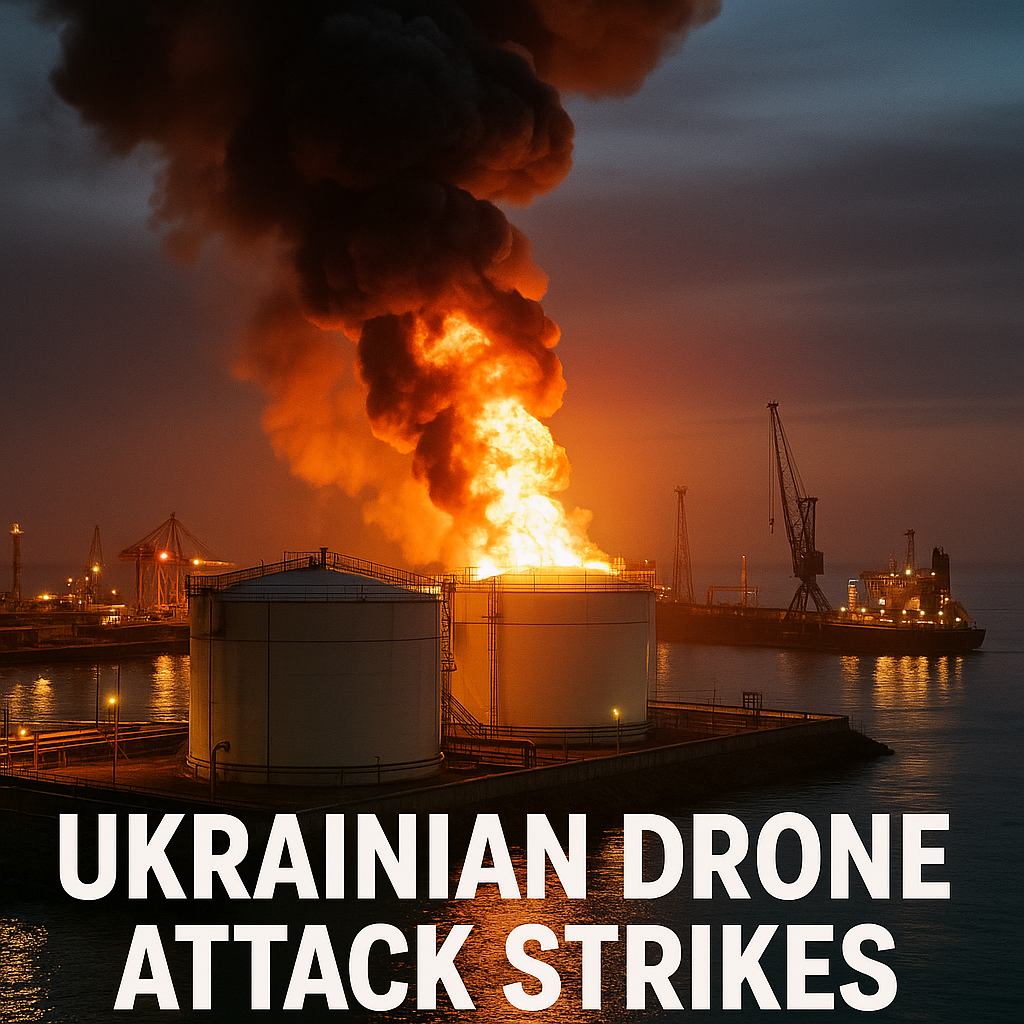
Ukrainian Drone Attack Strikes Russia’s Tuapse Port

Ukrainian Drone Attack Strikes Russia’s Tuapse Port: Analyzing the Impact
The recent Ukrainian drone attack on Russia’s Tuapse port marks a significant escalation in the ongoing conflict, raising questions about the strategic objectives of both Ukraine and Russia in the region. This incident underscores the complexities of modern warfare and the shifting dynamics of international relations.

The Details of the Attack
Reports indicate that the drone strike targeted key infrastructure within the port, which is essential for Russia’s maritime capabilities. Al Jazeera described the attack as a “deliberate attempt to disrupt supply lines” that are vital for the Russian military. The use of drones not only amplifies the capabilities of Ukraine’s forces but also signifies a shift towards asymmetric tactics in warfare. Drones enable smaller military forces to strike at significantly larger adversaries with precision, thereby leveling the battlefield to some extent.


Russia, in response, has termed the attack an act of aggression, further escalatory rhetoric that has characterized the conflict. State media has portrayed the strike as a breach of international law, emphasizing that Ukraine’s efforts to bolster military capabilities through drone technology warrant strong retaliation. Official sources have hinted at potential countermeasures, which could lead to further military engagements in the Black Sea region.


Diverging Perspectives on Strategic Implications
The incident at Tuapse has elicited varied viewpoints regarding its long-term implications for the conflict. According to a piece from RT, proponents of a more aggressive stance advocate using retaliation to demonstrate military strength. They argue that a robust response would deter further Ukrainian attacks and reaffirm Russia’s dominance in the region.
On the opposing side, analysts from Al Jazeera suggest that while immediate military action may seem appealing, it could inadvertently escalate tensions further and invite international condemnation. This viewpoint holds that the attack could provide Ukraine with a propaganda victory, showcasing its capability to strike deep within Russian territory and enhancing its legitimacy on the world stage.
The Broader Context: Geopolitical Ramifications
The drone attack has not occurred in isolation; it takes place within a broader context of shifting alliances and rising tensions. With NATO’s support of Ukraine and increasing military aid, the geopolitical stakes are high. The conflict remains complex, with various regional powers watching closely.
Some analysts believe that Ukraine’s capability to conduct such drone strikes might embolden other nations that feel threatened by Russia’s military actions. This could lead to a reevaluation of geopolitical alignments in Eastern Europe and beyond. Conversely, many in Russia perceive this as an existential threat, potentially shifting public opinion towards a more hardline approach domestically.
What Lies Ahead: Uncertainties and Perspectives
The incident at the Tuapse port raises numerous questions. Will Ukraine continue to employ drone strikes as a primary tactic? How will Russia respond militarily and politically? As opinions diverge, uncertainty remains a key theme. Some military experts assert that Ukraine’s drone tactics could play a crucial role in its strategy to reclaim territory, while others warn against overreliance on such technologies amid evolving Russian countermeasures.
Diverging opinions exist even among military analysts and geopolitical experts. While some advocate for a defensive strategy, emphasizing the importance of stabilizing the situation, others argue for a more aggressive stance that capitalizes on current Ukrainian military successes. This dichotomy illustrates the difficulty in forming a consensus on the best path forward.
Conclusion
The Ukrainian drone attack on Tuapse port is emblematic of modern warfare’s complexities, marked by rapid technological advancements and evolving military strategies. As both sides contemplate their next moves, the world watches closely, aware that each decision carries the potential for escalation. The ongoing conflict remains fraught with uncertainties, and only time will reveal the full ramifications of this latest incident.
In navigating this chaotic landscape, it is crucial for both sides, as well as the international community, to weigh options carefully, balancing military objectives with the potential for broader consequences.















