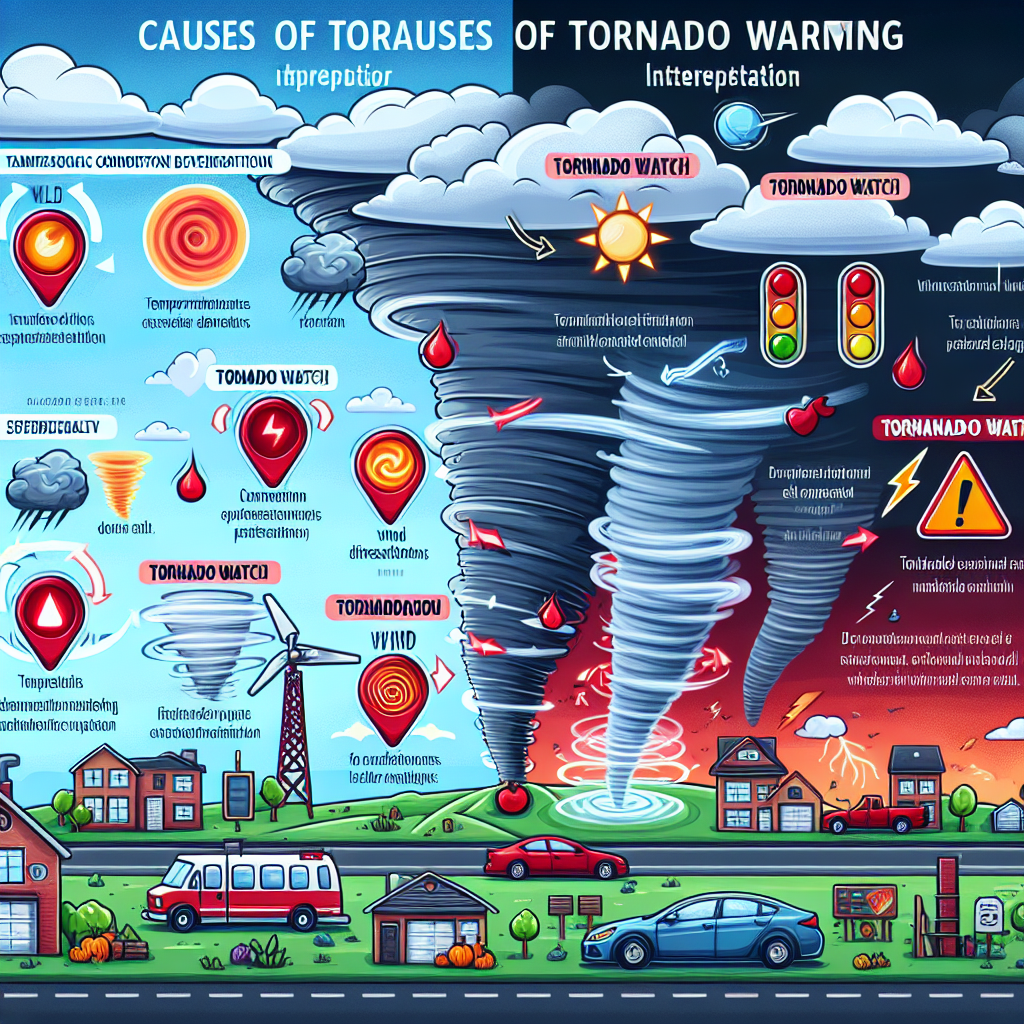
Understanding Tornado Causes and Interpreting Alerts

Understanding Tornado Causes and Interpreting Alerts
The Science Behind Tornado Formation
Tornadoes are one of nature’s most powerful and unpredictable phenomena. Understanding their formation is crucial for improving safety measures and response strategies.

- Atmospheric Conditions: Tornadoes typically form in severe thunderstorms where warm, moist air meets cold, dry air, creating instability.
- Wind Shear: Changes in wind speed and direction with height contribute to the rotation necessary for tornado development.
- Supercells: These are the most common type of storm to produce tornadoes, characterized by a rotating updraft known as a mesocyclone.
Interpreting Tornado Alerts
Effective interpretation of tornado alerts can save lives by providing timely information for taking protective actions.
Ads


- Tornado Watch: Issued when conditions are favorable for tornadoes to develop. It covers a broad area and a longer time frame.
- Tornado Warning: Indicates that a tornado has been sighted or detected by radar. It requires immediate action to seek shelter.
- Emergency Alerts: Utilize multiple channels such as sirens, mobile alerts, and media broadcasts to reach the public quickly.
Preparedness and Safety Measures
Being prepared and knowing how to respond to tornado alerts can significantly reduce risks and enhance safety.
Ads

Ads

- Emergency Kits: Keep a kit with essentials like water, food, and first-aid supplies ready.
- Shelter Plans: Identify safe locations in your home or community, such as basements or storm shelters.
- Community Drills: Participate in local tornado drills to practice response actions.
Conclusion
Understanding the causes of tornadoes and effectively interpreting alerts are vital components of tornado preparedness. By recognizing atmospheric conditions, responding promptly to alerts, and implementing safety measures, individuals and communities can enhance their resilience against these formidable natural events.
Ads

Ads

Ads

Ads

Ads

Ads

Ads

Ads

Ads

Ads

Ads