
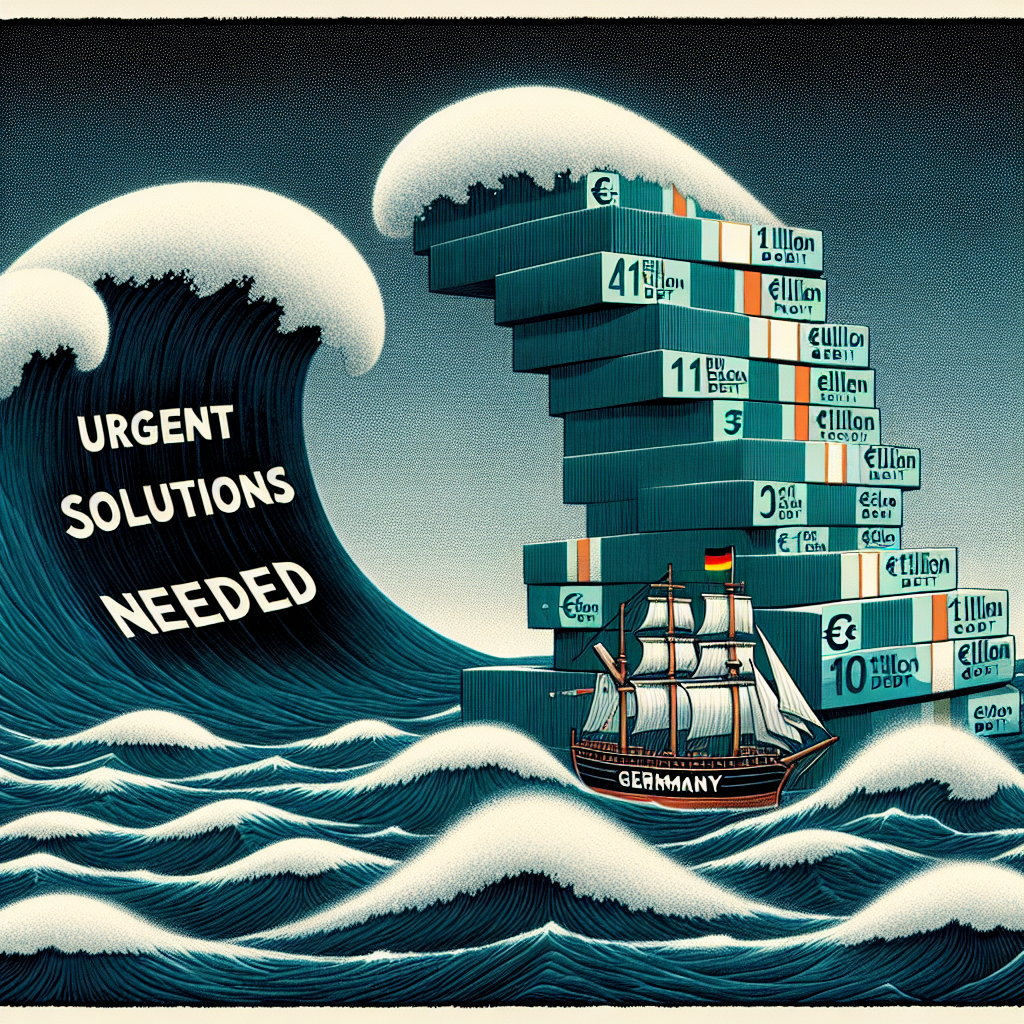
Urgent Solutions Needed: €1 Trillion Debt Won’t Save Germany

Urgent Solutions Needed: €1 Trillion Debt Won’t Save Germany
Overview
Germany, Europe’s largest economy, is facing a critical financial challenge. Despite a proposed €1 trillion debt plan, experts warn that this approach may not be sufficient to address the underlying economic issues. This situation calls for urgent and innovative solutions to ensure long-term stability and growth.

Key Challenges
- Economic Slowdown: Germany’s economy is experiencing a significant slowdown, with growth projections being revised downward.
- Rising Debt Levels: The proposed €1 trillion debt plan could exacerbate the country’s already high debt levels, potentially leading to long-term financial instability.
- Structural Issues: Persistent structural issues, such as an aging population and reliance on traditional industries, continue to hinder economic progress.
Proposed Solutions
- Investment in Innovation: Encouraging investment in technology and innovation to drive new growth sectors.
- Policy Reforms: Implementing comprehensive policy reforms to address structural inefficiencies and improve competitiveness.
- Sustainable Practices: Focusing on sustainable economic practices to ensure long-term environmental and financial health.
Conclusion
Germany’s economic challenges require more than just a financial bailout. While the €1 trillion debt plan may provide temporary relief, it is not a sustainable solution. The country must focus on innovative strategies, policy reforms, and sustainable practices to secure its economic future. Addressing these issues head-on will be crucial for Germany to maintain its position as a leading global economy.
Ads


Ads

Ads

Ads

Ads

Ads

Ads

Ads

Ads

Ads

Ads

Ads


