
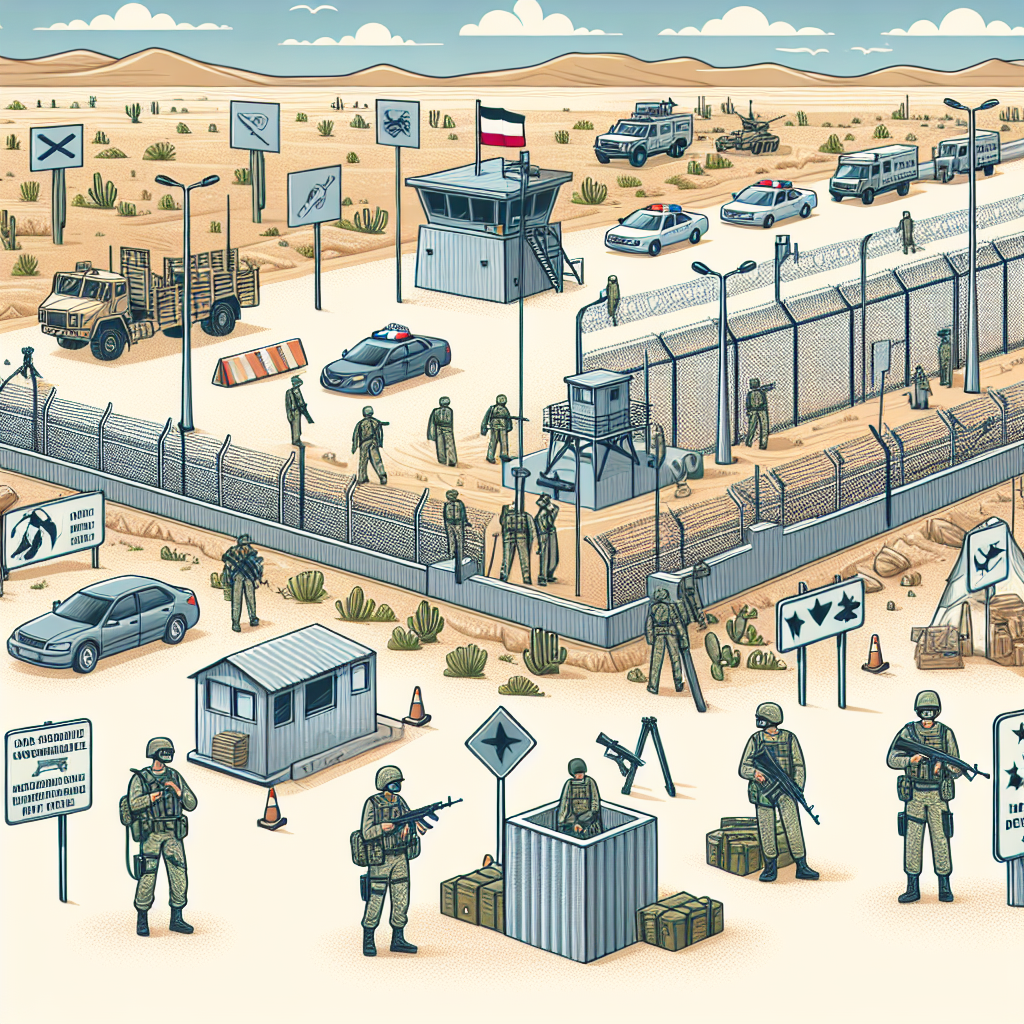
US Establishes Second Military Zone on Mexico Border to Deter Migrants

US Establishes Second Military Zone on Mexico Border to Deter Migrants
Introduction
The United States has announced the establishment of a second military zone along its border with Mexico. This strategic move aims to address the ongoing challenges of illegal immigration and enhance border security.

Key Objectives
- Strengthening Border Security: The new military zone is designed to bolster the existing security measures and provide additional resources to manage the influx of migrants.
- Deterrence Strategy: By increasing military presence, the US aims to deter potential migrants from attempting to cross the border illegally.
- Support for Border Patrol: The military zone will offer logistical and operational support to the US Border Patrol, enhancing their capacity to monitor and control border activities.
Implementation Details
The establishment of the second military zone involves deploying additional troops and resources to key areas along the border. This initiative is part of a broader strategy to address immigration challenges and ensure national security.


Reactions and Implications
- Political Reactions: The decision has sparked a range of reactions from political leaders, with some supporting the move as necessary for national security, while others criticize it as an excessive militarization of the border.
- Impact on Migrant Communities: The increased military presence may lead to heightened tensions and concerns among migrant communities and advocacy groups.
- International Relations: The move could affect US-Mexico relations, with potential diplomatic discussions on border management and migration policies.
Conclusion
The establishment of a second military zone on the US-Mexico border represents a significant step in the US government’s efforts to manage immigration and enhance border security. While it aims to deter illegal crossings, the move has sparked diverse reactions and could have broader implications for international relations and migrant communities.

















