
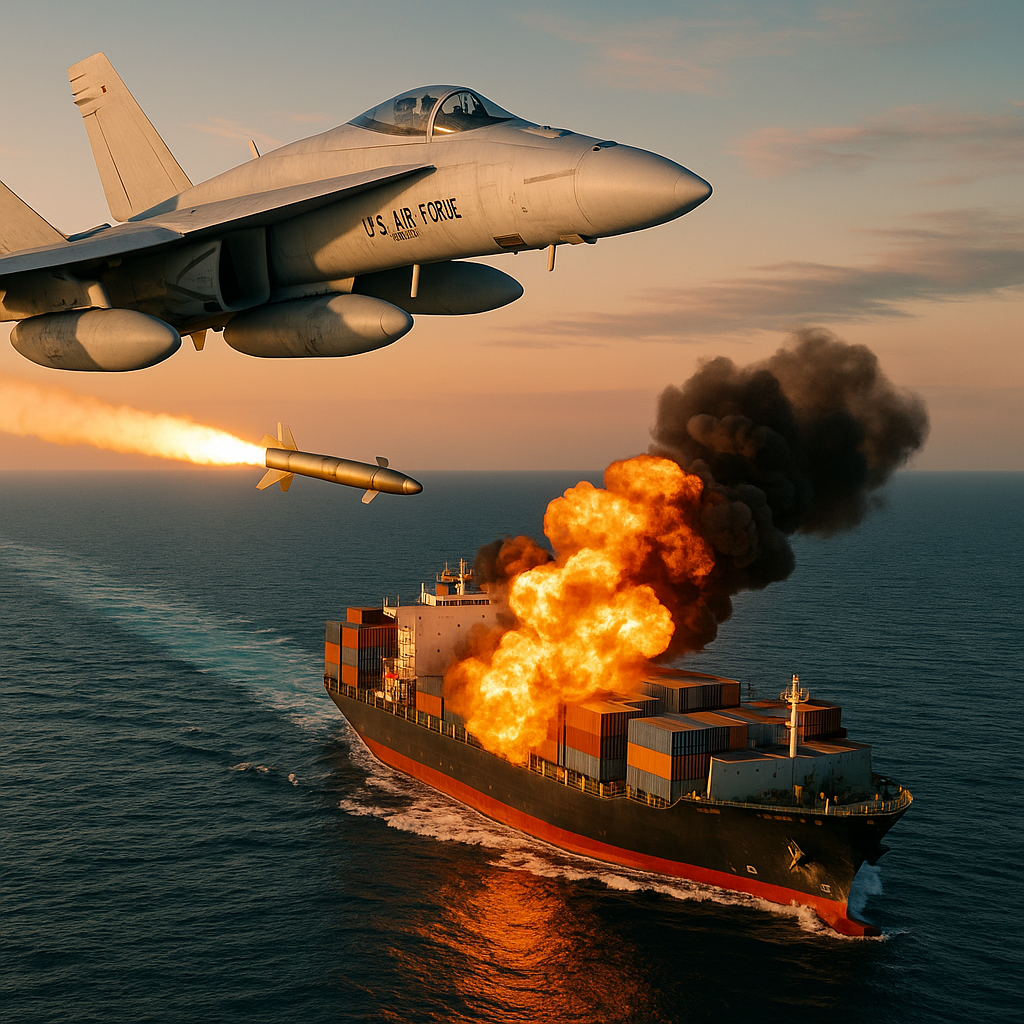
US Fighter Jet Missile Strike on Iranian-Bound Cargo Ship

On a significant day for international maritime security, a U.S. fighter jet carried out a missile strike on an Iranian-bound cargo ship, sparking a flurry of diplomatic concerns and escalating tensions in the region. This event not only underscores the complexities of U.S.-Iran relations but also illustrates the intricate balance of power within Middle Eastern geopolitics.

The Incident: Context and Reactions
Reports confirm that the U.S. Navy targeted the cargo ship after it was found to be allegedly carrying a cargo that violated sanctions. As detailed in various accounts, the U.S. has consistently aimed to curb Iran’s influence and military capabilities, particularly in its maritime routes. The U.S. military’s justification for the strike was based primarily on the belief that the ship was transporting weapons intended for groups hostile to American interests in the region.


Reactions to the missile strike have been polarized. Supporters argue that such proactive measures are necessary to deter potential threats and uphold international laws. In contrast, critics view this as an act of aggression that could further destabilize an already volatile area. According to an Al Jazeera report, analysts highlight that military actions of this nature often lead to retaliatory measures, raising the stakes for U.S. personnel operating in the region and increasing threats to shipping lanes crucial for global trade.


Escalating Tensions: Possible Implications
The strike has not only raised eyebrows among political leaders but has also thrust the subject of sanctions and diplomatic negotiations back into the spotlight. Iranian officials condemned the action, claiming it violates international maritime law and escalates tensions unnecessarily. This incident arrives on the heels of rampant discussions surrounding the 2015 Iran nuclear deal, which the U.S. withdrew from in 2018, causing a cascade of retaliatory actions from both sides.
Military analysts have pointed out that such provocations can lead to an escalation of conflict, especially given the strategic importance of maritime routes in the Middle East. The U.S. maintains that it has a responsibility to protect its interests and allies in the region, especially in light of numerous reported attempts by Iranian forces to disrupt shipping through the Strait of Hormuz.
To give further context, a Sky News report indicated that previous encounters between U.S. and Iranian forces have been marked by “frequent confrontations” as both countries strive to assert their dominance over maritime territories. The recent strike, therefore, might be seen as part of a broader pattern of military engagement amidst escalating hostilities.
Analyzing Perspectives: The Need for Dialogue
While military responses may seem necessary in the short term, many experts advocate for sustained dialogue and diplomatic avenues as the ultimate route to stability. The challenge lies in reconciling varied perspectives on security and national interests. U.S. actions, while aimed at securing peace, risk igniting further conflict, which could spiral beyond control.
Some experts caution that a series of military actions without collaborative diplomatic dialogue may undermine long-term security strategies, especially as Iran expands its influence in neighboring countries. Engaging in discussions can open channels to address not just nuclear concerns but also regional conficts where U.S. and Iranian objectives clash.
In essence, this situation emphasizes the need for balanced strategies that incorporate both military readiness and diplomatic engagement. The path forward remains uncertain, as both nations must navigate their respective national interests while remaining accountable on the international stage.
Conclusion: A Call for Caution
The U.S. fighter jet missile strike on the Iranian-bound cargo ship is emblematic of the complex interplay of military actions, diplomatic negotiations, and international law. With heightened tensions following this incident, it becomes crucial for all involved parties to reassess their approaches and consider avenues for dialogue over aggression. The ramifications of military decisions today will undoubtedly shape the geopolitical landscape of tomorrow, underscoring the need for cautious and calculated responses in an inherently delicate balance of power.















