
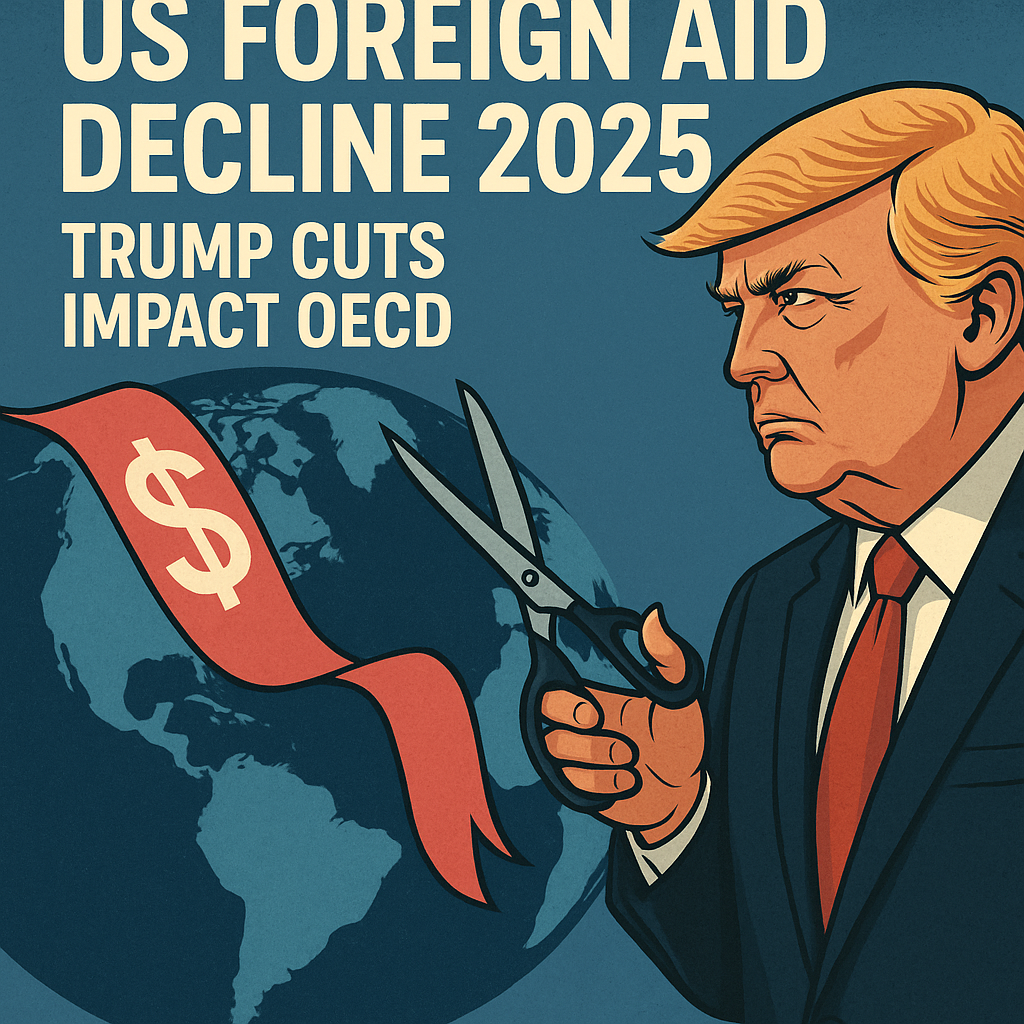
US Foreign Aid Decline 2025: Trump Cuts Impact OECD

The Decline of US Foreign Aid by 2025: Understanding the Impact of Trump’s Cuts
The projected decline of US foreign aid by 2025, largely attributed to budget cuts implemented during Donald Trump’s administration, poses significant implications for international relations and global humanitarian needs. As the world grapples with various humanitarian crises, the intricate dynamics of foreign aid are increasingly coming under scrutiny.

The Scope of Decline: A Quantitative Overview
The Organisation for Economic Co-operation and Development (OECD) has reported a historic decrease in US foreign aid, forecasting a decline that could reshape international aid frameworks. According to Al Jazeera, the figures have dropped to levels not seen in decades, raising questions about America’s commitment to global partnerships.


Key data highlights include:


– Budget Reductions: Under the Trump presidency, foreign aid budgets were slashed significantly. This has created lasting effects, with projections indicating that by 2025, aid could fall to less than half of prior levels.
– Shift in Priorities: The focus has shifted from long-term aid programs aimed at poverty alleviation to prioritizing national security and economic interests, affecting how aid is distributed globally.
Furthermore, an article from RT elucidates the idea that these reductions primarily affect regions in crisis, such as sub-Saharan Africa and parts of the Middle East, where aid is often a stabilizing force.
Varied Perspectives on the Cuts
Supporters of the cuts argue that reallocating resources is necessary to focus on domestic issues. They believe that the US government should prioritize spending on the American populace before extending financial assistance overseas. This perspective is often accompanied by the view that foreign aid does not yield the desired results and that many recipient countries must take greater responsibility for their development.
Conversely, critics assert that the decline in foreign aid jeopardizes global stability. Humanitarian organizations and many global leaders warn that diminished aid can exacerbate poverty, increase migration pressures, and destabilize regions essential for US strategic interest. They argue that immediate investments in foreign aid can yield long-term benefits for both recipients and donor countries, including enhanced security and reduced global tensions.
The Broader Implications for Global Aid Dynamics
Humanitarian Effects
As financial resources dwindle, organizations on the ground face heightened challenges. Aid agencies report that the loss of US funding severely disrupts existing programs that provide vital services, such as healthcare, education, and food security. According to Sky News, countries relying heavily on American assistance for survival, such as Yemen and Afghanistan, are particularly vulnerable to these cuts.
– Increased Suffering: Experts foresee a rise in humanitarian crises, where existing vulnerabilities are exacerbated by a lack of support.
– Displacement and Migration: With aid diminishing, many recipients may be pushed into desperate situations, leading to increased migration flows toward more stable regions, further burdening those economies.
Strategic Ramifications
The decline in aid is not merely a humanitarian crisis but also a strategic concern. Analysts observe that other nations may fill the void left by the US. China, in particular, is stepping into the breach, offering loans and investments to developing nations that align with its broader strategic interests. This shift could lead to greater influence for China in regions historically dominated by US foreign policy.
– Geopolitical Landscape: The reduction in aid could result in a power vacuum, granting other nations opportunities to expand their influence over crucial regions.
– International Relations: Reduced cooperation flows could also strain bilateral relations, particularly with long-time US allies who may feel abandoned during crises.
The Path Forward: Responsibility and Reassurance
While the cuts reflect a significant rethinking of American foreign aid strategy, the consensus remains that a complete abandonment of support will yield detrimental outcomes. Finding a balanced approach that incorporates both domestic needs and global responsibilities is paramount in responding to these anticipated challenges.
To mitigate the negative impacts, future administrations might consider re-evaluating aid strategies to ensure robust, effective responses without fully retracting support. Some advocates suggest:
– Targeted Aid Solutions: Focus on impactful initiatives that involve collaboration with international partners and local agencies to maximize efficiency.
– Public-Private Partnerships: Leverage private sector resources to enhance aid effectiveness and broaden the funding base.
In conclusion, as the US embarks on this new trajectory of foreign aid, navigating the complex interplay between immediate domestic imperatives and long-term global responsibilities will be essential. A nuanced understanding of these dynamics will be crucial in crafting strategies that can effectively respond to the challenges posed by the projected decline in foreign assistance. The stakes are high—not just for those who rely on the aid but also for the strategic landscape that shapes global relations.















