
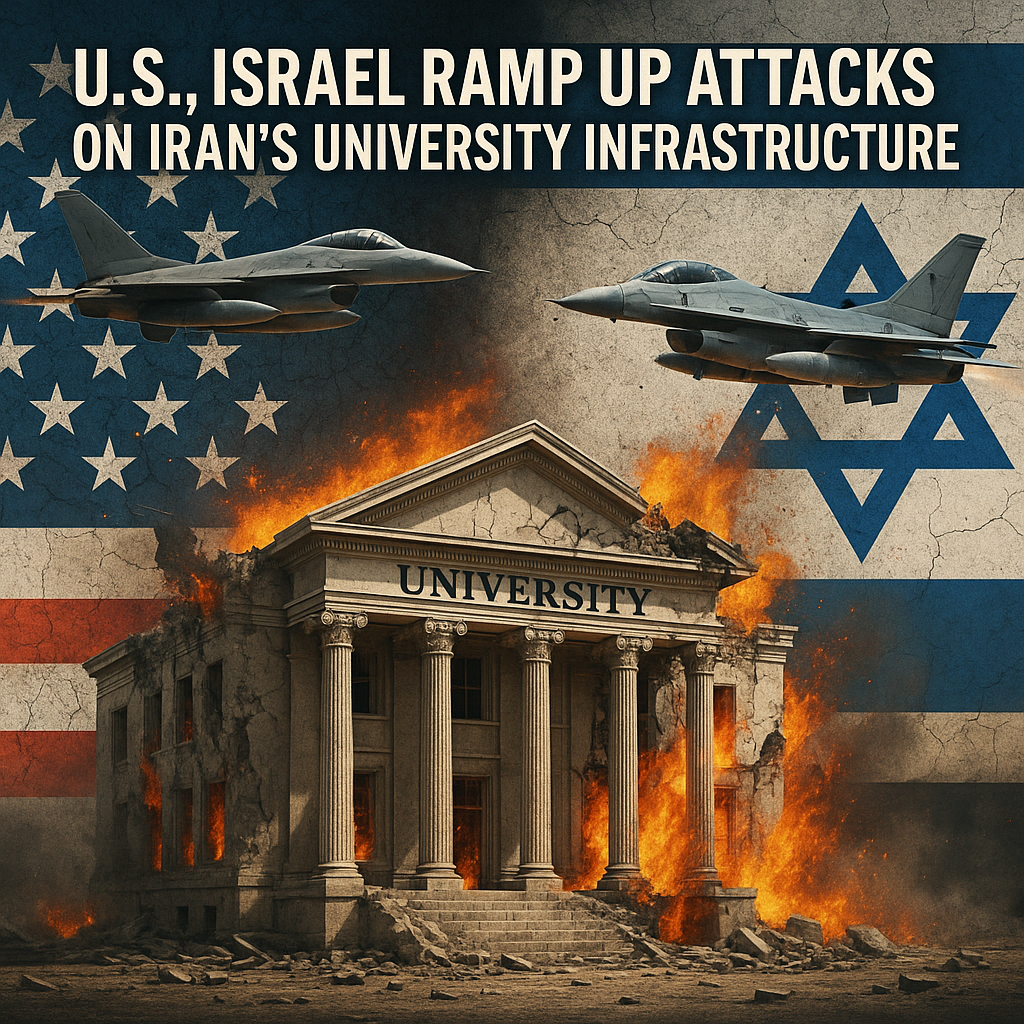
US, Israel Ramp Up Attacks on Iran’s University Infrastructure

US, Israel Ramp Up Attacks on Iran’s University Infrastructure
The recent escalation of military actions by the US and Israel targeting Iran’s university infrastructure marks a significant development in the ongoing tensions between these nations. This shift not only raises questions about educational establishments’ roles in geopolitics but also highlights broader issues concerning academic freedom and the potential ramifications on Iran’s future.

The Targeting of Academic Institutions
As reported by Al Jazeera, Iranian universities have increasingly become focal points in the US and Israeli military strategies. These attacks are framed as countermeasures against perceived threats, particularly regarding Iran’s nuclear ambitions and its influence in the region. The involvement of higher education institutions in these military operations raises ethical considerations about the role of academia in conflict zones and the implications for students and faculty members.


Diverging Perspectives on Justifications
Proponents of the strikes, including some US officials, argue that targeting such infrastructure is essential to deter Iran from pursuing its controversial nuclear program. They assert that universities are critical to the development of technologies that could further Iran’s military capabilities. For example, high-ranking sources suggest that research conducted within these institutions might indirectly support weapons development, thereby legitimizing the military actions.


Conversely, critics of this approach contend that targeting educational facilities undermines international norms regarding the protection of civilian infrastructure during conflicts. Academic institutions are traditionally seen as bastions of knowledge and cultural exchange, and their destruction could resonate beyond immediate military objectives. As RT highlights, the strikes could result in broad condemnation, potentially isolating the US and Israel diplomatically while simultaneously galvanizing nationalist sentiments within Iran.
Consequences for Iran’s Academic Community
The implications for Iran’s academic community are profound and multifaceted. For one, the strikes instill a climate of fear among students and educators. Many may reconsider pursuing academic careers, leading to a brain drain that could impede the country’s long-term development. Faculty members may face increased scrutiny, stifling freedom of expression and academic research. Reports suggest that many scholars are contemplating relocation to countries with greater academic freedoms, which could cripple Iran’s intellectual capital.
Furthermore, the ongoing military actions risk exacerbating the existing tensions within Iranian society. The perception of universities as legitimate military targets may shift public sentiment against the US and Israel, fueling anti-Western narratives and uniting various factions within Iran. The growing animosity could also hinder diplomatic efforts aimed at resolving global tensions surrounding Iran’s nuclear developments, as internal divides deepen amidst external pressures.
The Broader Geopolitical Context
This escalation reflects a broader geopolitical landscape characterized by escalating tensions and power dynamics. In a region where alliances shift rapidly, the strategic calculus of the US and Israel incorporates not only immediate threats but also long-term strategic initiatives. However, by placing educational institutions in their crosshairs, they risk alienating populations that might otherwise be sympathetic to other aspects of their agendas, such as economic sanctions or reforms.
According to views expressed in coverage from Sky News, military actions against educational infrastructure may provoke retaliatory actions from Iran, compounding the cycle of violence. Such a scenario would contribute to an atmosphere where dialogue yields to hostility, narrowing the possibilities for constructive engagement.
Conclusion: Navigating Complexities and Ethical Dilemmas
In light of the US and Israel ramping up attacks on Iran’s university infrastructure, the complexities of this situation are both numerous and significant. While there are arguments for the strategic necessity of such military interventions, the broader ethical implications cannot be overlooked. The targeting of educational facilities raises questions about the sanctity of academic freedom and the potential long-term effects on Iran’s societal progression.
As this tension continues to unfold, it is crucial for policymakers to weigh the immediate benefits against potential backlash, both domestically and internationally. The challenge remains to navigate these complex issues without further destabilizing an already volatile region. Ultimately, a dialogue-centered approach may provide a more sustainable pathway towards resolution, rather than a continued reliance on military engagement.















