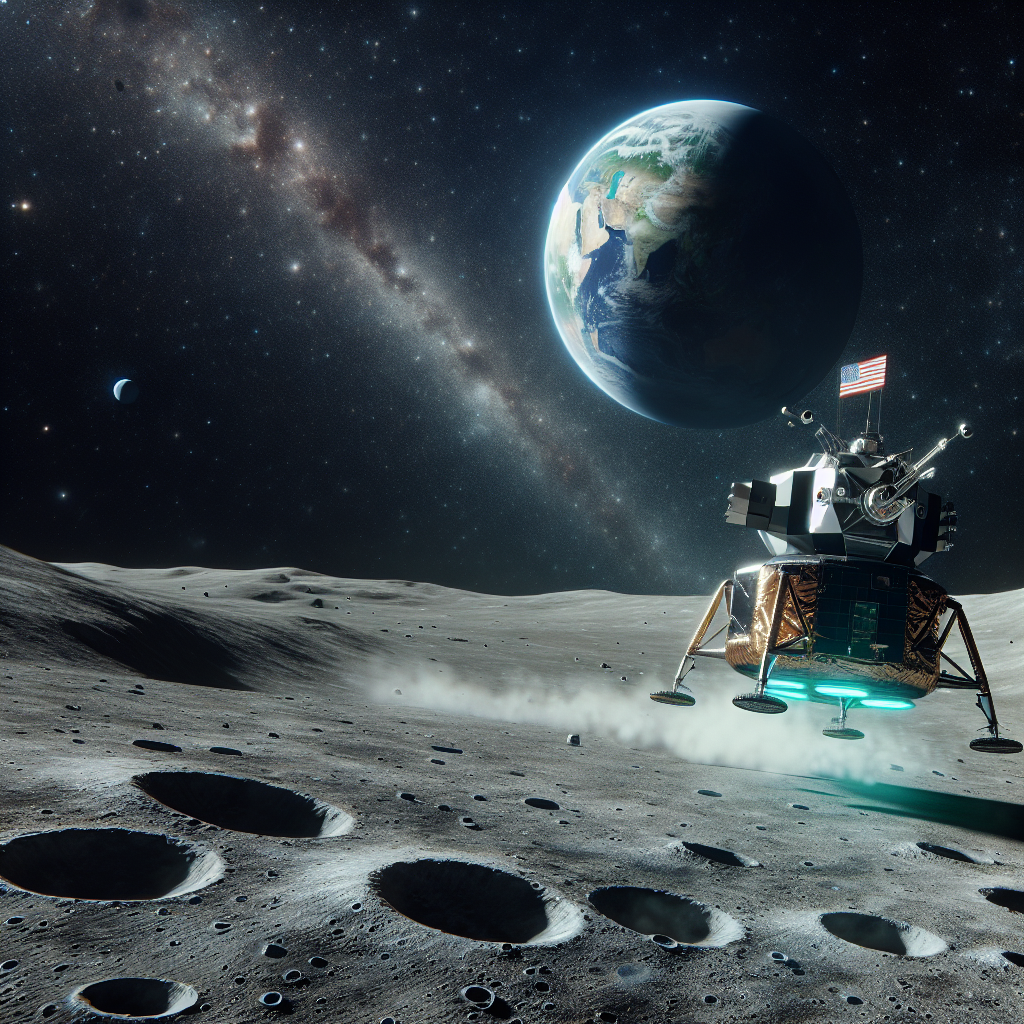
US Spaceship Makes Uneven Landing Near Moon’s South Pole

US Spaceship Makes Uneven Landing Near Moon’s South Pole
Overview of the Mission
The recent US space mission aimed to explore the Moon’s south pole, a region of significant scientific interest due to its potential water ice reserves. The mission marks a pivotal step in lunar exploration, with implications for future manned missions and the establishment of a sustainable lunar presence.

Key Highlights of the Landing
- Uneven Terrain: The spaceship encountered challenging terrain, resulting in an uneven landing. This highlights the complexities of landing in the Moon’s less-explored regions.
- Technological Achievements: Despite the uneven landing, the mission successfully demonstrated advanced landing technologies designed to handle the Moon’s rugged surface.
- Scientific Objectives: The mission aims to gather data on the Moon’s south pole, focusing on its geology and potential resources.
Implications for Future Missions
The mission’s outcomes are crucial for planning future lunar expeditions. The data collected will inform strategies for landing and operating in the Moon’s challenging environments, paving the way for human exploration and potential colonization.


Conclusion
The US spaceship’s uneven landing near the Moon’s south pole underscores the challenges of lunar exploration but also highlights significant technological advancements. The mission’s success in gathering valuable data sets the stage for future explorations and the potential for a sustained human presence on the Moon.