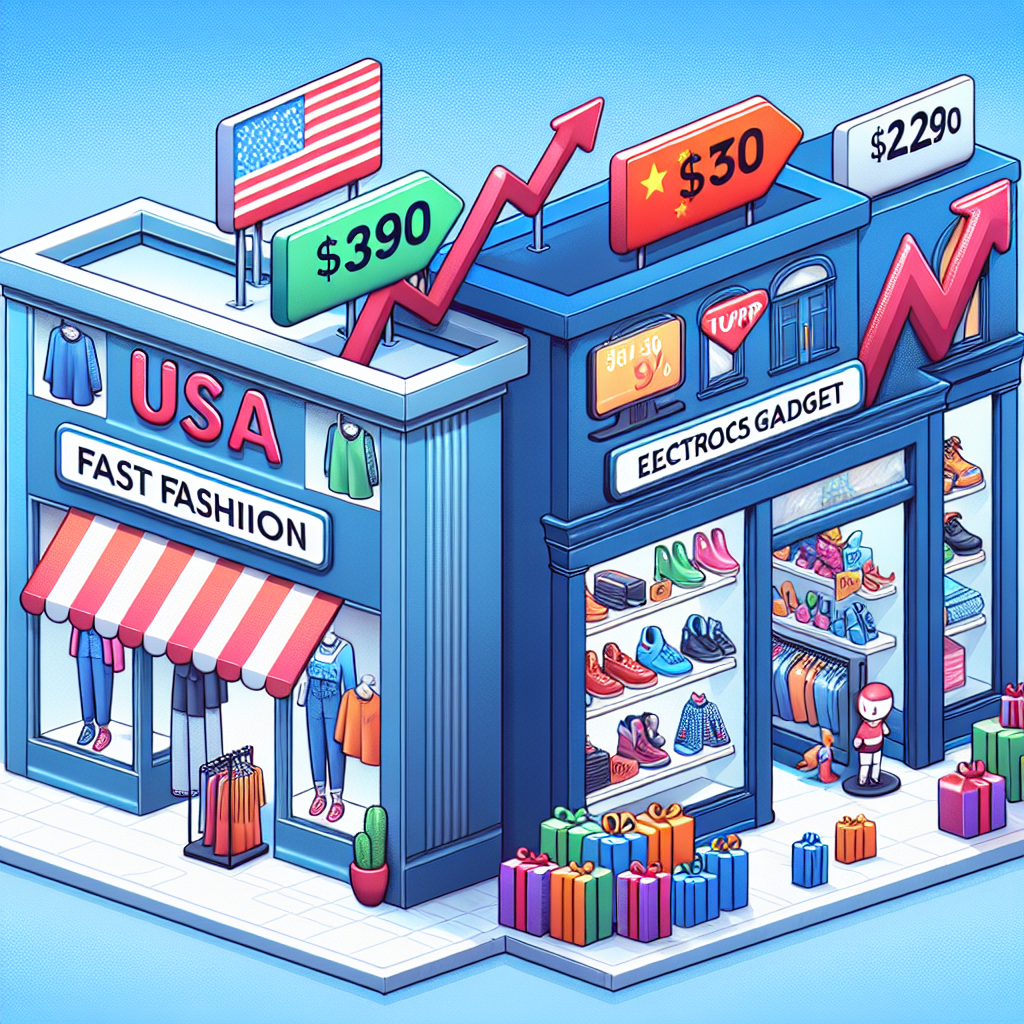
US Tariffs on Chinese Imports May Increase Costs for Fast Fashion, Electronics, and Toys

US Tariffs on Chinese Imports: Impact on Fast Fashion, Electronics, and Toys
Introduction
The United States is considering increasing tariffs on Chinese imports, a move that could significantly affect various consumer sectors. This development is poised to impact industries such as fast fashion, electronics, and toys, potentially leading to higher costs for consumers and businesses alike.

Key Sectors Affected
Fast Fashion
Fast fashion brands, known for their rapid production cycles and affordable pricing, may face challenges due to increased tariffs. The reliance on Chinese manufacturing for textiles and apparel could lead to:


- Higher production costs
- Increased retail prices
- Potential shifts in supply chain strategies
Electronics
The electronics industry, heavily dependent on Chinese imports for components and finished products, might experience significant disruptions. Key impacts include:


- Rising costs for consumer electronics
- Potential delays in product launches
- Increased pressure on tech companies to diversify supply chains
Toys
The toy industry, which sources a large portion of its products from China, could see notable changes. Potential consequences are:
- Higher prices for popular toys
- Challenges for small and medium-sized toy manufacturers
- Possible reduction in product variety
Broader Economic Implications
The proposed tariff increases could have wider economic repercussions, including:
- Inflationary pressures on consumer goods
- Strained US-China trade relations
- Potential shifts in global trade dynamics
Conclusion
The potential increase in US tariffs on Chinese imports is likely to have a ripple effect across several consumer sectors, notably fast fashion, electronics, and toys. As businesses grapple with higher costs and supply chain adjustments, consumers may face increased prices and reduced product availability. The broader economic implications underscore the complexity of international trade relations and the need for strategic adaptation by affected industries.