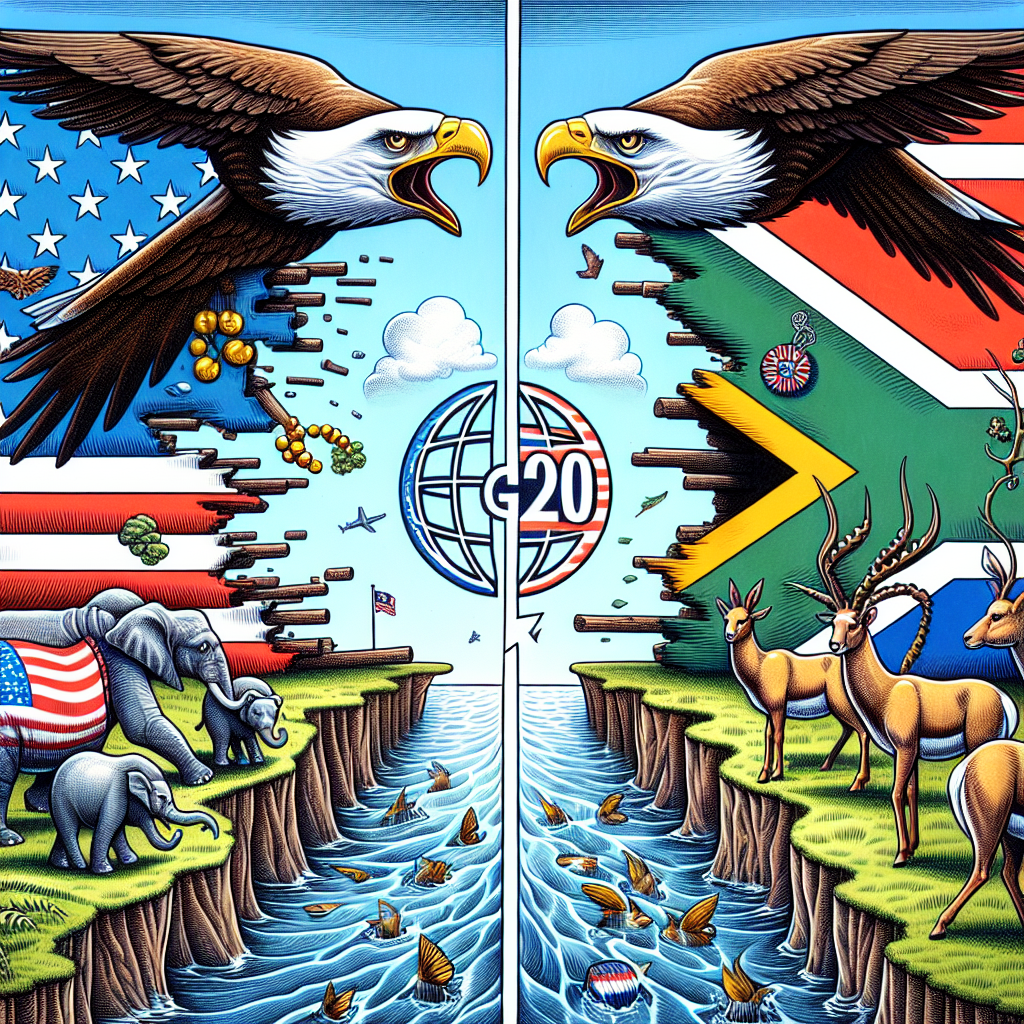
US to Boycott G20 Talks Over South Africa’s Alleged Anti-American Stance

US to Boycott G20 Talks Over South Africa’s Alleged Anti-American Stance
Background
The United States has announced its decision to boycott upcoming G20 talks, citing concerns over South Africa’s perceived anti-American stance. This move marks a significant diplomatic rift between the two nations, traditionally seen as allies in various global forums.

Reasons for the Boycott
- Alleged Anti-American Sentiment: The US accuses South Africa of adopting policies and rhetoric that undermine American interests.
- Diplomatic Tensions: Recent interactions between the two countries have been strained, with disagreements on key international issues.
- Strategic Concerns: The US is wary of South Africa’s growing ties with nations that are often at odds with American policies.
Implications of the Boycott
- Impact on G20 Dynamics: The absence of the US could shift the balance of discussions, potentially affecting global economic and political strategies.
- Strained Bilateral Relations: This decision may further strain US-South Africa relations, impacting trade and cooperation.
- Global Reactions: Other G20 members may need to navigate the fallout from this diplomatic move, balancing their own relations with both nations.
Responses and Reactions
South Africa has expressed disappointment over the US decision, emphasizing its commitment to multilateral dialogue. Other G20 members have urged both nations to resolve their differences through diplomatic channels.


Conclusion
The US boycott of the G20 talks highlights growing tensions with South Africa, driven by allegations of anti-American sentiment. This development could have significant implications for international diplomacy and economic discussions within the G20 framework. As the situation unfolds, the global community will be watching closely to see how these two influential nations navigate their strained relationship.