
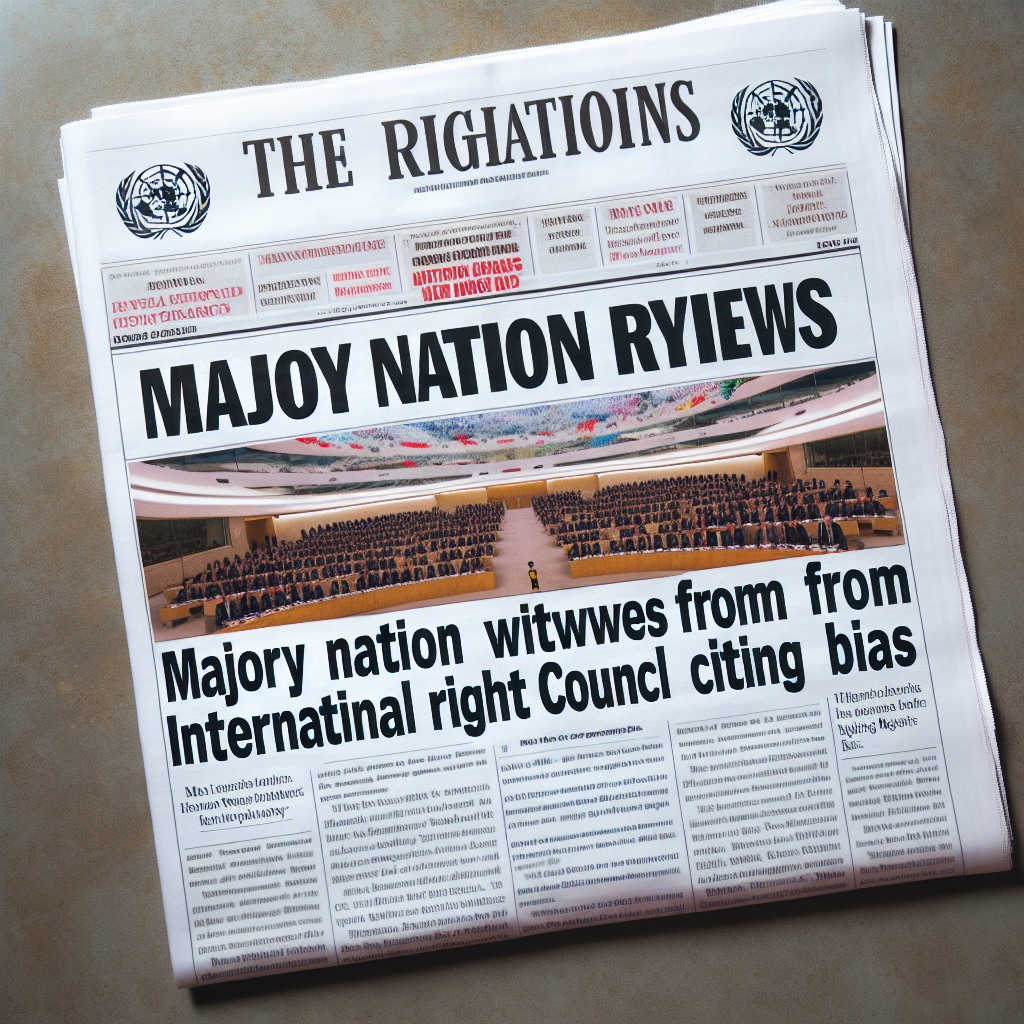
US Withdraws from UN Rights Council Citing “Anti-American Bias”

US Withdraws from UN Rights Council Citing “Anti-American Bias”
Introduction
The United States has made a significant diplomatic move by withdrawing from the United Nations Human Rights Council. This decision, announced by the US government, is rooted in allegations of persistent “anti-American bias” within the council.

Reasons for Withdrawal
The US government has outlined several reasons for its decision to exit the UN Human Rights Council:


- Perceived Bias: The US claims that the council harbors a consistent bias against American policies and interests.
- Membership Concerns: Criticism has been directed at the council for including countries with questionable human rights records.
- Ineffectiveness: The US argues that the council has failed to effectively address major human rights abuses globally.
Reactions and Implications
The decision has sparked a range of reactions both domestically and internationally:


- International Criticism: Many countries and human rights organizations have expressed disappointment, fearing the move could weaken global human rights advocacy.
- Domestic Support: Some US political figures and groups support the decision, viewing it as a stand against perceived international bias.
- Impact on US Influence: The withdrawal may affect the US’s ability to influence human rights discussions and decisions on the global stage.
Conclusion
The US withdrawal from the UN Human Rights Council marks a pivotal moment in international relations, highlighting tensions between national interests and global human rights advocacy. While the move underscores concerns about bias and effectiveness, it also raises questions about the future of US involvement in international human rights efforts.













