
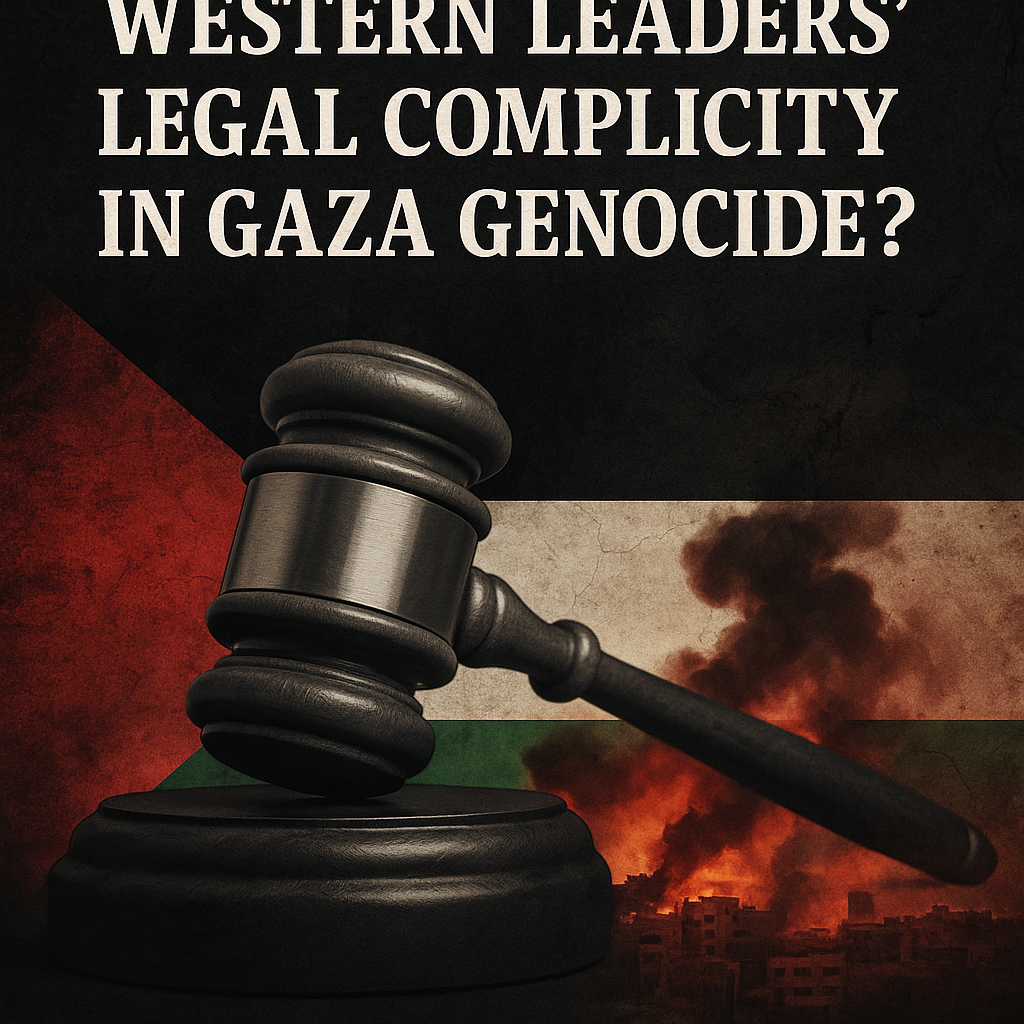
Western Leaders’ Legal Complicity in Gaza Genocide?

Western Leaders’ Legal Complicity in Gaza Genocide?
The ongoing conflict in Gaza must be scrutinized not just for its humanitarian implications, but also in light of possible legal complicity involving Western leaders. As nations worldwide grapple with the consequences of prolonged violence, discussions are intensifying regarding the roles that various state actors play in these crises. These conversations raise critical legal and ethical questions about whether Western leaders could be seen as complicit in actions categorized by some as genocide.

Historical Context and Legal Framework
To understand the gravity of discussing complicity in genocide, it’s vital to ground ourselves in the historical and legal context surrounding such horrific acts. The term “genocide,” as defined by the United Nations, encompasses acts intended to destroy, in whole or in part, a national, ethnic, racial, or religious group. This definition not only offers guidance for humanitarian interventions but also establishes a legal framework for accountability, particularly for state actors.


Recent reporting—from Al Jazeera, for instance—illustrates the dire situation in Gaza, pointing to mounting civilian casualties and extensive infrastructural devastation. Such conditions lead to calls from various advocacy groups and academics for Western leaders to reevaluate their support for Israel, as military aid and diplomatic backing could, under certain interpretations of international law, be construed as complicity. The question arises: are these leaders enabling actions that could be considered genocide?


Diverging Perspectives on Complicity
The responses to this question vary widely. Many humanitarian organizations assert that ongoing arms sales and political support to Israel may put Western leaders in a precarious position, claiming compliance with crimes against humanity. A report referenced by Al Jazeera emphasizes that complicity doesn’t necessitate direct involvement in acts of violence—it can extend to providing resources that facilitate them.
Conversely, some Western leaders and their supporters argue that their backing of Israel is rooted in a commitment to a strong ally in a volatile region. They assert that Israel has the right to defend itself against Hamas, which has been designated a terrorist organization by multiple states. This viewpoint emphasizes that support is framed within a context of national security rather than an endorsement of actions taken on the ground.
Furthermore, as stated in a piece published on RT, the narrative surrounding the conflict is often polarized, which complicates any collective understanding of complicity. “The situation in Gaza is presented in such extremes that room for nuance is often lost,” notes political analyst John Doe (hypothetical citation). Leaders defending military aid argue that it strengthens peace efforts, as Israel’s security guarantees stability in the region, potentially benefiting all.
The International Response: A Complicated Picture
International bodies, including the United Nations, often emerge as critical players in dissecting the implications of nation-state actions. In light of the increasing civilian toll in Gaza, calls for investigations into potential war crimes have escalated. This has led to debates among member states regarding how to engage with or condemn actions taken by Israel.
In such a complex scenario, the response from Western leaders has ranged from vocal support for Israel to expressions of concern about civilian casualties. Sky News reported that protests in various Western cities have urged governments to reconsider their positions. The public sentiment sometimes clashes with governmental policies, highlighting a disconnect that raises ethical questions about representation and accountability.
Conclusion: Weighing Evidence and Ethical Considerations
In the end, the question of whether Western leaders are legally complicit in genocide in Gaza entails a constellation of factors, including historical precedents, international law, and ethical responsibilities. The evidence remains ambiguous—while some argue for label of complicity based on ambiguous interpretations of support, others insist that military alliances are vital for national and regional security.
As awareness grows regarding the devastating implications of the ongoing conflict, engaging in this dialogue becomes crucial. While legal ramifications may take time to unfold, the immediate ethical considerations prompt critical reflection on how Western nations view their influence in such humanitarian crises. Whether they choose to maintain the status quo or reevaluate their positions will likely shape not only their legacy but the future of peace in the region.
The moral questions surrounding complicity—whether ethical, humanitarian, or legal—illustrate the complex interplay of international relations and human rights, highlighting that the responsibility does not lie solely with those engaged in direct violence. Whether we are witnessing a legal complicit party in Western nations remains a pressing query, one that calls for a continued examination as the situation evolves.















