
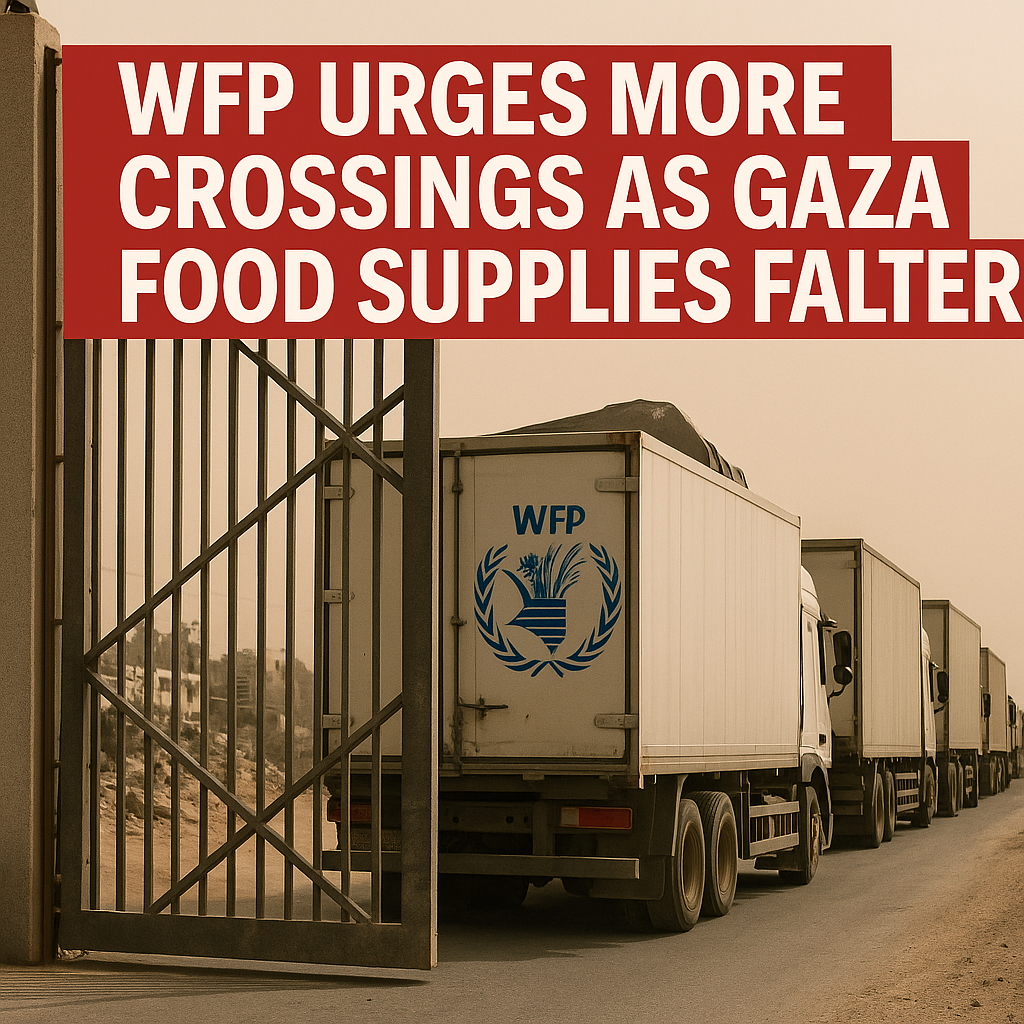
WFP Urges More Crossings as Gaza Food Supplies Falter

WFP Urges More Crossings as Gaza Food Supplies Falter
The situation in Gaza has reached a critical point, with the World Food Programme (WFP) emphasizing the urgent need for more crossings to facilitate food aid. With food supplies dwindling, the humanitarian crisis exacerbates daily, raising serious concerns about the wellbeing of the population.

The Severity of the Crisis
According to a recent report by Al Jazeera, the WFP has indicated that food supplies entering Gaza are currently below necessary targets. The organization reports that ongoing conflicts and border blockages severely restrict the flow of essential aid, leaving many families without sufficient nourishment. As of now, the food insecurity rate is alarmingly high, with thousands of civilians facing dire conditions.


Furthermore, a Sky News article outlines a troubling statistic: nearly 50% of Gaza’s population is estimated to be living under food deprivation. The traders and local markets also reflect the crises as prices for basic commodities skyrocket, making it even more difficult for families to access necessary food items.


Calls for Increased Humanitarian Access
The WFP’s plea for more crossings is not merely a logistical concern; it reflects deeper humanitarian needs. The organization notes that sustained humanitarian access is vital for alleviating the suffering of Gaza’s residents. The urgency of this request is bolstered by the reality that undercurrent tensions can lead to further disruption of aid efforts.
Many aid organizations share the WFP’s sentiments regarding the need for unfettered access to aid. Reports from RT echo the push for humanitarian corridors as critical passageways to deliver food and medical supplies. “Without immediate action to open these crossings, we will continue to see escalating suffering in the region,” a spokesperson from a humanitarian group noted.
Controversies and Challenges Ahead
Despite the pressing need for help, the issue of opening crossings is fraught with political complexities. Both regional and global stakeholders have roles to play that can affect the speed and volume of aid delivery. While the international community rallies behind the WFP’s position, differing opinions on border security and motives complicate matters.
Some critics argue that opening more crossings could lead to misuse or diversion of aid, fearing that resources might not reach those in genuine need. Conversely, advocates assert that humanitarian access must be prioritized above all else, emphasizing that any delays in aid could have catastrophic impacts on vulnerable populations.
It is worth noting that other voices in the debate stress the importance of accompanying any aid with long-term solutions. Policymakers must also consider not just immediate food security but also the sustainability of agricultural practices in the region.
The Road to Resolution
As the situation unfolds, the urgency for a coordinated humanitarian response cannot be overstated. The WFP’s assessment reveals a dire need for a collaborative approach from both the local authorities and the international community. Increased crossings could be a necessary step, but addressing underlying issues of conflict and governance is equally important.
For a balanced resolution, stakeholders could explore frameworks that ensure aid delivery is both timely and effective, while also safeguarding against potential abuse. Humanitarian efforts, if managed correctly, have the potential not only to alleviate short-term suffering but also to lay the groundwork for future stability.
In conclusion, the WFP’s message underlines a critical truth—a humanitarian crisis, marked by dwindling food supplies, requires immediate and sustained action. As discussions continue, it is paramount that all parties engage in open dialogue, seeking solutions that prioritize human dignity and well-being. In doing so, hope can be restored, and tangible aid can reach those who need it most.















