
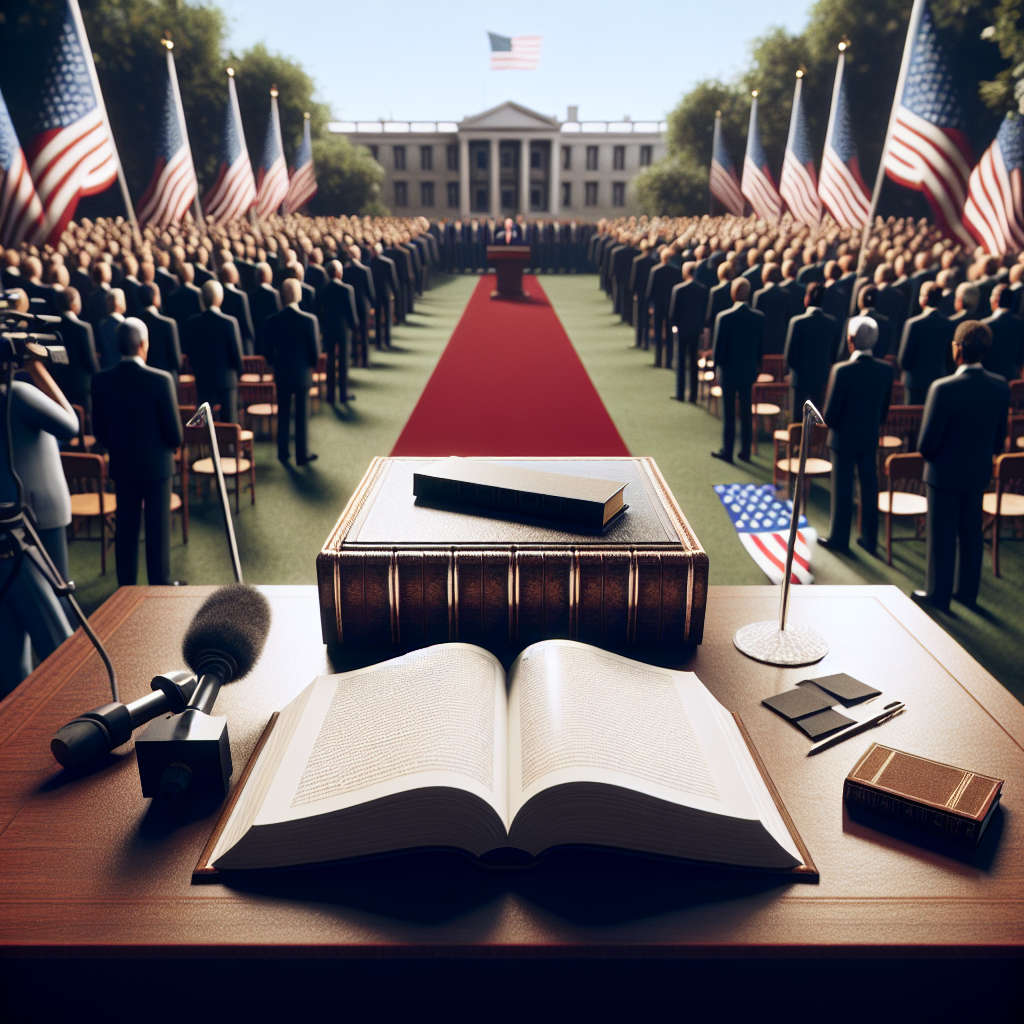
What If the US President-Elect Cannot Be Sworn In?

What If the US President-Elect Cannot Be Sworn In?
Understanding the Unprecedented Scenario
The possibility of a US President-elect being unable to take the oath of office is a rare and complex situation. This scenario raises questions about constitutional provisions, succession plans, and the potential impact on governance. While the US Constitution provides some guidance, the situation remains largely untested and open to interpretation.

Constitutional Provisions and Legal Framework
The US Constitution outlines the basic framework for presidential succession, but it does not explicitly address the situation where a President-elect cannot be sworn in. Key constitutional elements include:


- 20th Amendment: Establishes the terms of the President and Vice President, and outlines procedures if the President-elect dies before taking office.
- Presidential Succession Act: Provides a line of succession if both the President and Vice President are unable to serve.
Potential Scenarios and Outcomes
Several scenarios could unfold if a President-elect cannot be sworn in, each with distinct implications:


- Death or Incapacity: The Vice President-elect would typically assume the presidency.
- Contested Election Results: Legal battles could delay the inauguration, requiring intervention by Congress or the Supreme Court.
- Resignation or Withdrawal: The political party of the President-elect might nominate a replacement, subject to congressional approval.
Impact on Governance and Stability
An inability to swear in a President-elect could lead to political uncertainty and challenges in governance. Key concerns include:
- Public Confidence: The legitimacy of the electoral process could be questioned, affecting public trust.
- Policy Implementation: Delays in leadership transition could stall critical policy decisions and international relations.
- Constitutional Crisis: Prolonged uncertainty might trigger a constitutional crisis, necessitating legal and political resolutions.
Conclusion
The scenario of a US President-elect being unable to be sworn in presents a complex challenge with significant constitutional, legal, and political implications. While the Constitution provides some guidance, the situation remains largely uncharted, requiring careful navigation to ensure governance stability and public confidence. Understanding these potential outcomes and their impact is crucial for maintaining the integrity of the democratic process.













