
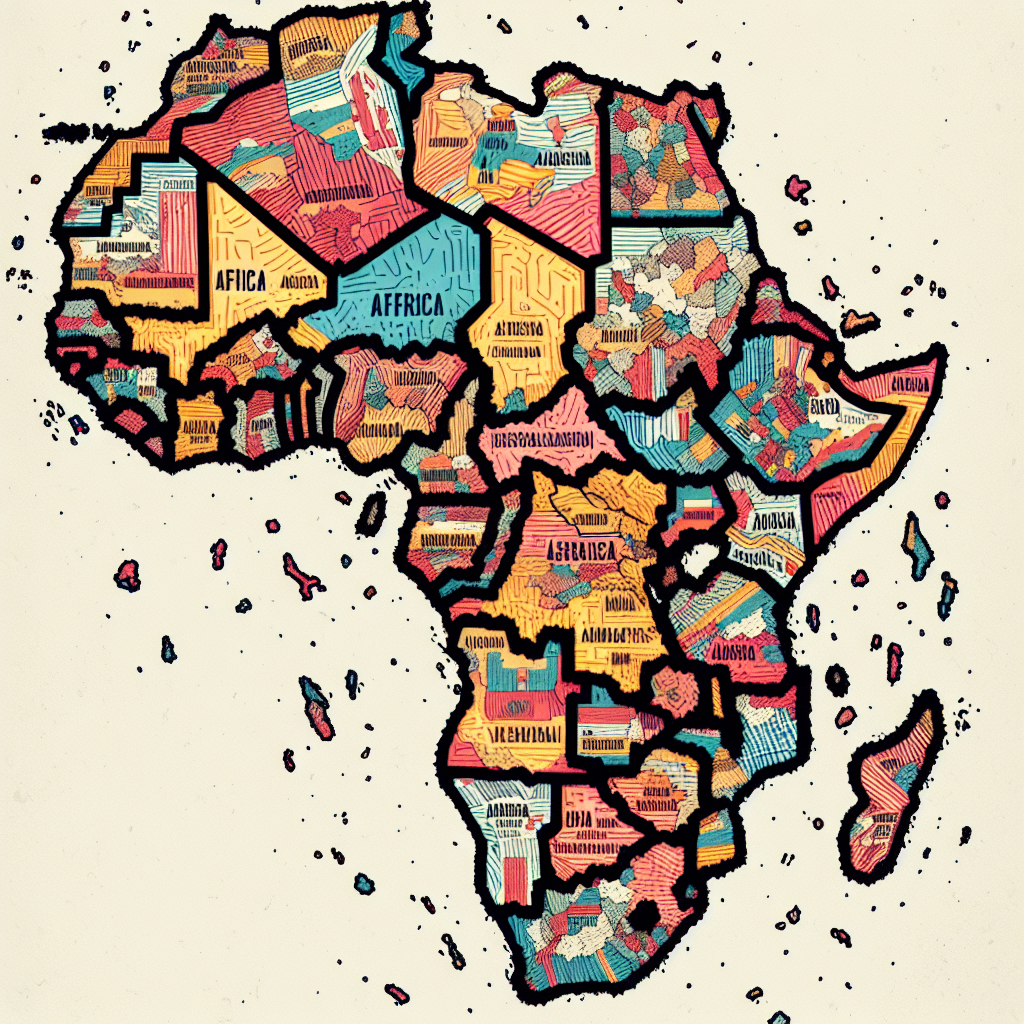
Why Do Africa’s Borders Look So Unusual?

Why Do Africa’s Borders Look So Unusual?
The Historical Context
Africa’s borders are a legacy of colonialism, primarily shaped during the late 19th and early 20th centuries. European powers, in their quest for territorial expansion, drew arbitrary lines across the continent, often with little regard for the existing ethnic, cultural, and linguistic landscapes.

The Berlin Conference of 1884-1885
The Berlin Conference was a pivotal event where European nations convened to divide Africa among themselves. This meeting laid the groundwork for the continent’s current borders, which were drawn with the following characteristics:


- Disregard for indigenous territories and communities.
- Focus on resource allocation and strategic advantage.
- Creation of borders that often split ethnic groups and merged disparate communities.
Consequences of Arbitrary Borders
The borders established during colonial times have had lasting impacts on Africa, including:


- Ethnic conflicts and tensions due to divided communities.
- Challenges in nation-building and governance.
- Economic disparities and development issues.
Modern-Day Implications
Today, African nations continue to grapple with the legacy of these borders. Efforts to address the challenges include:
- Regional cooperation and integration initiatives.
- Efforts to promote peace and resolve conflicts.
- Development of policies that consider the continent’s diverse cultural landscape.
Conclusion
Africa’s unusual borders are a testament to its colonial past, with lines drawn by foreign powers that continue to influence the continent’s socio-political and economic dynamics. Understanding this history is crucial for addressing the ongoing challenges and fostering a more unified and prosperous Africa.















